How to Brew
Beschreibung
Autorentext John Palmer is one of the most recognized names in homebrewing today. The author of three books and countless articles, he enjoys applying practical engineering know-how to the art and science of brewing beer. Through his bestselling Brewers Public...Format auswählen
- Kartonierter EinbandCHF 26.55

Wird oft zusammen gekauft
Andere Kunden kauften auch
Beschreibung
Autorentext
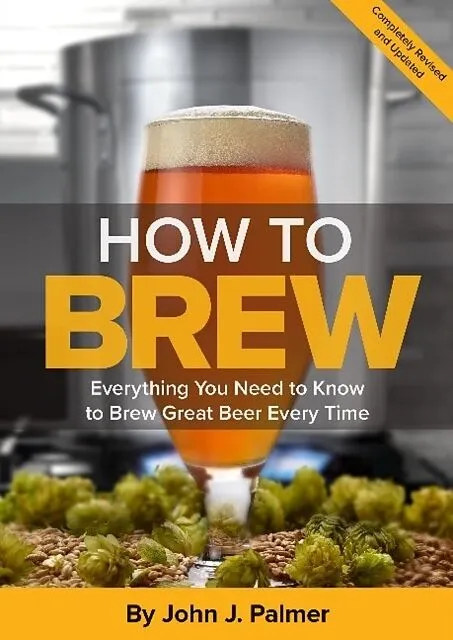
John Palmer is one of the most recognized names in homebrewing today. The author of three books and countless articles, he enjoys applying practical engineering know-how to the art and science of brewing beer. Through his bestselling Brewers Publications title, How to Brew: Everything You Need to Know to Brew Great Beer Every Time, John has helped hundreds of thousands of readers learn to successfully brew their own beer at home.
Palmer co-authored two other books on brewing: Brewing Classic Styles: 80 Winning Recipes Anyone Can Brew with homebrewing legend and Heretic Brewing Company founder Jamil Zainasheff and Water: A Comprehensive Guide for Brewers, the definitive guide to water chemistry for brewing with Colin Kaminski, former brewmaster at Napa's Downtown Joe's Brewery and Restaurant.
Palmer is involved in many scientific and professional brewing associations. He left a career in aerospace research and development, and metallurgy in 2011 to found Palmer Brewing Solutions, Inc. He now focuses on brewery consulting and product development with key brewing industry manufacturers and serves as publications director for the Master Brewers Association of the Americas.
When he's not brewing beer, writing about beer, or developing brewing equipment, John enjoys woodturning, blacksmithing, and reading sci-fi/fantasy. He lives in California with his wife, three children, and his cat, Shadow.
Klappentext
How to Brew is the definitive guide to making quality beers at home. Whether you want simple, sure-fire instructions for making your first beer, or you’re a seasoned homebrewer working with all-grain batches, this book has something for you. John Palmer adeptly covers the full range of brewing possibilities—accurately, clearly and simply. From ingredients and methods to recipes and equipment for brewing beer at home, How to Brew is loaded with valuable information on brewing techniques and recipe formulation.
A perennial best seller since the release of the third edition in 2006, How to Brew, is a must-have to update every new and seasoned brewer’s library.
This completely revised and updated edition includes:
More emphasis on the “top six priorities”: sanitation, fermentation temperature control, yeast management, the boil, good recipes, and water.Five new chapters covering malting and brewing, strong beers, fruit beers, sour beers, and adjusting water for style.All other chapters revised and expanded:Expanded and updated charts, graphs, equations, and visuals.Expanded information on using beer kits.Thorough revision of mashing and lautering chapters:
Expanded tables of recommended times and temperatures for single-infusion, multiple-step, and decoction mashing.
Complete discussion of first wort gravity as a function of water to grist ratio.
Complete revision of infusion and decoction equations.Revised and updated information on managing your fermentation:
Yeast pitching and starters.
Yeast starter growth factors.
Yeast and the maturation cycle.And much more!
Zusammenfassung
Fully revised and updated, How to Brew is the definitive guide to making quality beers at home. Whether you want simple, sure-fire instructions for making your first beer, or you're a seasoned homebrewer working with all-grain batches, this book has something for you. John Palmer adeptly covers the full range of brewing possibilities--accurately, clearly and simply. From ingredients and methods to recipes and equipment for brewing beer at home, How to Brew is loaded with valuable information on brewing techniques and recipe formulation.
Inhalt
Table of Contents
Acknowledgments
Table of Contents
List of Tips, Tables, & Significant Figures
Introduction
Section I—Brewing Beer Kits
Chapter 1 – A Crash Course in Brewing
What Do I Do?
Brew Day
Equipment Needed
Preparation
Making Wort
Fermentation Week(s)
Bottling Day
Serving Day
But Wait! There's More!
Chapter Two – Sanitation
The Road to Good Brewing
Preparation
Sanitation
Cleaning Products
Cleaning Your Equipment
Sanitizing Products
Heat
Cleaning and Sanitizing Final Thoughts
Record Keeping
Example Recipe Form
Chapter 3 – A Short Discourse on Malting and Brewing
A Brief Discussion of Barley and Malt
The Production of Malt Extract
Cooking the Wort
Full Boil vs. Partial Boil
Building a Beer
Chapter 4 – Malt Extract and Beer Kits
Choosing a Good Kit
Shopping for Extracts
How Much Extract to Use
Gravity vs. Fermentability
Steeping Specialty Grains
Chapter 5– Hops
What Are They?
Why Are Hops Bitter?
How Are They Used?
First Wort Hopping
Bittering
Flavoring
Finishing (Whirlpool Hops)
Dry Hopping
Hop Forms - Pellets, Plug and Whole
Hop Variety Types
Bittering Hop Varieties
Dual Purpose Hop Varieties
Aroma Hop Varieties
How to Measure Hops
Hop Bitterness (IBU) Calculations
Gravity of the Boil
Utilization
Hop IBU Nomograph
Chapter 6 – Yeast and Fermentation
How Yeast Work
Defining Fermentation ...................... 99
Lagtime or Adaptation Phase ..... 100
High growth or Attenuative Phase 101
Conditioning Phase...................... 102
Cold Conditioning / Lagering...... 103
Building a Better Fermentation ........ 104
Oxygen and Aeration ................. 105
Nitrogen ...................................... 106
Necessary Minerals...................... 107
Nutritional Supplements ............. 108
Open vs. Closed Fermentation ........ 109
Chapter 7 –Managing Your Yeast
Yeast Types
Yeast Forms
Yeast Strains
Dry Yeast Strains
Liquid Yeast Strains
Yeast Nutritional Needs
Nutritional Supplements
Oxygen
Aeration is Good, Oxidation is Bad
Preparing Yeast and Yeast Starters
Preparing Dry Yeast
Preparing Liquid Yeast
When Is My Yeast Starter Ready to Pitch?
Using Yeast From Commercial Beers
Support Your Local Micro
Simple Yeast Ranching
Chapter 8 – Water For Extract Brewing
Two Things
What is Good Brewing Water?
How to Read a Water Quality Report
Adding Brewing Salts
Chapter 9 – Brewing Your Second Batch
First Recipe
Beginning the Boil
The Hot Break
Hop Additions
Kettle Fining
Cooling the Wort
Water Bath
Ice
Copper Wort Chillers
Choosing Your Fermentor
Buckets vs. Carboys
Airlocks vs. Blowoffs
Transferring the Wort
Conducting Your Fermentation
Pitching the Yeast
Fermentation Location
Fermentation
Racking
Estimating the Alcohol Content
Chapter 10 – Priming, Bottling, and Kegging
When to Bottle
Bottle Cleaning
Fining
What Sugar Should I Prime With?
Commercial Priming Agents
Bottle Filling
Storage
Kegging
Chapter 11 – Brewing Lager Beer
Yeast Differences
Additional Time
Lower Temperatures
Autolysis
Lager Yeast Fermentation
When to Begin Lagering
Aagh!! It Froze!!
Should I Add More Yeast?
Maintaining Lager Temperature
Priming and Bottling of Lager Beer
Bottling
Brewing American Lager Beer
Recipe—Typical American Lager
Chapter 12 – Brewing Strong Beers
Chapter 13 – Brewing Fruit Beers
Chapter 14 – Brewing Sour Beers
Section II—All-Grain Brewing
Chapter 15 – Understanding Malted Barley & Adjuncts
What is Malting?
Maillard Reactions and Flavor Development
Malt Types and Usages
Base Malts
Kilned Malts
Caramel Malts
Roasted Malts
Other Grains and Adjuncts
How To Read a Malt Analysis Sheet
Chapter 16 – How the Mash Works
An Allegory
Defining the Mash
The Acid Rest
Doughing-In and Beta Glucanase
The Protein Rest and Modification
Starch Conversion/Saccharification Rest …