
IHR WARENKORB IST AKTUELL LEER.
Haben Sie noch nichts passendes gefunden? Stöbern Sie durch unser komplettes Sortiment.
Oder melden Sie sich an bzw. registrieren Sie sich.
- Kostenlose Lieferung
- Kauf auf Rechnung
- Ex Libris Tiefpreis
- Filiallieferung und 650+ Abholorte
- Rabatt-Bons als Club-Mitglied
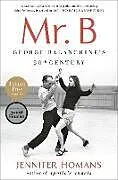
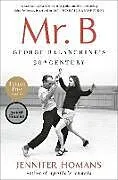
Mr. B
Beschreibung
Informationen zum Autor Jennifer Homans is the dance critic for The New Yorker. Her widely acclaimed, bestselling Apollo's Angels: A History of Ballet was named one of the ten best books of the year by The New York Times Book Review . Trained in dance at Georg...Format auswählen
- TaschenbuchCHF 27.60

Wird oft zusammen gekauft
Andere Kunden kauften auch
Beschreibung
Informationen zum Autor Jennifer Homans is the dance critic for The New Yorker. Her widely acclaimed, bestselling Apollo's Angels: A History of Ballet was named one of the ten best books of the year by The New York Times Book Review . Trained in dance at George Balanchine's School of American Ballet, Homans danced professionally with the Pacific Northwest Ballet. She earned her BA at Columbia University and her PhD in modern European history at New York University, where she is a Scholar in Residence and the Founding Director of the Center for Ballet and the Arts. Klappentext "The New York Times called him "the Shakespeare of dancing." He appeared on the cover of Time magazine. Arguably the greatest choreographer who ever lived, George Balanchine was one of the cultural titans of the twentieth century. His radical approach to choreography reinvented the art of dance and his richly imaginative ballets made him a legend. Yet, Balanchine's life was as dramatic as his art, coinciding with some of the biggest historical events of his time. Born in Russia under the last Czar, Balanchine experienced the upheavals of World War I, the Russian Revolution, World War II, exile, and the Cold War. He co-founded the New York City Ballet and revolutionized dance in America, pressing it to the forefront of modernism and making it serious and popular art. A man of many muses, Balanchine was married five times and consumed by other loves in between. Both the passions that animated him and the difficulties of his life--personal losses, bouts of ill health, and dark moods of despair--resonate in his more than 100 ballets, which speak of love, loss, mortality, and the transformative power of art. Nearly forty years after his death the full scale of Balanchine's achievement remains unexplored. Jennifer Homans, who studied with Balanchine and has had unprecedented access to his papers and many of those who knew him, has researched every facet of Balanchine's life and times. As much a biography as a vast history of the twentieth century through the lens of one of its greatest artists, Mr. B is the definitive biography by ballet's definitive writer"-- Leseprobe Chapter 1 Happy Families When Georgi was born one cold January day in 1904, he was his mother's first illegitimate son. It was official: he was number 160 on the list of newborns at the Church of the Nativity on the Sands in St. Petersburg, where Maria Nikolaevna Vasil'eva had dutifully registered his arrival. On this critical document establishing Balanchine's existence in the eyes of God and the Russian state, his father was absent, and his mother, the authorities noted in a neat hand, was Orthodox but unwed. The problem was not only that Balanchine came into the world in a half-fallen bastard state, somehow discredited from the start; it was also that without a father, Georgi had no patronymic, and without a patronymic his entire genealogy was in doubt. Who was he, even? His older sister, Tamara, born two years earlier, was illegitimate too. Ditto his brother, Andrei, who came a year after Georgi, in 1905. On Tamara's document, ILLEGITIMATE was even scrawled like a scarlet letter in bold capitals under her name. Had Maria's children been born in Western Europe, they might have held some rights through their mother, but this was Russia, and children automatically took the legal status of their father. The sad fact was that without a paterfamilias none of them had any legal standing at all. They hardly existed. There was only one way back into the social and political fold: in special cases, usually with influence and money changing hands, a child might be legitimized ex post facto by imperial consent and the word of the czar himself. A cramped note in new ink amending Tamara's, Georgi's, and Andrei's birth documents tells us that this is exactly what happened. On March 18, 1906, the distri...
Autorentext
Jennifer Homans is the dance critic for The New Yorker. Her widely acclaimed, bestselling Apollo’s Angels: A History of Ballet was named one of the ten best books of the year by The New York Times Book Review. Trained in dance at George Balanchine’s School of American Ballet, Homans danced professionally with the Pacific Northwest Ballet. She earned her BA at Columbia University and her PhD in modern European history at New York University, where she is a Scholar in Residence and the Founding Director of the Center for Ballet and the Arts.
Klappentext
**PULITZER PRIZE FINALIST • “A fascinating read about a true genius and his unrelenting thirst for beauty in art and in life.”—MIKHAIL BARYSHNIKOV
**Winner of the Plutarch Award for Best Biography and the Marfield Prize for Arts Writing • Finalist for the National Book Critics Circle Award, the Los Angeles Times Book Prize, the PEN/Jacqueline Bograd Weld Award, the Kirkus Prize, and the Baillie Gifford Prize
Based on a decade of unprecedented research, the first major biography of George Balanchine, a broad-canvas portrait set against the backdrop of the tumultuous century that shaped the man The New York Times called “the Shakespeare of dancing”—from the bestselling author of Apollo’s Angels**
New York Times Editors’ Choice • ONE OF THE BEST BOOKS OF THE YEAR: The New York Times Book Review, The New Yorker, Vanity Fair, NPR, Oprah Daily
Arguably the greatest choreographer who ever lived, George Balanchine was one of the cultural titans of the twentieth century—The New York Times called him “the Shakespeare of dancing.” His radical approach to choreography—and life—reinvented the art of ballet and made him a legend. Written with enormous style and artistry, and based on more than one hundred interviews and research in archives across Russia, Europe, and the Americas, Mr. B carries us through Balanchine’s tumultuous and high-pitched life story and into the making of his extraordinary dances.
Balanchine’s life intersected with some of the biggest historical events of his century. Born in Russia under the last czar, Balanchine experienced the upheavals of World War I, the Russian Revolution, exile, World War II, and the Cold War. A co-founder of the New York City Ballet, he pressed ballet in America to the forefront of modernism and made it a popular art. None of this was easy, and we see his loneliness and failures, his five marriages—all to dancers—and many loves. We follow his bouts of ill health and spiritual crises, and learn of his profound musical skills and sensibility and his immense determination to make some of the most glorious, strange, and beautiful dances ever to grace the modern stage.
With full access to Balanchine’s papers and many of his dancers, Jennifer Homans, the dance critic for The New Yorker and a former dancer herself, has spent more than a decade researching Balanchine’s life and times to write a vast history of the twentieth century through the lens of one of its greatest artists: the definitive biography of the man his dancers called Mr. B.
Zusammenfassung
****PULITZER PRIZE FINALIST • A Best Book of the 21st Century (So Far)—Kirkus Reviews
“A fascinating read about a true genius and his unrelenting thirst for beauty in art and in life.”—MIKHAIL BARYSHNIKOV
Winner of the Plutarch Award for Best Biography and the Marfield Prize for Arts Writing • Finalist for the National Book Critics Circle Award, the Los Angeles Times Book Prize, the PEN/Jacqueline Bograd Weld Award, the Kirkus Prize, and the Baillie Gifford Prize
**
Based on a decade of unprecedented research, the first major biography of George Balanchine, a broad-canvas portrait set aga…