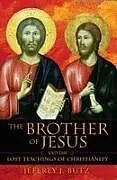
The Brother of Jesus and the Lost Teachings of Christianity
Beschreibung
Zusatztext "In telling the story of James! Jeffrey Butz provides us with a renewed consideration of the profound spiritual interconnectedness between Christianity! Judaism! and Islam . . . " Informationen zum Autor Jeffrey J. Bütz is an ordained Lutheran minis...Format auswählen
- BroschiertCHF 18.40

Wird oft zusammen gekauft
Andere Kunden kauften auch
Beschreibung
Zusatztext "In telling the story of James! Jeffrey Butz provides us with a renewed consideration of the profound spiritual interconnectedness between Christianity! Judaism! and Islam . . . " Informationen zum Autor Jeffrey J. Bütz is an ordained Lutheran minister and adjunct professor of world religions at Penn State University's Berks-Lehigh Valley campus. He lives in Catasauqua, Pennsylvania. Klappentext Reveals the true role of James, the brother of Jesus, in early Christianity • Uses evidence from the canonical Gospels, apocryphal texts, and the writings of the Church Fathers to reveal the teachings of Jesus as transmitted to his chosen successor: James • Demonstrates how the core message in the teachings of Jesus is an expansion not a repudiation of the Jewish religion • Shows how James can serve as a bridge between Christianity, Judaism, and Islam James has been a subject of controversy since the founding of the Church. Evidence that Jesus had siblings contradicts Church dogma on the virgin birth, and James is also a symbol of Christian teachings that have been obscured. While Peter is traditionally thought of as the leader of the apostles and the rock on which Jesus built his church, Jeffrey Bütz shows that it was James who led the disciples after the crucifixion. It was James, not Peter, who guided them through the Church's first major theological crisis--Paul's interpretation of the teachings of Jesus. Using the canonical Gospels, writings of the Church Fathers, and apocryphal texts, Bütz argues that James is the most overlooked figure in the history of the Church. He shows how the core teachings of Jesus are firmly rooted in Hebraic tradition; reveals the bitter battles between James and Paul for ideological supremacy in the early Church; and explains how Paul's interpretations, which became the foundation of the Church, are in many ways its betrayal. Bütz reveals a picture of Christianity and the true meaning of Christ's message that are sometimes at odds with established Christian doctrine and concludes that James can serve as a desperately needed missing link between Christianity, Judaism, and Islam to heal the wounds of centuries of enmity. Leseprobe PERSONA NON GRATA: JAMES THE BROTHER OF JESUS Jesus . . . came to his hometown . . . On the Sabbath he began to teach in the synagogue, and many who heard him were astounded. They said, Where did this man get all this? What is this wisdom that has been given to him? What deeds of power are being done by his hands! Is not this the carpenter, the son of Mary and the brother of James and Joses and Judas and Simon, and are not his sisters here with us? (The Gospel According to Mark 6:13) Jesus had siblings. This simple, seemingly innocuous statement actually raises a host of profound questions, the answers to which have startling implications. Perhaps it is because these questions are so sensitive to some Christians--indeed, divisive--that the subject of Jesus' brothers and sisters has largely been ignored both by biblical scholars and by the Christian church. Yet the evidence of Jesus' siblings is so widespread that there can be no doubt of their existence. The amount of information that exists on Jesus' brothers, particularly James, is quite surprising. As we see above, Mark even provides the names of Jesus' four brothers; nonetheless, in my experience both as a pastor of a Lutheran church and an instructor of world religions in a public university, people are almost always incredulous when told that Jesus had brothers and sisters. This is not something they have usually been taught in church or Sunday School. The recent discovery, in 2002, of an ancient Middle Eastern ossuary (a burial box) made international headlines because of the startling inscription on the box, which identified this particular ossuary as once containing the bones of, James, son of Joseph, br...
"In telling the story of James, Jeffrey Butz provides us with a renewed consideration of the profound spiritual interconnectedness between Christianity, Judaism, and Islam . . . "
Autorentext
Jeffrey J. Bütz is an ordained Lutheran minister and adjunct professor of world religions at Penn State University's Berks-Lehigh Valley campus. He lives in Catasauqua, Pennsylvania.
Klappentext
Reveals the true role of James, the brother of Jesus, in early Christianity
• Uses evidence from the canonical Gospels, apocryphal texts, and the writings of the Church Fathers to reveal the teachings of Jesus as transmitted to his chosen successor: James
• Demonstrates how the core message in the teachings of Jesus is an expansion not a repudiation of the Jewish religion
• Shows how James can serve as a bridge between Christianity, Judaism, and Islam
James has been a subject of controversy since the founding of the Church. Evidence that Jesus had siblings contradicts Church dogma on the virgin birth, and James is also a symbol of Christian teachings that have been obscured. While Peter is traditionally thought of as the leader of the apostles and the “rock” on which Jesus built his church, Jeffrey Bütz shows that it was James who led the disciples after the crucifixion. It was James, not Peter, who guided them through the Church's first major theological crisis--Paul's interpretation of the teachings of Jesus.
Using the canonical Gospels, writings of the Church Fathers, and apocryphal texts, Bütz argues that James is the most overlooked figure in the history of the Church. He shows how the core teachings of Jesus are firmly rooted in Hebraic tradition; reveals the bitter battles between James and Paul for ideological supremacy in the early Church; and explains how Paul's interpretations, which became the foundation of the Church, are in many ways its betrayal. Bütz reveals a picture of Christianity and the true meaning of Christ's message that are sometimes at odds with established Christian doctrine and concludes that James can serve as a desperately needed missing link between Christianity, Judaism, and Islam to heal the wounds of centuries of enmity.
Zusammenfassung
Reveals the true role of James, the brother of Jesus, in early Christianity.
Leseprobe
PERSONA NON GRATA:
JAMES THE BROTHER OF JESUS
*Jesus . . . came to his hometown . . . On the Sabbath he began to teach in the synagogue, and many who heard him were astounded. They said, “Where did this man get all this? What is this wisdom that has been given to him? What deeds of power are being done by his hands! Is not this the carpenter, the son of Mary and the brother of James and Joses and Judas and Simon, and are not his sisters here with us?”*
(The Gospel According to Mark 6:1–3)
Jesus had siblings. This simple, seemingly innocuous statement actually raises a host of profound questions, the answers to which have startling implications. Perhaps it is because these questions are so sensitive to some Christians--indeed, divisive--that the subject of Jesus’ brothers and sisters has largely been ignored both by biblical scholars and by the Christian church. Yet the evidence of Jesus’ siblings is so widespread that there can be no doubt of their existence. The amount of information that exists on Jesus’ brothers, particularly James, is quite surprising. As we see above, Mark even provides the names of Jesus’ four brothers; nonetheless, in my experience both as a pastor of a Lutheran church and an instructor of world religions in a public university, people are almost always incredulous when told that Jesus had brothers and sisters. This is not something they have usually been taught in church or Sunday School.
The recent discovery, in 2002, of an ancient Middle Eastern ossuary (a burial box) made international headlines because of the startling inscription on the box, which identifi…