
IHR WARENKORB IST AKTUELL LEER.
Haben Sie noch nichts passendes gefunden? Stöbern Sie durch unser komplettes Sortiment.
Oder melden Sie sich an bzw. registrieren Sie sich.
- Kostenlose Lieferung
- Kauf auf Rechnung
- Ex Libris Tiefpreis
- Filiallieferung und 650+ Abholorte
- Rabatt-Bons als Club-Mitglied
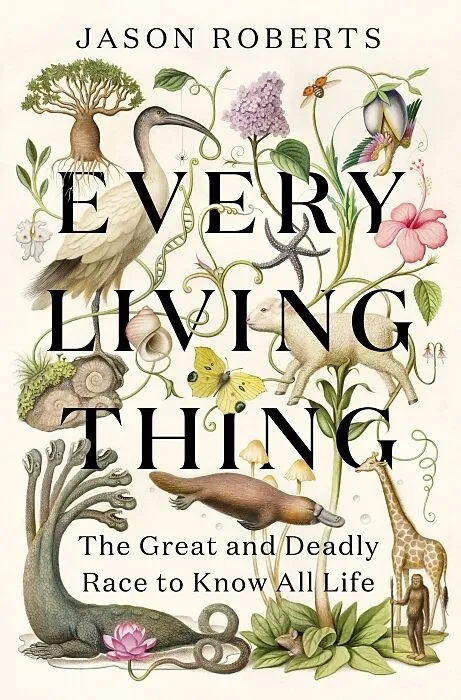
Every Living Thing
Beschreibung
Informationen zum Autor Jason Roberts is a Pulitzer Prizewinning writer of fiction and nonfiction. His previous book, A Sense of the World: How a Blind Man Became History's Greatest Traveler , was a national bestseller and finalist for the National Book Critic...Format auswählen
- Fester EinbandCHF 38.80
- Kartonierter EinbandCHF 18.40
Wird oft zusammen gekauft
Andere Kunden kauften auch
Beschreibung
Informationen zum Autor Jason Roberts is a Pulitzer Prizewinning writer of fiction and nonfiction. His previous book, A Sense of the World: How a Blind Man Became History's Greatest Traveler , was a national bestseller and finalist for the National Book Critics Circle Award. A contributor to McSweeney's, The Believer , and other publications, he lives in Northern California. Klappentext "In the 18th century, two men dedicated their lives to the same daunting task: identifying and describing all life on Earth. Their approaches could not have been more different. Carl Linnaeus, a pious Swedish doctor with a huckster's flair, believed that life belonged in tidy, static categories. Georges-Louis de Buffon, an aristocratic polymath and keeper of France's royal garden, viewed life as a dynamic swirl of complexities. Both began believing their work to be difficult, but not impossible--how could the planet possibly hold more than a few thousand species? Stunned by life's diversity, both fell far short of their goal. But in the process they articulated starkly divergent views on nature, on humanity's role in shaping the fate of our planet, and on humanity itself. The rivalry between these two unique, driven individuals created reverberations that still echo today. Linnaeus, with the help of acolyte explorers he called 'apostles' (only half of whom returned alive), gave the world such concepts as mammal, primate and homo sapiens--but he also denied species change and promulgated racist pseudo-science. Buffon coined the term reproduction, formulated early prototypes of evolution and genetics, and argued passionately against prejudice. It was a clash that, during their lifetimes, Buffon seemed to be winning. But their posthumous fates would take a very different turn"-- Leseprobe One Of the Linden Tree the landscape of seventeenth-century sweden was dotted with natural shrines. These were linden trees, viewed in a semi-mystical light by Swedes who associated their heart-shaped leaves and fragrant blossoms with Freyja, the Nordic goddess of love and fertility. Pregnant women visited them to gather leaves, hoping to invoke Freyja's protection during childbirth by sleeping on pillows stuffed with them. Travelers sought shelter under their branches during storms, believing that Thor deferred to Freyja by aiming his lightning strikes elsewhere. Their silver trunks were favored sites for both romantic declarations and business negotiations, since Freyja was thought to punish anyone speaking lies beneath their boughs. One ancient linden tree was especially revered. It grew near the border of the southern Swedish province of Småland, in a field straddling Hvittaryds and Jonsboda parishes, rising in a massive triple trunk to spread a canopy shading most of an acre. Nestled near its roots lay a cairn of piled stones, dating to the Bronze Age and thought to mark the resting place of a Viking warrior. The natives of Småland had long since declared the tree and its grounds a våarträd, a treasured landmark believed to extend its protection to all of the surrounding countryside. For the family that owned the land, that brought both honor and a special duty of care: Våarträds were customarily left as undisturbed as possible, even when they occupied what would otherwise be productive farmland. For generations the family tended to the tree. When twigs or branches fell, they carefully gathered them up (it was bad luck to break even a single one) and placed them in neat piles atop the roots, leaving them to weather in peace. They erected a perimeter fence to protect the tree from the bunting, rubbing, and ringbarking of grazing animals, but kept a path to the trunk accessible to visitors. The family had no name. This was common in rural Sweden, where surnames were rarely necessary; one's lifelong presence on ancestral land served as identity enough. Most...
Autorentext
Jason Roberts is a Pulitzer Prize–winning writer of fiction and nonfiction. His previous book, A Sense of the World: How a Blind Man Became History’s Greatest Traveler, was a national bestseller and finalist for the National Book Critics Circle Award. A contributor to McSweeney’s, The Believer, and other publications, he lives in Northern California.
Klappentext
"In the 18th century, two men dedicated their lives to the same daunting task: identifying and describing all life on Earth. Their approaches could not have been more different. Carl Linnaeus, a pious Swedish doctor with a huckster's flair, believed that life belonged in tidy, static categories. Georges-Louis de Buffon, an aristocratic polymath and keeper of France's royal garden, viewed life as a dynamic swirl of complexities. Both began believing their work to be difficult, but not impossible--how could the planet possibly hold more than a few thousand species? Stunned by life's diversity, both fell far short of their goal. But in the process they articulated starkly divergent views on nature, on humanity's role in shaping the fate of our planet, and on humanity itself. The rivalry between these two unique, driven individuals created reverberations that still echo today. Linnaeus, with the help of acolyte explorers he called 'apostles' (only half of whom returned alive), gave the world such concepts as mammal, primate and homo sapiens--but he also denied species change and promulgated racist pseudo-science. Buffon coined the term reproduction, formulated early prototypes of evolution and genetics, and argued passionately against prejudice. It was a clash that, during their lifetimes, Buffon seemed to be winning. But their posthumous fates would take a very different turn"--
Zusammenfassung
PULITZER PRIZE WINNER • An epic, extraordinary account of scientific rivalry and obsession in the quest to survey all of life on Earth
**“[An] engaging and thought-provoking book, one focused on the theatrical politics and often deeply troubling science that shape our definitions of life on Earth.”—The New York Times
“A fluent and engaging account of the eighteenth-century origins of Darwinism before Darwin.”—The Wall Street Journal**
**
WINNER OF THE PEN/E.O. WILSON LITERARY SCIENCE WRITING AWARD • A KIRKUS REVIEWS BEST BOOK OF THE YEAR**
In the eighteenth century, two men—exact contemporaries and polar opposites—dedicated their lives to the same daunting task: identifying and describing all life on Earth. Carl Linnaeus, a pious Swedish doctor with a huckster’s flair, believed that life belonged in tidy, static categories. Georges-Louis de Buffon, an aristocratic polymath and keeper of France’s royal garden, viewed life as a dynamic swirl of complexities. Each began his task believing it to be difficult but not impossible: How could the planet possibly hold more than a few thousand species—or as many could fit on Noah’s Ark?
Both fell far short of their goal, but in the process they articulated starkly divergent views on nature, the future of the Earth, and humanity itself. Linnaeus gave the world such concepts as mammal, primate, and Homo sapiens, but he also denied that species change and he promulgated racist pseudoscience. Buffon formulated early prototypes of evolution and genetics, warned of global climate change, and argued passionately against prejudice. The clash of their conflicting worldviews continued well after their deaths, as their successors contended for dominance in the emerging science that came to be called biology.
In Every Living Thing, Jason Roberts weaves a sweeping, unforgettable narrative spell, exploring the intertwined lives and legacies of Linnaeus and Buffon—as well as the groundbreaking, often fatal adventures of their acolytes—to trace an arc of insight and discovery that extends across three centuries into the present day.