
IHR WARENKORB IST AKTUELL LEER.
Haben Sie noch nichts passendes gefunden? Stöbern Sie durch unser komplettes Sortiment.
Oder melden Sie sich an bzw. registrieren Sie sich.
- Kostenlose Lieferung
- Kauf auf Rechnung
- Ex Libris Tiefpreis
- Filiallieferung und 650+ Abholorte
- Rabatt-Bons als Club-Mitglied
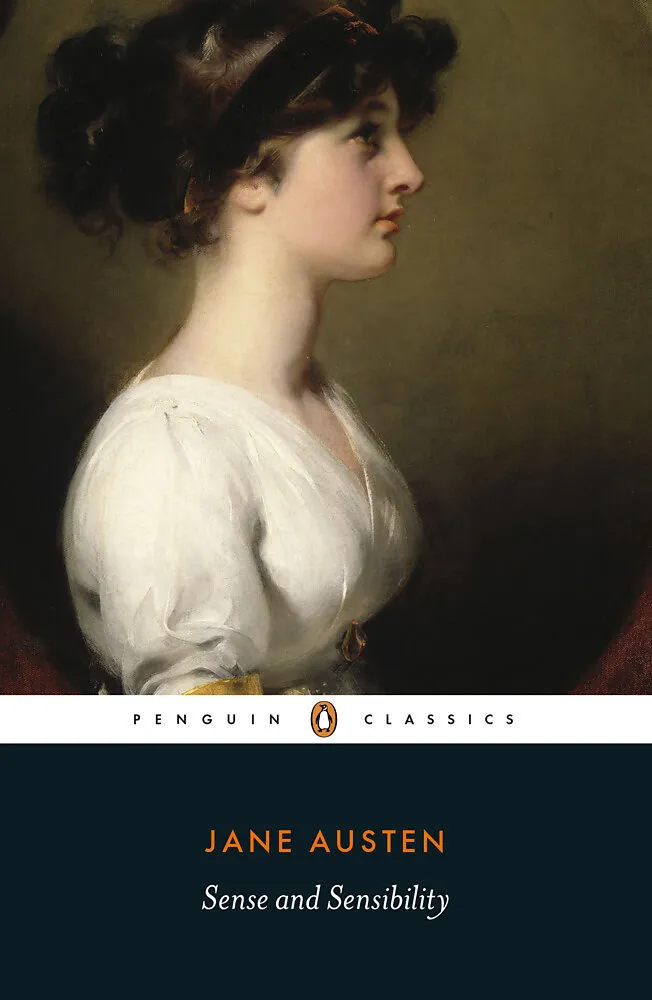
Sense and Sensibility
Beschreibung
Die Erstausgabe erschien im Jahr 1811. Jane Austen erzählt die Geschichte der beiden Schwestern Elinor und Marianne. Elinor verkörpert Verstand, Selbstbeherrschung und Taktgefühl, Marianne hingegen Impulsivität, Leidenschaftlichkeit und spontane Hingabe. Zusat...Format auswählen
- Kartonierter EinbandCHF 14.60
- Fester EinbandCHF 26.30
- E-Book (epub)CHF 1.50
- Kartonierter EinbandCHF 19.00

Wird oft zusammen gekauft
Andere Kunden kauften auch
Beschreibung
Die Erstausgabe erschien im Jahr 1811. Jane Austen erzählt die Geschichte der beiden Schwestern Elinor und Marianne. Elinor verkörpert Verstand, Selbstbeherrschung und Taktgefühl, Marianne hingegen Impulsivität, Leidenschaftlichkeit und spontane Hingabe.
Zusatztext "As nearly flawless as any fiction could be." Eudora Welty Informationen zum Autor Jane Austen was born on December 16, 1775, in Steventon, a small village in Hampshire, England. As a girl, she wrote stories, including burlesques of popular romances. She lived with her family in Steventon until her father, a clergyman in the Church of England, retired in 1801. After his death, in 1805, she, her mother, and her sister did not have a settled home until 1809, when they moved to Chawton, Hampshire. There she was extraordinarily productive, revising three novels and writing three more from scratch. Published during her lifetime were Sense and Sensibility (1811), Pride and Prejudice (1813), Mansfield Park (1814), and Emma (1815). Austen died on July 18, 1817, in Winchester, where she was receiving medical treatment, and was buried in that city's cathedral. Two more novels, Northanger Abbey and Persuasion , were published posthumously in 1817 with a biographical notice by her brother Henry Austen, the first formal announcement of her authorship. She also left two earlier compositions: a short epistolary novel, Lady Susan , and an unfinished novel, The Watsons . At the time of her death, she was working on a new novel, Sanditon , a fragmentary draft of which survives. Ros Ballaster is Professor of 18th Century Studies at Mansfield College, Oxford. Klappentext Jane Austen's first published work, meticulously constructed and sparkling with her unique wit A Penguin Classic Marianne Dashwood wears her heart on her sleeve, and when she falls in love with the dashing but unsuitable John Willoughby she ignores her sister Elinor's warning that her impulsive behaviour leaves her open to gossip and innuendo. Meanwhile Elinor, always sensitive to social convention, is struggling to conceal her own romantic disappointment, even from those closest to her. Through their parallel experience of love - and its threatened loss - the sisters learn that sense must mix with sensibility if they are to find personal happiness in a society where status and money govern the rules of love. This edition also includes explanatory notes and textual variants between first and second edition. Penguin Classics is the leading publisher of classic literature in the English-speaking world, representing a global bookshelf of the best works throughout history and across genres and disciplines. Readers trust the series to provide authoritative texts enhanced by introductions and notes by distinguished scholars and contemporary authors, as well as up-to-date translations by award-winning translators. Chapter I The family of Dashwood had long been settled in Sussex.Their estate was large, and their residence was at Norland Park,in the centre of their property, where, for many generations,they had lived in so respectable a manner, as to engagethe general good opinion of their surrounding acquaintance.The last owner but one of this estate, was a single man, who livedto a very advanced age, and who, for many years of his life,had a constant companion and housekeeper in his sister.But her death, which happened ten years before his own,produced a great alteration in his home; for, to supplyher loss, he invited and received into his house the familyof his nephew Mr. Henry Dashwood, the legal inheritorof the Norland estate, and the person to whom he intendedto bequeath it. In the society of his nephew and niece,and their children, the old Gentleman's days werecomfortably spent. His attachment to them all increased.The constant attention of Mr. and Mrs. Henry Dashwoodto his wishes, which proceeded not merely from interest,but from goodness of heart, gave him every degree of solidcomfort which his age could receive; and the cheerfulnessof the children added a relish to his existence. ...
"As nearly flawless as any fiction could be."
—Eudora Welty
Autorentext
Jane Austen, the daughter of a clergyman, was born in Hampshire in 1775, and later lived in Bath and the village of Chawton. As a child and teenager, she wrote brilliantly witty stories for her family's amusement, as well as a novella, Lady Susan. Her first published novel was Sense and Sensibility, which appeared in 1811 and was soon followed by Pride and Prejudice, Mansfield Park and Emma. Austen died in 1817, and Persuasion and Northanger Abbey were published posthumously in 1818.
Klappentext
'The wit of Jane Austen has for partner the perfection of her taste' Virginia Woolf
Jane Austen's subtle and witty novel of secrets and suppression, lies and seduction, brilliantly portrays a world where rigid social convention clashes with the impulses of the heart. It tells the story of two very different sisters who find themselves thrown into an unkind world when their father dies. Marianne, wild and impulsive, falls dangerously in love, while Elinor suffers her own private heartbreak but conceals her true feelings, even from those closest to her.
Edited with an Introduction by ROS BALLASTER
Zusammenfassung
Jane Austen's first published work, meticulously constructed and sparkling with her unique wit
A Penguin Classic
Marianne Dashwood wears her heart on her sleeve, and when she falls in love with the dashing but unsuitable John Willoughby she ignores her sister Elinor's warning that her impulsive behaviour leaves her open to gossip and innuendo. Meanwhile Elinor, always sensitive to social convention, is struggling to conceal her own romantic disappointment, even from those closest to her. Through their parallel experience of love - and its threatened loss - the sisters learn that sense must mix with sensibility if they are to find personal happiness in a society where status and money govern the rules of love. This edition also includes explanatory notes and textual variants between first and second edition.
Penguin Classics is the leading publisher of classic literature in the English-speaking world, representing a global bookshelf of the best works throughout history and across genres and disciplines. Readers trust the series to provide authoritative texts enhanced by introductions and notes by distinguished scholars and contemporary authors, as well as up-to-date translations by award-winning translators.
Leseprobe
Chapter I
The family of Dashwood had long been settled in Sussex.Their estate was large, and their residence was at Norland Park,in the centre of their property, where, for many generations,they had lived in so respectable a manner, as to engagethe general good opinion of their surrounding acquaintance.The last owner but one of this estate, was a single man, who livedto a very advanced age, and who, for many years of his life,had a constant companion and housekeeper in his sister.But her death, which happened ten years before his own,produced a great alteration in his home; for, to supplyher loss, he invited and received into his house the familyof his nephew Mr. Henry Dashwood, the legal inheritorof the Norland estate, and the person to whom he intendedto bequeath it. In the society of his nephew and niece,and their children, the old Gentleman's days werecomfortably spent. His attachment to them all increased.The constant attention of Mr. and Mrs. Henry Dashwoodto his wishes, which proceeded not merely from interest,but from goodness of heart, gave him every degree of solidcomfort which his age could receive; and the cheerfulnessof the children added a relish to his existence.
By a former marriage, Mr. Henry Dashwood had oneson: by his present lady, three daughters. The son,a steady respectable young man, was amply providedfor by the fortune of …