
IHR WARENKORB IST AKTUELL LEER.
Haben Sie noch nichts passendes gefunden? Stöbern Sie durch unser komplettes Sortiment.
Oder melden Sie sich an bzw. registrieren Sie sich.
- Kostenlose Lieferung
- Kauf auf Rechnung
- Ex Libris Tiefpreis
- Filiallieferung und 650+ Abholorte
- Rabatt-Bons als Club-Mitglied
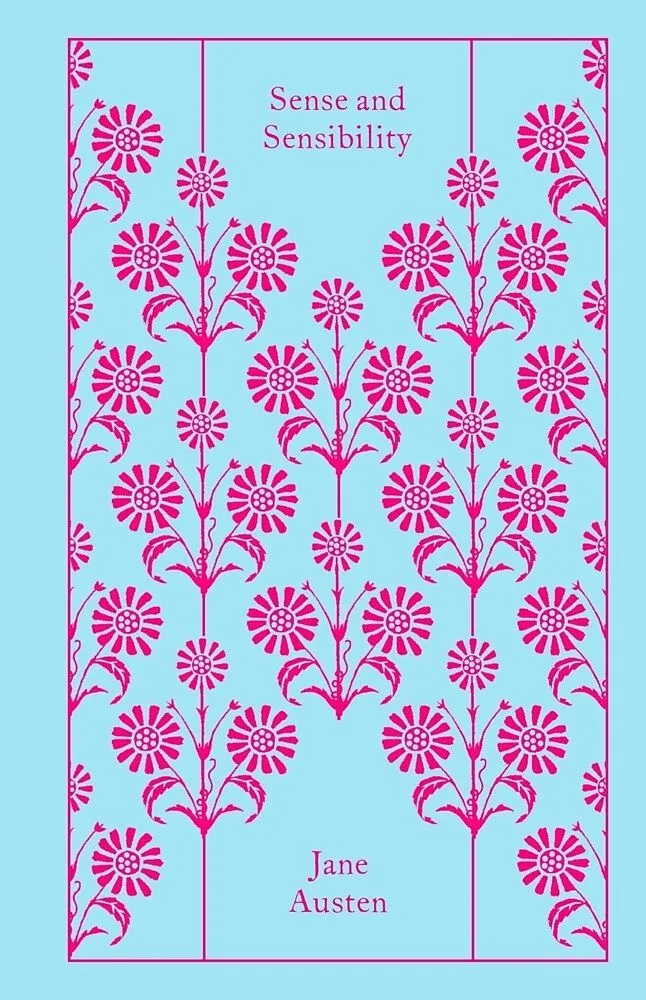
Sense and Sensibility
Beschreibung
Zusatztext "As nearly flawless as any fiction could be." Eudora Welty Informationen zum Autor Jane Austen Klappentext Part of Penguin's beautiful hardback Clothbound Classics series, designed by the award-winning Coralie Bickford-Smith, these delectable and co...Format auswählen
- Fester EinbandCHF 26.30
- Kartonierter EinbandCHF 14.60
- E-Book (epub)CHF 1.50
- Kartonierter EinbandCHF 19.00

Wird oft zusammen gekauft
Andere Kunden kauften auch
Beschreibung
Zusatztext "As nearly flawless as any fiction could be." Eudora Welty Informationen zum Autor Jane Austen Klappentext Part of Penguin's beautiful hardback Clothbound Classics series, designed by the award-winning Coralie Bickford-Smith, these delectable and collectible editions are bound in high-quality colourful, tactile cloth with foil stamped into the design. Marianne Dashwood wears her heart on her sleeve, and when she falls in love with the dashing but unsuitable John Willoughby she ignores her sister Elinor's warning that her impulsive behaviour leaves her open to gossip and innuendo. Meanwhile Elinor, always sensitive to social convention, is struggling to conceal her own romantic disappointment, even from those closest to her. Through their parallel experience of love - and its threatened loss - the sisters learn that sense must mix with sensibility if they are to find personal happiness in a society where status and money govern the rules of love.Sense and Sensibility, the first of those metaphorical bits of "ivory" on which Jane Austen said she worked with "so fine a brush," jackhammers away at the idea that to conjecture is a vain and hopeless reflex of the mind. But I´ll venture this much: If she´d done nothing else, we´d still be in awe of her. Wuthering Heights alone put Emily Brontë in the pantheon, and her sister Charlotte and their older contemporary Mary Shelley might as well have saved themselves the trouble of writing anything but Jane Eyre and Frankenstein . Sense and Sensibility , published in 1811, is at least as mighty a work as any of these, and smarter than all three put together. And it would surely impress us even more without Pride and Prejudice (1813), Mansfield Park (1814), and Emma (1815) towering just up ahead. Austen wrote its ur-version, Elinor and Marianne , when she was nineteen, a year before First Impressions , which became Pride and Prejudice ; she reconceived it as Sense and Sensibility when she was twenty-two, and she was thirty-six when it finally appeared. Like most first novels, it lays out what will be its author´s lasting preoccupations: the "three or four families in a country village" (which Austen told her niece, in an often-quoted letter, was "the very thing to work on"). The interlocking anxieties over marriages, estates, and ecclesiastical "livings." The secrets, deceptions, and self-deceptions that take several hundred pages to straighten out-to the extent that they get straightened out. The radical skepticism about human knowledge, human communication, and human possibility that informs almost every scene right up to the sort-of-happy ending. And the distinctive characters-the negligent or overindulgent parents, the bifurcating siblings (smart sister, beautiful sister; serious brother, coxcomb brother), the charming, corrupted young libertines. Unlike most first novels, though, Sense and Sensibility doesn´t need our indulgence. It´s good to go. In the novels to come, Elinor Dashwood will morph into Anne Elliott and Elizabeth Bennet (who will morph into Emma Woodhouse); Edward Ferrars into Edmund Bertram, Mr. Knightley, Henry Tilney, and Captain Wentworth; Willoughby into George Wickham and Henry Crawford. But the characters in Sense and Sensibility stand convincingly on their own, every bit as memorable as their later avatars. If Austen doesn´t have quite the Caliban-to-Ariel range of a Shakespeare, she can still conjure up and sympathize with both Mrs. Jennings-the "rather vulgar" busybody with a borderline-unwholesome interest in young people´s love lives, fits of refreshing horse sense, and a ruggedly good heart-and Marianne Dashwood, a wittily observed case study in Romanticism, a compassionately observed case study in sublimated adolescent sexuality, and a humorously observed case study in humorlessness. "I should hardly call her a live...
"As nearly flawless as any fiction could be."
—Eudora Welty
Autorentext
Jane Austen was born on December 16, 1775, in Steventon, a small village in Hampshire, England. As a girl, she wrote stories, including burlesques of popular romances. She lived with her family in Steventon until her father, a clergyman in the Church of England, retired in 1801. After his death, in 1805, she, her mother, and her sister did not have a settled home until 1809, when they moved to Chawton, Hampshire. There she was extraordinarily productive, revising three novels and writing three more from scratch. Published during her lifetime were Sense and Sensibility (1811), Pride and Prejudice (1813), Mansfield Park (1814), and Emma (1815). Austen died on July 18, 1817, in Winchester, where she was receiving medical treatment, and was buried in that city’s cathedral. Two more novels, Northanger Abbey and Persuasion, were published posthumously in 1817 with a biographical notice by her brother Henry Austen, the first formal announcement of her authorship. She also left two earlier compositions: a short epistolary novel, Lady Susan, and an unfinished novel, The Watsons. At the time of her death, she was working on a new novel, Sanditon, a fragmentary draft of which survives.
Klappentext
**Part of Penguin's beautiful hardback Clothbound Classics series, designed by the award-winning Coralie Bickford-Smith, these delectable and collectible editions are bound in high-quality colorful, tactile cloth with foil stamped into the design.
**
Jane Austen's timeless tale of sisters navigating love and loss.
Marianne Dashwood wears her heart on her sleeve, and when she falls in love with the dashing but unsuitable John Willoughby, she ignores her sister Elinor's warning that her impulsive behavior leaves her open to gossip and innuendo. Meanwhile Elinor, always sensitive to social convention, is struggling to conceal her own romantic disappointment, even from those closest to her. Through their parallel experience of love—and its threatened loss—the sisters learn that sense must mix with sensibility if they are to find personal happiness in a society where status and money govern the rules of love. The Penguin Classics Deluxe Edition includes an introduction, glossary, contextual essays, suggestions for further exploration, and illustrations from early editions of Sense and Sensibility, written and edited by Devoney Looser.
Penguin Classics is the leading publisher of classic literature in the English-speaking world, representing a global bookshelf of the best works throughout history and across genres and disciplines. Readers trust the series to provide authoritative texts enhanced by introductions and notes by distinguished scholars and contemporary authors, as well as up-to-date translations by award-winning translators.
Zusammenfassung
Marianne Dashwood wears her heart on her sleeve, and when she falls in love with the dashing but unsuitable John Willoughby she ignores her sister Elinor's warning that her impulsive behaviour leaves her open to gossip and innuendo.
Leseprobe
Sense and Sensibility, the first of those metaphorical bits of "ivory" on which Jane Austen said she worked with "so fine a brush," jackhammers away at the idea that to conjecture is a vain and hopeless reflex of the mind. But I'll venture this much: If she'd done nothing else, we'd still be in awe of her. Wuthering Heights alone put Emily Brontë in the pantheon, and her sister Charlotte and their older contemporary Mary Shelley might as well have saved themselves the trouble of writing anything but Jane Eyre and Frankenstein. Sense and Sensibility, published in 1811, is at least as mighty a work as any of these, and smarter than all three put together. And it would surely impress us even more without Pride and Prejudice (1813), Mansfield Park (1814), and Emma (1815) towering just up ahead. Austen wrote its ur-version, Elinor and Marianne, when she was nineteen, a…