Beschreibung
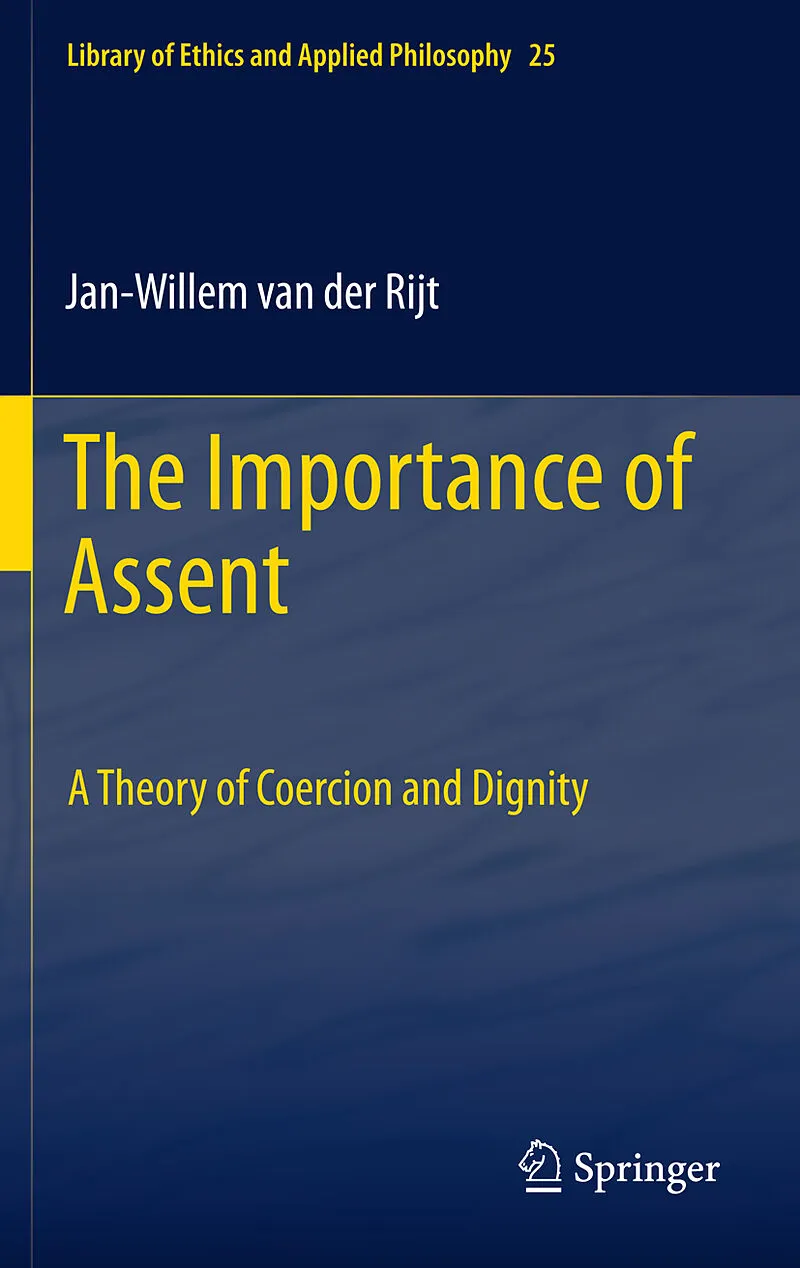
This book argues that respect for persons as moral agents requires consideration of individuals' subjective moral judgments, independent of their validity or reasonableness. The focus is on coercion and domination, key ideas in moral and political theory....This book argues that respect for persons as moral agents requires consideration of individuals' subjective moral judgments, independent of their validity or reasonableness. The focus is on coercion and domination, key ideas in moral and political theory.
The view that persons are entitled to respect because of their moral agency is commonplace in contemporary moral theory. What exactly this respect entails, however, is far less uncontroversial. In this book, Van der Rijt argues powerfully that this respect for persons' moral agency must also encompass respect for their subjective moral judgments even when these judgments can be shown to be fundamentally flawed. Van der Rijt scrutinises the role persons' subjective moral judgments play within the context of coercion and domination. His fresh, original analysis of Kant's third formulation of the Categorical Imperative reveals how these judgments are intimately connected to a person's dignity. The result is an insightful new account of coercion, a novel Kantian reformulation of the republican notion of non-domination and a compelling, innovative argument in favour of retributive justice."In this admirably clear and insightful work, Van der Rijt develops an original account of coercion and dignity. On the basis of his analysis of the relation between these two concepts, he also provides an intriguing new angle on the nature of republicanism. I recommend this book to anyone interested in freedom and power and their roles in normative political theory."Ian Carter - University of Pavia"In this carefully argued and original study Jan-Willem van der Rijt offers an analysis of coercion, a broadly Kantian argument that coercion is an affront to dignity, and an illuminating contrast with Philip Pettit's republicanism. A most welcome contribution."Thomas E. Hill, Jr. - University of North Carolina at Chapel Hill"Jan-Willem van der Rijt has written a well argued, original book that will prove to be extremely helpful for the philosophical inquiry of the relationship between coercion and human dignity as well as for the assessment of republicanism and its consequences."Ralf Stoecker - Universityof Potsdam
Shows the importance of subjective moral judgments to moral theory and practice Brings together Kantian and republican moral theory Contains a new argument in favour of retributivism based on the dignity of victims Presents a new interpretation of moral law-giving as the basis for the dignity of persons
Inhalt
Acknowledgements.- Introduction.- Part I: Coercion.- 1. The Analysis of Coercion. 1.1 Introduction 1.2 Evaluating coercion accounts 1.3 The position of the coerced 1.4 The role of the coercer 1.5 Summary.- 2. Coercion and Moral Judgment 2.1 A definition of coercion 2.2 Discussion 2.3 Applications.- Part II: Dignity and Interference .- 3. A Kantian Perspective 3.1 Introduction 3.2 Considering oneself wronged 3.3 Moral agents, chosen ends, and wrongful interference .- 4. Moral Objections and the Categorical Imperative 4.1 Introduction 4.2 Coercion and disagreement 4.3 The Formulae of Universal Law and End-in-Itself 4.4 The Formula of the Commonwealth of Ends 4.5 Conclusion.- Part III: A Kantian Reconstruction of Republicanism 5. Republicanism 5.1 Introduction 5.2 Republican freedom.- 6. Non-domination and Dignity 6.1 Introduction 6.2 Dignity and avowed interests 6.3 Immunity vs. impunity 6.4 Implications I 6.5 Implications II: Retributive justice 6.6 Summary.- 7. Conclusion 7.1 Summary_ 7.2 Dignity and sincerity.- Abbreviations to Kant's Works.- References.- Index.