
IHR WARENKORB IST AKTUELL LEER.
Haben Sie noch nichts passendes gefunden? Stöbern Sie durch unser komplettes Sortiment.
Oder melden Sie sich an bzw. registrieren Sie sich.
- Kostenlose Lieferung
- Kauf auf Rechnung
- Ex Libris Tiefpreis
- Filiallieferung und 650+ Abholorte
- Rabatt-Bons als Club-Mitglied
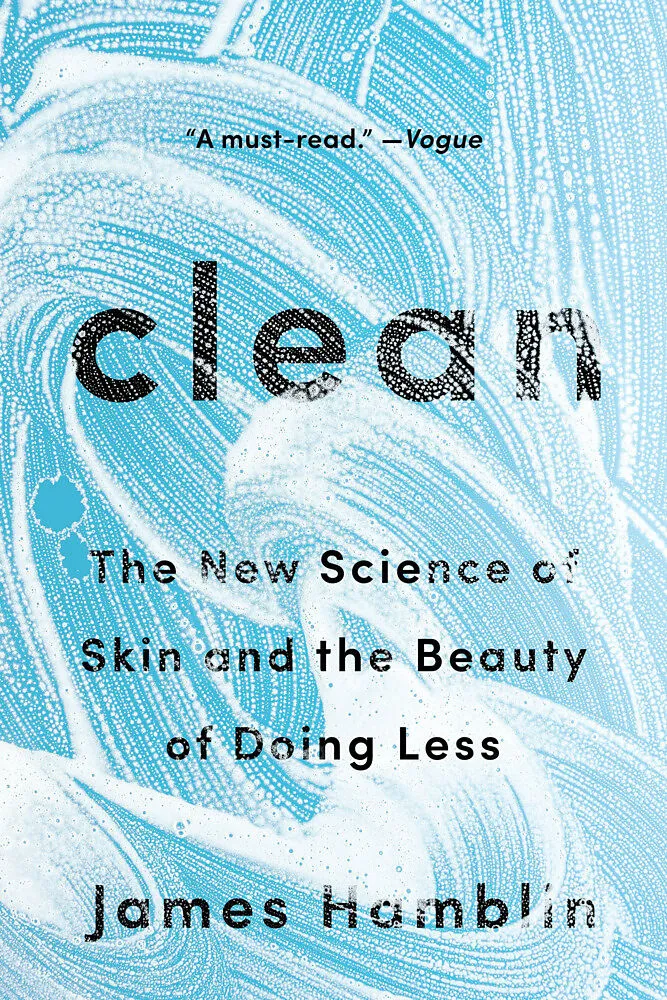
Clean
Beschreibung
Named a Best Book of 2020 by NPR and Vanity Fair One of Smithsonian's Ten Best Science Books of 2020 A searching and vital explication of germ theory, social norms, and what the modern era is really doing to our bodies and our psyches. Vanity Fair A preve...Format auswählen
- Kartonierter Einband (Kt)CHF 16.60
- Fester EinbandCHF 26.45

Wird oft zusammen gekauft
Andere Kunden kauften auch
Beschreibung
****Named a Best Book of 2020 by NPR and Vanity Fair
One of Smithsonian's Ten Best Science Books of 2020*
*
A searching and vital explication of germ theory, social norms, and what the modern era is really doing to our bodies and our psyches. Vanity Fair**
A preventative medicine physician and staff writer for The Atlantic explains the surprising and unintended effects of our hygiene practices in this informative and entertaining introduction to the new science of skin microbes and probiotics.**
Keeping skin healthy is a booming industry, and yet it seems like almost no one agrees on what actually works. Confusing messages from health authorities and ineffective treatments have left many people desperate for reliable solutions. An enormous alternative industry is filling the void, selling products that are often of questionable safety and totally unknown effectiveness.
In Clean, doctor and journalist James Hamblin explores how we got here, examining the science and culture of how we care for our skin today. He talks to dermatologists, microbiologists, allergists, immunologists, aestheticians, bar-soap enthusiasts, venture capitalists, Amish people, theologians, and straight-up scam artists, trying to figure out what it really means to be clean. He even experiments with giving up showers entirely, and discovers that he is not alone.
Along the way, he realizes that most of our standards of cleanliness are less related to health than most people think. A major part of the picture has been missing: a little-known ecosystem known as the skin microbiome the trillions of microbes that live on our skin and in our pores. These microbes are not dangerous; they re more like an outer layer of skin that no one knew we had, and they influence everything from acne, eczema, and dry skin, to how we smell. The new goal of skin care will be to cultivate a healthy biome and to embrace the meaning of clean in the natural sense. This can mean doing much less, saving time, money, energy, water, and plastic bottles in the process.
Lucid, accessible, and deeply researched, Clean explores the ongoing, radical change in the way we think about our skin, introducing readers to the emerging science that will be at the forefront of health and wellness conversations in coming years.
Autorentext
James Hamblin
Klappentext
Our hygiene practices can have surprising and unintended effects, as this informative and entertaining introduction to the new science of skin microbes and probiotics reveals
Keeping skin healthy is a booming industry, and yet it seems like almost no one agrees on what actually works. Confusing messages from health authorities and ine¬ffective treatments have left many people desperate for reliable solutions. An enormous alternative industry is filling the void, selling products that are often of questionable safety and totally unknown effectiveness.
In Clean, doctor and journalist James Hamblin examines how the health of our skin is influenced by the world around us in unexpected ways. He argues that a major part of the picture has been missing: a little-known ecosystem known as the skin microbiome-the trillions of microbes that live on our skin and in our pores. These microbes are not dangerous; they're more like an outer layer of skin that no one knew we had, and they influence everything from acne, eczema, and dry skin to how our bodies smell.
To determine how this new understanding of skin will change our hygiene and skin-care habits, Hamblin talks to dermatologists, probiotic researchers, allergists, immunologists, estheticians, bar-soap enthusiasts, venture capitalists, Amish people, theologians, and straight-up scam artists. He even experiments with giving up showers entirely, and discovers that he is not alone. Along the way he realizes that most of our standards of cleanliness are less related to health than most people think. Embracing a new definition of "clean" could mean doing much less, saving time, money, energy, water, and plastic bottles in the process.
Lucid, accessible, and deeply researched, Clean explores the ongoing, radical change in the way we think about our skin, introducing the emerging science that will be at the forefront of health conversations in coming years.
Zusammenfassung
Fun, interesting and credible. *The New York Times Book Review
*
A searching and vital explication of germ theory, social norms, and what the modern era is really doing to our bodies and our psyches. Vanity Fair
A breezy social history with a health angle. . . . the science writing is accessible and articulate graceful even and there are some wonderful surprises *The Wall Street Journal
*"Deeply researched. . . . James Hamblin explores the history behind the human obsession with cleanliness and the colossal industry driving our current desire to scrub every inch of our bodies." Smithsonian
"There s a line. . . between how we lather up to avoid disease and how we scrub down to feel clean. Where you draw it may help or harm the microscopic creatures living on your body s largest organ. Who better to investigate than a doctor and journalist who hasn t showered in years? NPR
A fascinating, rich mix of science, marketing and culture that will have you questioning everything you think you know about your daily skincare routine. BookPage
Fascinating . . . Hamblin takes us on a slippery ride through the soap marketing of the twentieth century, sharing some of the racial, class, and gender undertones many of us probably missed, and introduces us to fascinating people. Spirituality & Health
Clean is a thought-provoking and deeply-researched investigation into the life and times of our skin. From unraveling the history of soap to profiling our many microbes, Hamblin s analysis is anything but skin deep. Bianca Bosker, author of Cork Dork
James Hamblin s characteristic mix of clarity and levity shine through every single page. You'll never think about your largest organ the same way again. David Epstein, author of Range and The Sports Gene
A wide-ranging study that shows how cleanliness was not always next to godliness. *Kirkus Reviews
*
Leseprobe
I
Awaken
I walk off the elevator into a palatial, sun-soaked office looming seven stories over Bryant Park in Manhattan. It's the fall of 2018, some three years since I last washed my face. I'm here to see what the effects have been.
The herringbone wood floors are decorated with floral bouquets as tall as any human. The fireplace has a white mantel, and ethereal flute-based music wafts over me from somewhere. A bed draped in white linens awaits under a chandelier. This is the headquarters of an up-and-blazingly-coming skin care company called Peach and Lily. It's based in the Korean tradition and part of a Westernized movement commonly known as "K-beauty" that centers on maintenance of one's skin, often through a ritual of cleansing, toning, moisturizing, and sheet masking that can include ten or more steps.
The company's founder, Alicia Yoon, holds an MBA at Harvard Business School. She is also an esthetician, perhaps best known for her work in popularizing the application of snail secretions to the skin. In just two years, Yoon took Peach and Lily from a small internet boutique to a full line of original products distributed at retailers like Urban Outfitters and CVS. The company arrived on the crest of an enormous wave. In South Korea, where K-beauty is based on long-standing tradition, the industry has exploded to more than $13 billion per year. Its newfound popularity in the U.S. has helped make skin care a faster-growing segment of the beauty industry than makeup. Sales of high-end skin care grew 13 percent in 2018 alone, significantly faster than …