Hilma af Klint
Beschreibung
A close look at a portfolio of forty-six botanical drawings by Hilma af Klint, and the abstract diagrams the artist developed to express the interconnectedness of the natural and spiritual realms. ''I have shown,'' wrote the Swedish artist Hilma af Klint, ''th...Format auswählen
- Fester EinbandCHF 65.60
Wird oft zusammen gekauft
Andere Kunden kauften auch
Beschreibung
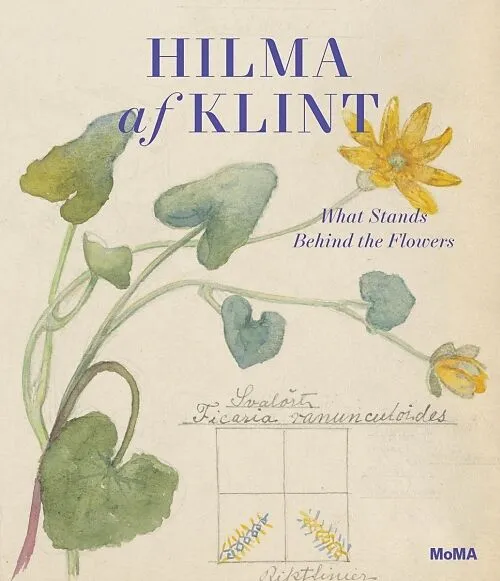
A close look at a portfolio of forty-six botanical drawings by Hilma af Klint, and the abstract diagrams the artist developed to express the interconnectedness of the natural and spiritual realms. ''I have shown,'' wrote the Swedish artist Hilma af Klint, ''that there is a connection between the plant world and the world of the soul.'' Her Nature Studies portfolio (1919-20), recently acquired by The Museum of Modern Art, New York, comprises 46 sheets of exquisitely rendered botanical drawings. Documenting each plant''s particular qualities along with Latin names, Swedish common names, and dates of observation, af Klint follows the typical format of a botanical reference book, known as a Flora; however, hers is a Flora of the spirit, a mapping of the natural world in spiritual terms that would stand alongside any scientific resource. Carefully drawn and vividly colored plants, flowers, and lichen are juxtaposed with geometric forms: a blooming sunflower is echoed by three nested circles, a central dot, a solid red line, a ring of points; a white narcissus is set against a pinwheel of softened primary hues; a cluster of budding branches is accompanied by checkerboard boxes of dots and stroke. Published in conjunction with the first exhibition of the rare portfolio, Hilma af Klint: What Stands Behind the Flowers presents the 46 botanical drawings alongside contextualizing works, as well as translations of her notes and previously unpublished texts from her own journals. An overview essay by curator Jodi Hauptman examines af Klint''s strong connection to the natural and spiritual realms; texts by Ewa Lajer-Burcharth, Lena Struwe, and Laura Neufeld unpack the inspiration, imagery, and beliefs behind these drawings.
Autorentext
Jodi Hauptman is The Richard Roth Senior Curator in the Department of Drawings and Prints at The Museum of Modern Art, New York.
Ewa Lajer-Burcharth is the William Dorr Boardman Professor of Fine Arts in the Department of History of Art and Architecture at Harvard University.
Laura Neufeld is Associate Paper Conservator in the David Booth Conservation Department at MoMA.
Lena Struwe is the director of the Chrysler Herbarium and professor at the School of Environmental and Biological Sciences at Rutgers University.
Klappentext
Af Klint?s exquisitely rendered botanical portfolio reveals a deep spiritual engagement with the flora of her native Sweden
Across the spring and summer seasons of 1919 and 1920, Swedish artist Hilma af Klint engaged in a period of intense observation of nature, venturing into forests and fields and drawing the flowers she found there. The resulting 46 sheets comprise her Nature Studies portfolio, recently acquired by the Museum of Modern Art, New York. In pencil and jewel-toned watercolor, af Klint juxtaposed exquisitely rendered blossoms with enigmatic diagrams: a blooming sunflower is echoed by nested circles; lily of the valley is joined by a colorful checkerboard; catsfoot is set against a pair of mirrored spirals. Together, these two modes?representational and abstract?demonstrate the artist?s belief that close observation of nature reveals "what stands behind the flowers": ineffable aspects of the human character.
Published in conjunction with the first public exhibition of this rare portfolio, Hilma af Klint: What Stands Behind the Flowers presents the drawings alongside contextualizing artworks and translations of the artist?s previously unpublished writings. An overview essay by curator Jodi Hauptman explores af Klint?s portfolio and the circumstances of its creation; texts by Ewa Lajer-Burcharth, Laura Neufeld and Lena Struwe unpack the imagery, materiality and botanical knowledge behind these works.
Hilma af Klint (1862?1944) trained at Stockholm?s Royal Academy of Fine Arts and established herself as a professional artist. In the first decade of the 20th century, she developed a unique abstract vocabulary, some years earlier than her peers. Whether on canvas or on paper, her singular work is informed by her spiritual investigations and, as this project demonstrates, an interest in and attunement to the natural world.