
IHR WARENKORB IST AKTUELL LEER.
Haben Sie noch nichts passendes gefunden? Stöbern Sie durch unser komplettes Sortiment.
Oder melden Sie sich an bzw. registrieren Sie sich.
- Kostenlose Lieferung
- Kauf auf Rechnung
- Ex Libris Tiefpreis
- Filiallieferung und 650+ Abholorte
- Rabatt-Bons als Club-Mitglied
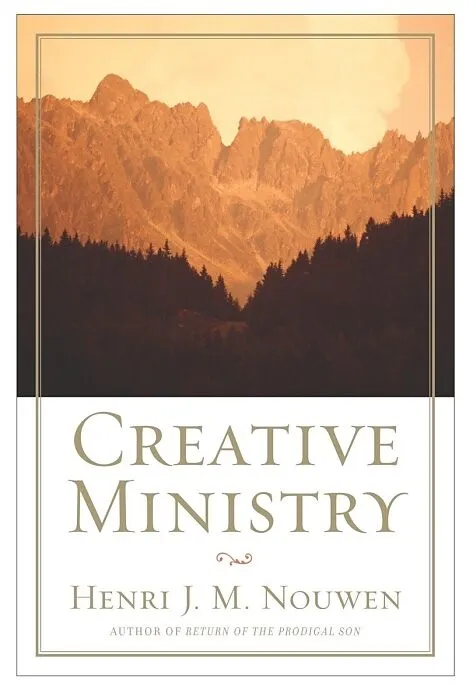
Creative Ministry
Beschreibung
Informationen zum Autor Henri J. M. Nouwen Klappentext According to Henri Nouwen, the bestselling spiritual writer, every Christian is a ministertrying to live his life in the light of the Gospel. Creative Ministry is a thoughtful examination of the various co...Format auswählen
- Kartonierter EinbandCHF 13.85

Wird oft zusammen gekauft
Andere Kunden kauften auch
Beschreibung
Informationen zum Autor Henri J. M. Nouwen Klappentext According to Henri Nouwen, the bestselling spiritual writer, every Christian is a ministertrying to live his life in the light of the Gospel. Creative Ministry is a thoughtful examination of the various complex tasks that are part of that way of life.Separate chapters treat each of the five areas that Nouwen considers the primary responsibilities of the minister: teaching, preaching, counseling, organizing, and celebrating. He shows how these main functions are inextricably tied to the minister's spiritual life and why they must be directed toward a creative dialogue with other Christians if they are to be rewarding. It is also essential, he maintains, that the minister leave himself open, take risks, and "lay down his life for his friends in order to give new life."There is today a great hunger for a new spirituality, observes Nouwen, a hunger that requires new and creative forms of ministry. Citing numerous examples from his rich experience, the author offers practical advice for infusing daily pastoral work with meaning. The result is an insightful presentation and a resonant spiritual guide for every man and woman who wants to be of service.chapter 1 Beyond the Transference of Knowledge Teaching From a Violent to a Redemptive Way of Learning Introduction There was a time when God sent angels from Heaven with an urgent message for us. God still does. A few months ago, a Vietnamese Buddhist monk came to Holland and one day walked into the house where I lived. He was a thin man whom you would be afraid to touch. But his clear, fearless eyes radiated an insight so deeply impregnated with affection that the only thing you could hope for was understanding. While he looked straight into my eyes, he said: "There was a man on a horse galloping swiftly along the road. An old farmer standing in the fields, seeing him pass by, called out, 'Hey, rider, where are you going?' The rider turned around and shouted back, 'Don't ask me, just ask my horse!' " The monk looked at me and said: "That is your condition. You are no longer master over your own destiny. You have lost control over the great powers that pull you forward toward an unknown direction. You have become a passive victim of an ongoing movement which you do not understand." It seemed as if he carved his message on my skin like a tattoo and then asked me to let it be seen wherever I go. When we look at the situation of those who teach and those who are taught, the same question comes to mind: Do teachers and students really know where their horses are going? Students are men and women who are supposed to be in the exceptional situation that allows them to reflect on themselves and their society under the guidance of competent teachers. They have set aside a certain amount of time in their lives to look explicitly at their own condition, and at the condition of the world in which they live, in the hope of being better able to understand and act accordingly. But when we realize that today a "school" is no longer a "schola," which means free time, but has become a highly complex industry that prepares people for an even more complex society, we might become receptive to the words of the Vietnamese Buddhist monk. If teaching means providing people with enough academic weapons to outdo other people, to make more money, to have a better career, and to get more esteem in the neighborhood, we had better start asking ourselves if there is any word from God that supports this approach. The most universal and most appreciated role of the Christian ministry through the ages has been teaching. Wherever Christians went to be of service, they always considered teaching as one of their primary tasks because of their conviction that increasing insight into the human condition and the world is the way to new freedom and new ways of life. And althoug...
Autorentext
Henri J. M. Nouwen
Klappentext
According to Henri Nouwen, the bestselling spiritual writer, every Christian is a minister—trying to live his life in the light of the Gospel. Creative Ministry is a thoughtful examination of the various complex tasks that are part of that way of life.Separate chapters treat each of the five areas that Nouwen considers the primary responsibilities of the minister: teaching, preaching, counseling, organizing, and celebrating. He shows how these main functions are inextricably tied to the minister's spiritual life and why they must be directed toward a creative dialogue with other Christians if they are to be rewarding. It is also essential, he maintains, that the minister leave himself open, take risks, and "lay down his life for his friends” in order to give new life."There is today a great hunger for a new spirituality,” observes Nouwen, a hunger that requires new and creative forms of ministry. Citing numerous examples from his rich experience, the author offers practical advice for infusing daily pastoral work with meaning. The result is an insightful presentation and a resonant spiritual guide for every man and woman who wants to be of service.
Leseprobe
chapter 1
Beyond the Transference of Knowledge
Teaching
From a Violent to a Redemptive Way of Learning
Introduction
There was a time when God sent angels from Heaven with an urgent message for us. God still does. A few months ago, a Vietnamese Buddhist monk came to Holland and one day walked into the house where I lived. He was a thin man whom you would be afraid to touch. But his clear, fearless eyes radiated an insight so deeply impregnated with affection that the only thing you could hope for was understanding. While he looked straight into my eyes, he said: "There was a man on a horse galloping swiftly along the road. An old farmer standing in the fields, seeing him pass by, called out, 'Hey, rider, where are you going?' The rider turned around and shouted back, 'Don't ask me, just ask my horse!' "
The monk looked at me and said: "That is your condition. You are no longer master over your own destiny. You have lost control over the great powers that pull you forward toward an unknown direction. You have become a passive victim of an ongoing movement which you do not understand." It seemed as if he carved his message on my skin like a tattoo and then asked me to let it be seen wherever I go.
When we look at the situation of those who teach and those who are taught, the same question comes to mind: Do teachers and students really know where their horses are going?
Students are men and women who are supposed to be in the exceptional situation that allows them to reflect on themselves and their society under the guidance of competent teachers. They have set aside a certain amount of time in their lives to look explicitly at their own condition, and at the condition of the world in which they live, in the hope of being better able to understand and act accordingly.
But when we realize that today a "school" is no longer a "schola," which means free time, but has become a highly complex industry that prepares people for an even more complex society, we might become receptive to the words of the Vietnamese Buddhist monk. If teaching means providing people with enough academic weapons to outdo other people, to make more money, to have a better career, and to get more esteem in the neighborhood, we had better start asking ourselves if there is any word from God that supports this approach.
The most universal and most appreciated role of the Christian ministry through the ages has been teaching. Wherever Christians went to be of service, they always considered teaching as one of their primary tasks because of their conviction that increasing insight into the human condition and the world is the way to new freedom and new ways of life. And although Christian churches frequently failed to live up to this conviction, even pr…