Beschreibung
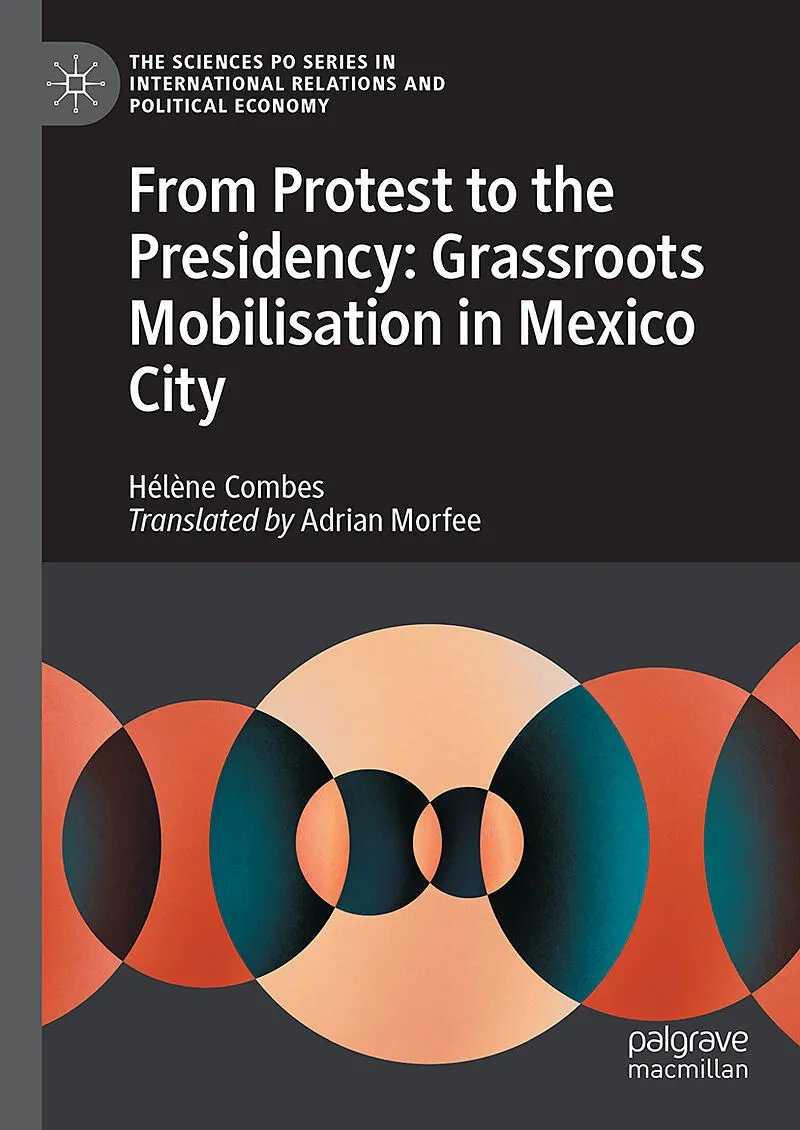
How does an occupation movement become a political force capable of taking power? This book explores Mexico's 2006 mass encampment in Mexico Cityan unprecedented 48-day protest sparked by a contested presidential election. From this occupation emerged new mob...**How does an occupation movement become a political force capable of taking power?**
This book explores Mexico's 2006 mass encampment in Mexico Cityan unprecedented 48-day protest sparked by a contested presidential election. From this occupation emerged new mobilisations against privatisation and inequality, reshaping the Mexican left and paving the way for electoral victories in 2018 and 2024. Drawing on long-term fieldwork, the book traces activist networks, grassroots organising, and innovative repertoires of action, offering insights into how movements transform into enduring political parties. Through the stories of key figures, including Claudia Sheinbaum and Andrés Manuel López Obrador, it provides a human and sociological account of political commitment, revitalising debates on occupations and social movements worldwide
Unique work that studies the 2 dimensions of social mobilizations & contruction of a political party in Mexico, An original narrative construction for a social science book, which makes it a real page turner A book that mobilizes both qualitative and quantitative methods in the social sciences
Autorentext
Hélène Combes is a CNRS Research Professor and member of the Center for International Studies (CERI-Sciences Po/CNRS). Previous editor of the journal Critique internationale. Revue comparative de sciences sociales (Presses de Sciences Po, 2017-2023) , her research focuses on Mexican politics, political parties and social movements.
Klappentext
What are the lasting impacts of transgressive collective action? Shuttling vividly between individual activists' lives and protest dynamicsand creatively combining strands of scholarship that seldom talk to one anotherthis book makes a persuasive case about the long-term consequences of el plantón, a potent instance of disruptive mass action. There are plenty of important and original lessons for readers interested in contemporary Latin American politics and in social movements in general.
Javier Auyero, University of Texas at Austin, Ikerbasque Research Professor at University of the Basque Country.
Hélène Combes has written the only sustained ethnography and sociological history of the rise of MORENA and its transformation from a social movementtied to electoral protest to a mass political party, and culminating in its massive 2018 electoral triumph in Mexico's federal elections. Combes's sophisticated and empirically rich study explains the mechanics of this unusual and deeply consequential social process.
Claudio Lomnitz, Columbia University.
**How does an occupation movement become a political force capable of taking power?**
This book explores Mexico's 2006 mass encampment in Mexico Cityan unprecedented 48-day protest sparked by a contested presidential election. From this occupation emerged new mobilisations against privatisation and inequality, reshaping the Mexican left and paving the way for electoral victories in 2018 and 2024. Drawing on long-term fieldwork, the book traces activist networks, grassroots organising, and innovative repertoires of action, offering insights into how movements transform into enduring political parties. Through the stories of key figures, including Claudia Sheinbaum and Andrés Manuel López Obrador, it provides a human and sociological account of political commitment, revitalising debates on occupations and social movements worldwide.
Hélène Combes is a CNRS Research Professor and member of the Center for International Studies (CERI-Sciences Po/CNRS). Previous editor of the journal Critique internationale. Revue comparative de sciences sociales (Presses de Sciences Po, 2017-2023) , her research focuses on Mexican politics, political parties and social movements.
Inhalt
Chapter 1 An angerfuelled camp.- Chapter 2 Women on a war footing: Mobilising the Adelitas.- Chapter 3 Turning the protest movement into an organisation.- Chapter 4 Holding camp, holding rank.- Chapter 5 Ambivalent commitment and its relationship to social context.- Chapter 6 Social and activist(in)felicity.- Chapter 7 When activists are created by the district.