
IHR WARENKORB IST AKTUELL LEER.
Haben Sie noch nichts passendes gefunden? Stöbern Sie durch unser komplettes Sortiment.
Oder melden Sie sich an bzw. registrieren Sie sich.
- Kostenlose Lieferung
- Kauf auf Rechnung
- Ex Libris Tiefpreis
- Filiallieferung und 650+ Abholorte
- Rabatt-Bons als Club-Mitglied
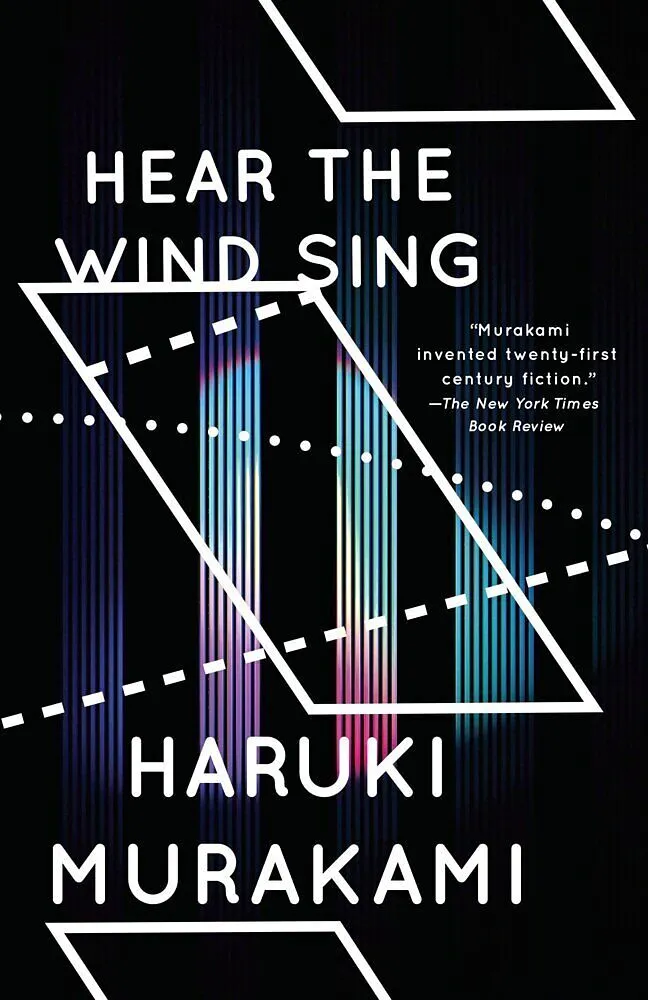
Wind / Pinball
Beschreibung
The first two short novels--never before widely available in the U.S.--by the internationally acclaimed writer, newly translated, in one volume, with a new introduction by the author. Zusatztext More than anyone! Haruki Murakami invented 21st-century fiction. ...Format auswählen
- Kartonierter EinbandCHF 15.65
- Fester EinbandCHF 27.20

Wird oft zusammen gekauft
Andere Kunden kauften auch
Beschreibung
The first two short novels--never before widely available in the U.S.--by the internationally acclaimed writer, newly translated, in one volume, with a new introduction by the author.
Zusatztext More than anyone! Haruki Murakami invented 21st-century fiction. . . . He is the novelist of our mash-up epoch. . . . Murakami's atomic sensibility characterizes world literature." The New York Times Book Review Powerful! unsettling! mature novels. . . . Murakami gives his characters' quirks a humanizing legitimacy. Chicago Tribune Early Murakami isn't Murakami-in-the-making! it's already and entirely Murakami. The Guardian Both books have that unique blend of melancholy and beauty that Murakami manages so well; they are mysterious! moreish. . . . What stands out . . . is the writing! beautiful in its simplicity! and also the deadpan humour and one-liners. . . . The dialogue is sparklingly clever! drunkenly witty. The Independent A fresh! heart-warming dose of the Japanese master. . . . Signals that would become familiar in Mr Murakami's fiction make an early appearance: characters alienated by society and afflicted by loneliness and ennui; quotidian detail that is! by turn! banal and fascinating; musical references; supernatural undertones; dark dreams and black humour. The Economist Murakami's trademark postmodernist flourishes abound . . . and never fail to surprise and delight. O! The Oprah Magazine Short! darkly magical coming-of-age tales. Elle Indispensable. . . . There is evidence of the themes! motifs and yes! obsessions! that would come to infuse his later books. The Free Lance-Star (Fredericksburg) An invaluable addition to the canon. Toronto Star A great treatboth for Murakami enthusiasts and for the more casually interested reader. . . . A pair of early literary excursions that are never less than insightful and intelligent; brisk and diverting; unusual and transporting. The National (UAE) The writing and! above all! Murakami's way of making emotionally resonant images and symbols bump around on the page! and in one's mind! remains fresh! miraculously! more than 35 years on. Evening Standard Informationen zum Autor Haruki Murakami; translated by Ted Goossen Klappentext NATIONAL BESTSELLER Wind/Pinball, a unique two-in-one volume, includes, on one side, Murakami's first novel Hear the Wind Sing. When you flip the book over, you can read his second novel, Pinball, 1973. Each book has its own stunning cover. In the spring of 1978, a young Haruki Murakami sat down at his kitchen table and began to write. The result: two remarkable short novels-Hear the Wind Sing and Pinball, 1973-that launched the career of one of the most acclaimed authors of our time. These powerful, at times surreal, works about two young men coming of age-the unnamed narrator and his friend the Rat-are stories of loneliness, obsession, and eroticism. They bear all the hallmarks of Murakami's later books, and form the first two-thirds, with A Wild Sheep Chase, of the trilogy of the Rat. Widely available in English for the first time ever, newly translated, and featuring a new introduction by Murakami himself, Wind/Pinball gives us a fascinating insight into a great writer's beginnings.The twins woke me up on Thursday morning. Fifteen minutes earlier than usual, but what the heck. I shaved, drank my coffee, and pored over the morning paper, so fresh from the press that its ink looked ready to smear my hands. We have a favor to ask, said one of the twins. Think you can borrow a car on Sunday? said the other. I guess so, I said. Where do you want to go? The reservoir. The reservoir? They nodded. What are you planning to do at the reservoir? Hold a funeral. Who for? The switch panel, of course. I see, I said. And went back to my paper. Unfortuna...
ldquo;More than anyone, Haruki Murakami invented 21st-century fiction. . . . He is the novelist of our mash-up epoch. . . . Murakami’s atomic sensibility characterizes world literature." —The New York Times Book Review
“Powerful, unsettling, mature novels. . . . Murakami gives his characters' quirks a humanizing legitimacy.” —Chicago Tribune
“Early Murakami isn’t Murakami-in-the-making, it’s already and entirely Murakami.” —The Guardian
“Both books have that unique blend of melancholy and beauty that Murakami manages so well; they are mysterious, moreish. . . . What stands out . . . is the writing, beautiful in its simplicity, and also the deadpan humour and one-liners. . . . The dialogue is sparklingly clever, drunkenly witty.” —*The Independent
*“A fresh, heart-warming dose of the Japanese master. . . . Signals that would become familiar in Mr Murakami’s fiction make an early appearance: characters alienated by society and afflicted by loneliness and ennui; quotidian detail that is, by turn, banal and fascinating; musical references; supernatural undertones; dark dreams and black humour.” —The Economist
“Murakami's trademark postmodernist flourishes abound . . . and never fail to surprise and delight.” —O, The Oprah Magazine
“Short, darkly magical coming-of-age tales.” —Elle
“Indispensable. . . . There is evidence of the themes, motifs and yes, obsessions, that would come to infuse his later books.” —The Free Lance-Star (Fredericksburg)
“An invaluable addition to the canon.” —Toronto Star
“A great treat—both for Murakami enthusiasts and for the more casually interested reader. . . . A pair of early literary excursions that are never less than insightful and intelligent; brisk and diverting; unusual and transporting.” —The National (UAE)
“The writing and, above all, Murakami’s way of making emotionally resonant images and symbols bump around on the page, and in one’s mind, remains fresh, miraculously, more than 35 years on.” —Evening Standard
Autorentext
Haruki Murakami; translated by Ted Goossen
Klappentext
NATIONAL BESTSELLER
Wind/Pinball, a unique two-in-one volume, includes, on one side, Murakami's first novel Hear the Wind Sing. When you flip the book over, you can read his second novel, Pinball, 1973. Each book has its own stunning cover.
In the spring of 1978, a young Haruki Murakami sat down at his kitchen table and began to write. The result: two remarkable short novels-Hear the Wind Sing and Pinball, 1973-that launched the career of one of the most acclaimed authors of our time.
These powerful, at times surreal, works about two young men coming of age-the unnamed narrator and his friend the Rat-are stories of loneliness, obsession, and eroticism. They bear all the hallmarks of Murakami's later books, and form the first two-thirds, with A Wild Sheep Chase, of the trilogy of the Rat.
Widely available in English for the first time ever, newly translated, and featuring a new introduction by Murakami himself, Wind/Pinball gives us a fascinating insight into a great writer's beginnings.
Zusammenfassung
**NATIONAL BESTSELLER
Wind/Pinball, a unique two-in-one volume, includes, on one side, Murakami’s first novel* Hear the Wind Sing*. When you flip the book over, you can read his second novel, Pinball, 1973. Each book has its own stunning cover.**
In the spring of 1978, a young Haruki Murakami sat down at his kitchen table and began to write. The result: two remarkable short novels—Hear the Wind Sing and Pinball, 1973—that launched the career of one of the most acclaimed authors of our time.
These powerful, at times surreal, works about two young men coming of age—the unnamed narrator and his friend the Rat—are stories of loneliness, obse…