
IHR WARENKORB IST AKTUELL LEER.
Haben Sie noch nichts passendes gefunden? Stöbern Sie durch unser komplettes Sortiment.
Oder melden Sie sich an bzw. registrieren Sie sich.
- Kostenlose Lieferung
- Kauf auf Rechnung
- Ex Libris Tiefpreis
- Filiallieferung und 650+ Abholorte
- Rabatt-Bons als Club-Mitglied
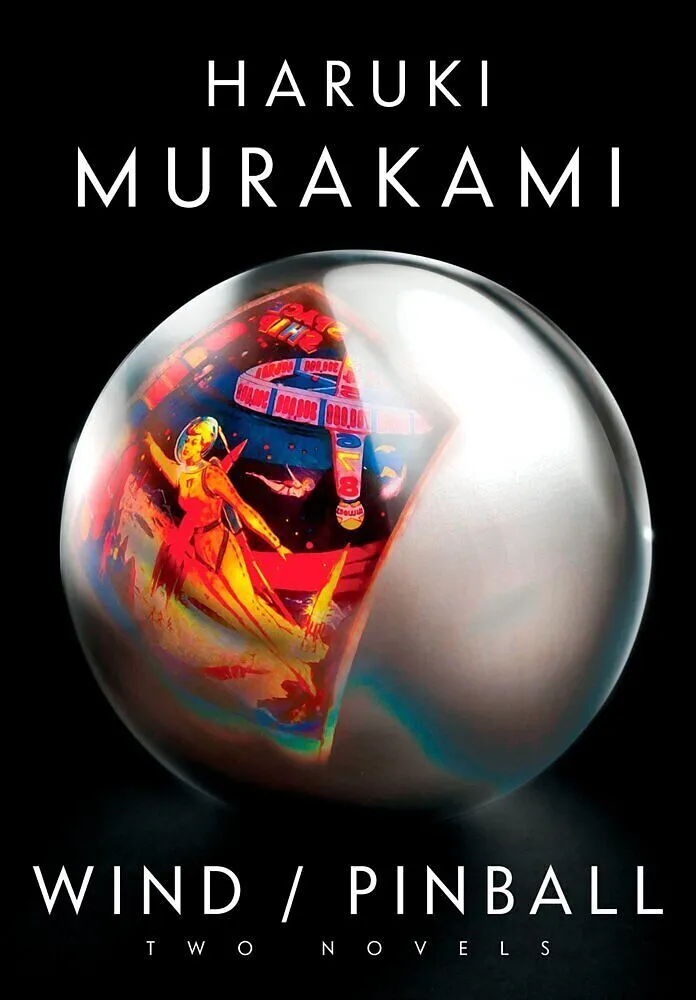
Wind/Pinball
Beschreibung
Zusatztext 41789406 Informationen zum Autor HARUKI MURAKAMI was born in Kyoto in 1949 and now lives near Tokyo. His work has been translated into more than fifty languages, and the most recent of his many international honors is the Jerusalem Prize, whose prev...Format auswählen
- Fester EinbandCHF 27.20

Wird oft zusammen gekauft
Andere Kunden kauften auch
Beschreibung
Zusatztext 41789406 Informationen zum Autor HARUKI MURAKAMI was born in Kyoto in 1949 and now lives near Tokyo. His work has been translated into more than fifty languages, and the most recent of his many international honors is the Jerusalem Prize, whose previous recipients include J. M. Coetzee, Milan Kundera, and V. S. Naipaul. Klappentext NATIONAL BESTSELLER In the spring of 1978, a young Haruki Murakami sat down at his kitchen table and began to write. The result: two remarkable short novels-Hear the Wind Sing and Pinball, 1973-that launched the career of one of the most acclaimed authors of our time. These powerful, at times surreal, works about two young men coming of age-the unnamed narrator and his friend the Rat-are stories of loneliness, obsession, and eroticism. They bear all the hallmarks of Murakami's later books, and form the first two-thirds, with A Wild Sheep Chase, of the trilogy of the Rat. Widely available in English for the first time ever, newly translated, and featuring a new introduction by Murakami himself, Wind/Pinball gives us a fascinating insight into a great writer's beginnings.The twins woke me up on Thursday morning. Fifteen minutes earlier than usual, but what the heck. I shaved, drank my coffee, and pored over the morning paper, so fresh from the press that its ink looked ready to smear my hands. We have a favor to ask, said one of the twins. Think you can borrow a car on Sunday? said the other. I guess so, I said. Where do you want to go? The reservoir. The reservoir? They nodded. What are you planning to do at the reservoir? Hold a funeral. Who for? The switch panel, of course. I see, I said. And went back to my paper. Unfortunately, a fine rain was falling Sunday morning. Not that I knew what sort of weather befitted a switch panel's funeral. The twins never mentioned the rain, so neither did I. I had borrowed my business partner's sky-blue Volkswagen Beetle. Got a girl now, huh? he asked. Mm, I answered. His son had smeared milk chocolate or something all over the backseat, leaving what looked like bloodstains from a gunfight. Not a single one of his cassette tapes was any good, so we spent the entire hour-and-a-half trip in silence. The rain grew stronger, then weaker, then stronger, then weaker again, at regular intervals. A yawn-inducing sort of rain. The only constant was the steady whoosh of oncoming traffic speeding by on the paved road. One twin sat in the front passenger seat, the other in the backseat, her arms around a thermos bottle and the shopping bag that held the switch panel. Their faces were grave, appropriate for a funeral. I matched my mood to theirs. We maintained that solemnity even when we stopped to eat roasted corn. All that broke the silence was the sound of kernels popping off the cob. We gnawed the cobs bare, tossed them away, and resumed our drive. The area turned out to be populated by hordes of dogs, who milled around in the rain like a school of yellowtail in an aquarium. As a result, I spent a lot of time leaning on the horn. The dogs showed no interest whatsoever in either the rain or our car. In fact, they looked downright pissed off by my honking, although they scampered out of the way. It was impossible, of course, for them to avoid the rain. They were all soaked right down to their butt holessome resembled the otter in Balzac's story, others reminded me of meditating Buddhist priests. One of the twins inserted a cigarette between my lips and lit it. Then she placed her little hand on the inner thigh of my cotton trousers and moved it up and down a few times. It seemed less a caress than an attempt to verify something. The rain looked as if it would continue forever. October rains are like thatthey just go on ...
ldquo;More than anyone, Haruki Murakami invented 21st-century fiction. . . . He is the novelist of our mash-up epoch and the subversive who, by intent or not, lit the fuse to whatever 'canon' of the previous century anybody still takes seriously. . . .Murakami is the first major Japanese author born in the radioactive white light of the modern age. . . . [His] atomic sensibility characterizes world literature. . . . If Murakami’s hybrid futurism is a product of Japanese tradition clashing with local postmodernism, then the greatest revelation of his debut is how this contradiction has raged in Murakami from the outset. . . . Recalling the prologue that Thomas Pynchon wrote more than 30 years ago for his collection 'Slow Learner,' Murakami’s introduction to Wind/Pinball affords the reader a rare glimpse behind the curtain of a mysterious creative process. . . . On some subliminal level the tension and power of Murakami’s stories reside in the reader’s hope, sometimes fulfilled and sometimes dashed, for reconciliation between the storyteller and his story.” —*The New York Times Book Review
*“Powerful, unsettling, mature novels, replete with many of the same distinctive traits that characterize [Murakami’s] later fiction: jazz, beer, a gentle surrealism, a tendency to treat the strange and the mysterious as mundane facts of life and characters haunted by an ineffable, pervasive melancholy. . . . Murakami gives his characters' quirks a humanizing legitimacy. . . . Both novels' metaphors, which are often beautifully suggestive, also cluster around certain core themes.” —Chicago Tribune
“Murakami's trademark postmodernist flourishes abound—disrupting the narrative to insert a song lyric, say, or a graphic of a T-shirt—and never fail to surprise and delight.” —O, The Oprah Magazine
“A fresh, heart-warming dose of the Japanese master. . . . These new-old books are short but by no means slight. Nor are they only for hard-core Murakami fans.” —The Economist
“[Wind/Pinball] clearly show[s] a writer of innovation emerging and developing his formidable talent. . . . Both books have that unique blend of melancholy and beauty that Murakami manages so well; they are mysterious, moreish. . . . Novella-sized, they incorporate the themes that preoccupy Murakami to the present day, and bear much of the same style. . . . What is also there, especially in Hear the Wind Sing, is reflections on writing itself, as if Murakami were stating his reasons, and his need, to tell stories. . . . What stands out in both books is the writing, beautiful in its simplicity, and also the deadpan humour and one-liners. . . . The dialogue is sparklingly clever, drunkenly witty.” —The Independent
“Elegiac, ambient, and matter-of-fact in [its] strangeness. . . . Given Murakami’s fervent fan base and the enduring strangeness that characterizes his work, it’s not surprising that an aura of mystery surrounds his first two novels: the only previous English translations were published in Japan and they’ve been difficult to find in the West. Now 1979’s Hear the Wind Sing and the following year’s Pinball, 1973, written while the budding author operated a Tokyo jazz club, are finally available in one volume as Wind/Pinball, and Murakami obsessives are in for a treat. All the hallmarks of Murakami are here at their genesis, including his seemingly simple style, which he describes in an indispensable foreword. . . . Both novels, of course, feature digressions on beer, historical oddballs, obscure trivia, and jazz.” —Publishers Weekly
“What establishes these two novellas as quintessential Murakami are not just the themes of isolation and loneliness that will characterise many of his later works, nor their colloquial style that positions them firmly in the familiar territory of classic American coming-of-age novels. It’s that both stories hint at the unique, postmodern blend of the real and the surreal, the quotidi…