Haben Sie noch nichts passendes gefunden? Stöbern Sie durch unser komplettes Sortiment.
Oder melden Sie sich an bzw. registrieren Sie sich.


Beschreibung
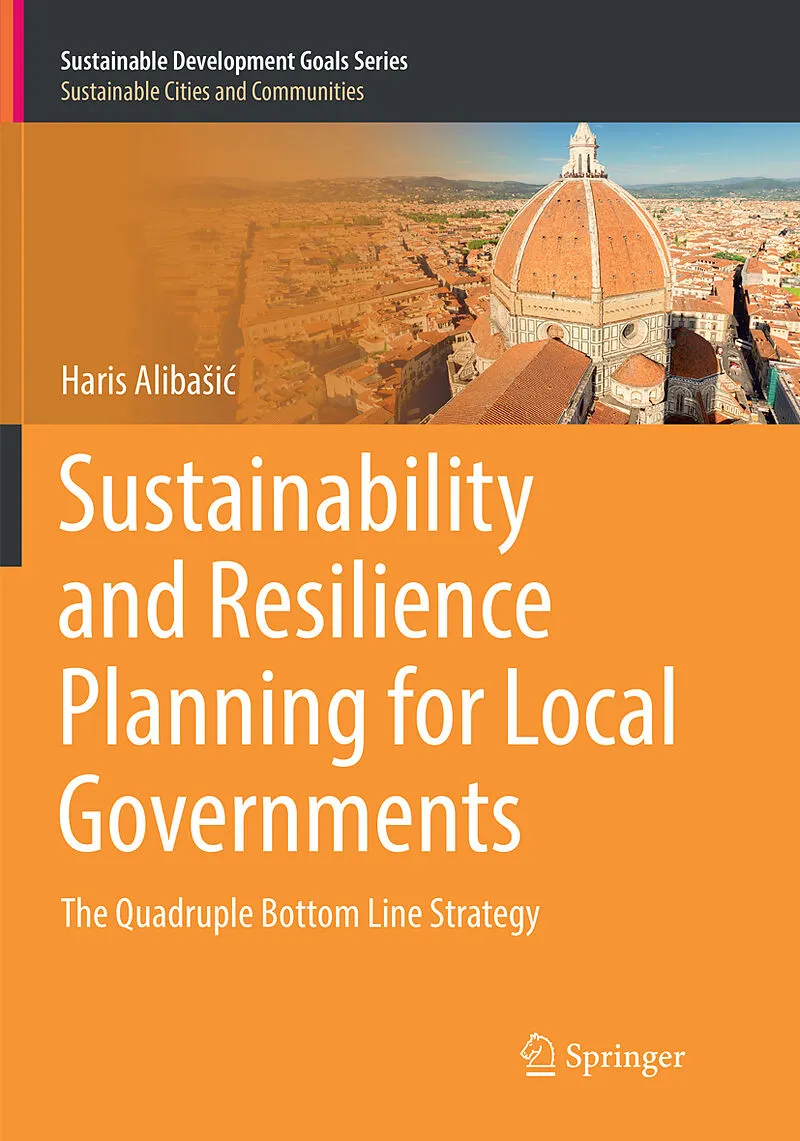
This book details a process of creating a long-term sustainability and resilience plan for local governments to use in designing and implementing sustainability and resilience-related policies, initiatives, and programs. It offers guidance and methods in appl...
This book details a process of creating a long-term sustainability and resilience plan for local governments to use in designing and implementing sustainability and resilience-related policies, initiatives, and programs. It offers guidance and methods in applying sustainability and resilience strategies to attain the prosperity of organizations and communities. The recommendations in this book are based on the author's years of experience in directing applied resilience and sustainability planning for a local government, and years of research covering diverse aspects of sustainability and resilience from climate change, climate preparedness and readiness, quadruple bottom line strategy, greenhouse gas emission reduction policies, climate adaptation and mitigation to sustainable energy policies and initiatives.
Chapter one defines terms related to sustainability and resilience and addresses how the topics reshape local governments and communities. Chapter two maps out the sustainability and resilience process for organizations and communities, determining the appropriate steps to be taken at each level of sustainability and resilience planning. Chapter three identifies community and organizational level engagement, with internal and external stakeholders, including designs necessary throughout these processes. Chapter four contains measuring, tracking, monitoring and reporting methods using the quadruple bottom line strategy, and developing a sustainability and resilience progress report to ensure accountability, transparency, and good governance. Then, chapter five details the implementation of a sustainability and resilience plan once it is established, describing potential programs and initiatives to achieve sustainable and resilient communities. Chapter six describes the intersection between sustainability and resilience, and chapter seven examines the tools and resources available to create a practical sustainability and resilience plan. Chaptereight concludes the text by addressing the future of sustainability and resilience, and complexities of the modern dynamics of the interconnected systems in cities, counties, and organizations, and recommends how local government administrators in their planning methods and strategies must consider these challenges.
Autorentext
Dr. Haris Alibai is an Associate Professor in the Public Administration program at the University of West Florida and the Public Administration Program Coordinator. Dr. Alibai brings 26 years of expertise and experience in the public sector, including working for the United Nations Mission and the Office of High Representative in Bosnia and Herzegovina and directing energy, sustainability, and legislative affairs for the second-largest city in Michigan. For over 16 years, Dr. Alibai taught graduate and undergraduate courses in public policy, public administration, economic development, emergency preparedness, management, and sustainability at various universities in Michigan. As an associate professor at UWF, he teaches doctoral and graduate-level online and in-class ethics, political economy, strategic management, leadership in sustainability, public budgeting and finance, capstone, and public administration courses. Dr. Alibai holds a Bachelor's degree in Business Administration (BBA) in International Business and Marketing and a Master's degree in Public Administration (MPA) from Grand Valley State University (GVSU) in Grand Rapids, MI. Dr. Alibai earned a Ph.D. in Public Policy and Administration from Walden University in Minneapolis, MN, where he was a recipient of the Doctoral Scholarship, Commitment to Social Change.Dr. Alibai has written, presented, and published extensively on the topics of ethics, sustainability, climate resilience, economic development, and sustainable energy. He is the author of the book Sustainability and Resilience Planning for Local Governments: The Quadruple Bottom Line Strategy, published in June of 2018 by Springer. Dr. Alibai presented at numerous national, regional, and international conferences on sustainability, resilience, economic development, and ethics, including in Brazil, Costa Rica, Monte Negro, Italy, Austria, Croatia, and Bosnia and Herzegovina. Hehas been interviewed and quoted in local, national, and international media for his expertise and research in sustainability, resilience, and ethics. Dr. Alibai is an elected member of the Executive Committee of the American Society for Public Administration (ASPA) - Section on Ethics and Integrity in Governance (SEIGOV), where he serves as the Director of the Charter, ByLaws, and Legal Affairs. In 2017 and 2018, Dr. Alibai was appointed and served on the City of Pensacola Climate Mitigation and Adaptation Task Force and presented the Task Force's final recommendations to the City of Pensacola Council. In 2013, Dr. Alibai advised the Resilient Communities of America on climate resilience and served as a co-chair for the energy sector of the White House Climate Preparedness and Resilience Task Force in 2014. Dr. Alibai received the 2012 West Michigan Environmental Action Council (WMEAC) - The C.R. Evenson Award and the 2011 Grand Valley State University's Sustainability Champion Award. In November of 2016, he won the prestigious Sustainable Hall of Fame Merit Award from West Michigan Sustainable Business Forum. In January 2017, he received an Emerging Scholar Award at Thirteenth International Conference on Environmental, Cultural, Economic and Social Sustainability and the On Sustainability Research Network, held in Rio, Brazil. He also received a 2017 Great Lakes-Saint Lawrence Cities Initiative (GLSLCI) Certificate of Appreciation and November 28th of 2016 State of Michigan Special Tribute. In 2018, Dr. Alibai received the CEPS Outstanding Contribution in Research Award.
Klappentext
This book details a process of creating long-term sustainability and resilience plan for local governments to use for designing and implementing sustainability and resilience policies, initiatives, and programs. It offers guidance, strategies, and methods in applying sustainability and resilience planning to attain the prosperity of organizations and communities. The recommendations in this book are based on the author's years of direct experience in directing applied resilience and sustainability planning for a local government, and years of research covering diverse aspects of sustainability and resilience from climate change, climate preparedness and readiness, triple bottom line impact, quadruple bottom line strategy, carbon footprint and greenhouse gas emission policies, climate adaptation and climate change mitigation to sustainable energy policies and practices.
Chapter one defines terms related to sustainability and resilience, how the topics reshape localgovernments and communities. Chapter two maps out the sustainability process for organizations and communities, determining the appropriate steps to be taken at each level of sustainability and resilience planning. Chapter three identifies community and organizational level engagement, internal and external stakeholders, including designs necessary throughout these processes. Chapter four involves measuring, tracking, monitoring and reporting using the quadruple bottom line strategy, and developing a sustainability and resilience progress report to ensure accountability, transparency, and good governance. Then, chapter five details the implementation of a sustainability/resilience plan once it is established, describing potential programs and initiatives to achieve sustainable and resilient communities. Chapter six describes the intersection between sustainability and resilience, and chapter seven examines the tools and resources available to create effective sustainabilityand resilience plan. Chapter eight concludes the text by addressing the future of sustainability and resilience, and complexities of the modern dy…