Haben Sie noch nichts passendes gefunden? Stöbern Sie durch unser komplettes Sortiment.
Oder melden Sie sich an bzw. registrieren Sie sich.


Beschreibung
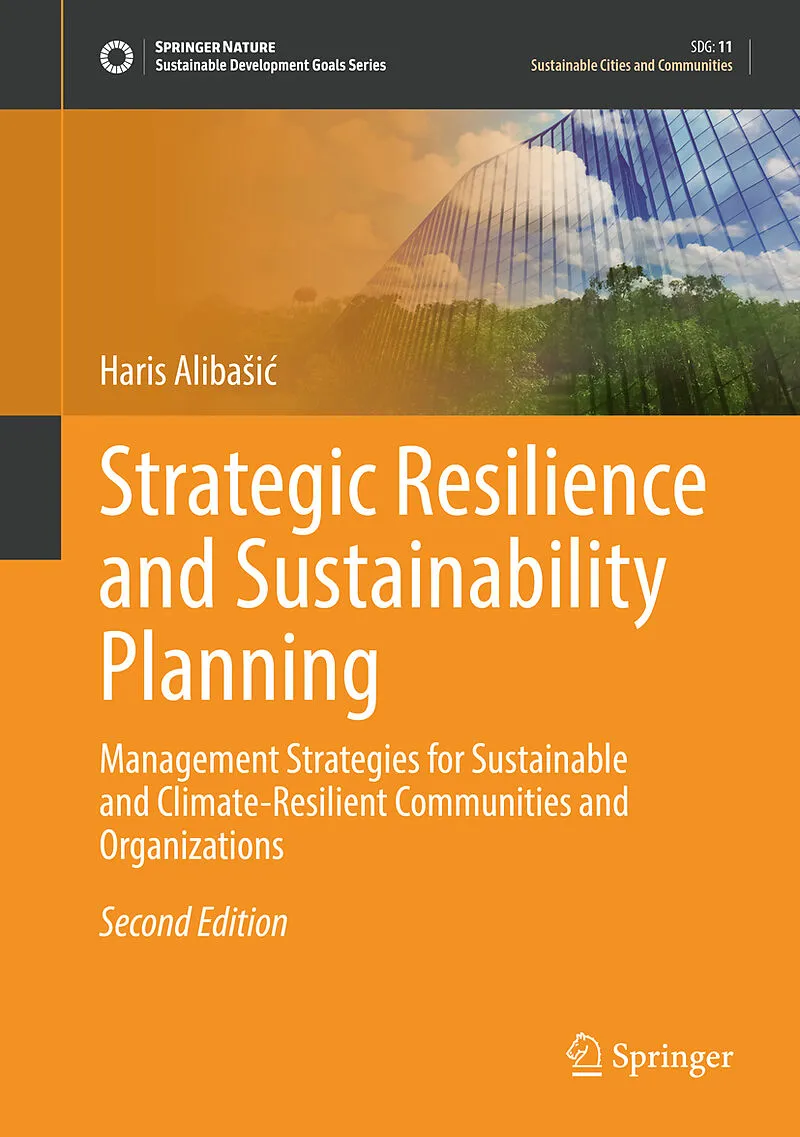
The book examines management strategies for developing and implementing strategic resilience and sustainability plans for sustainable and climate-resilient communities and organizations. It examines trends in resilience and sustainability planning, highlighti...
The book examines management strategies for developing and implementing strategic resilience and sustainability plans for sustainable and climate-resilient communities and organizations. It examines trends in resilience and sustainability planning, highlighting best practices and case studies. The book explores Quadruple Bottom Line strategies and methods to implement resilience and sustainability-related initiatives in organizations and communities. It also examines diverse perspectives on climate resilience, climate preparedness and readiness, greenhouse gas emission reductions policies, climate adaptation and mitigation, disaster preparedness and readiness, and sustainable energy policies and projects. Additionally, the book offers insights on strategic resilience and sustainability planning during a pandemic as well as private sector perspectives on strategic resilience and sustainability.
In chapter one,the author presents expanded definitions of strategic resilience and sustainability as well as mechanisms reshaping communities and organizations. Chapter two examines strategic planning processes for communities and organizations and lays out planning steps. Chapter three offers insights into community and organizational level engagement, looking at internal and external stakeholders, organizers, partners, collaborators, and implementers of distinct stages of strategic resilience and sustainability planning. Chapter four outlines measurements and tactics to track and improve strategic resilience and sustainability reporting mechanisms using the quadruple bottom line strategy. It offers a resilience progress report to ensure accountability, answerability, transparency, and good governance. Chapter five details the implementation of a strategic resilience and sustainability plan, describing programs and initiatives to achieve resilient and sustainablecommunities and organizations. Chapter six extensively examines the theoretical and practical intersection between climate change, resilience, and sustainability. Chapter seven reviews resources available for strategic resilience and sustainability plans to aid communities and organizations. Chapter eight assesses the current and future state of resilience and sustainability in communities and organizations, including concerns surrounding climate change, pandemics, disaster resilience, and emergency management and preparedness.
Details a process of creating a long-term sustainability and resilience plan for local governments Clarifies the purpose of well-executed sustainability and resilience initiatives Ensures the connection between climate change planning, resilience and sustainability strategies
Autorentext
Dr. Haris Alibaši is a Professor and Whitman Faculty Fellow in the Department of Business Administration, Public Administration Program at the University of West Florida's Lewis Bear Jr. College of Business, where he teaches ethics, capstone, political economy, strategic management, leadership, resilience planning, public budgeting and finance, and public administration courses to doctoral, graduate, and undergraduate students. He brings nearly three decades of professional and academic expertise spanning governance, strategic planning, artificial intelligence ethics, cybersecurity, and public policy. Dr. Alibaši 's international work includes NATO, the United Nations Mission, and the Office of the High Representative in Bosnia and Herzegovina, where he contributed to post-conflict governance reform and institutional capacity-building. In 2022, as a Fulbright Specialist through the U.S. Department of State, he advised the Republic of Kosovo's Prime Minister and the Office of Strategic Planning on national development strategy, energy assessment, and governance frameworks. Before his academic career, he also served as the Legislative and Strategic Planning Director for the City of Grand Rapids, Michigan, under three mayors and two city managers, and taught as a senior adjunct & visiting faculty at Davenport, Central Michigan, and Grand Valley State universities. His scholarship comprises more than 60 publications, including five books and over 35 peer-reviewed journal articles appearing in Public Administration Review, Sustainable Development, Energy Research & Social Science, Public Integrity, Global Public Policy and Governance, Public Money & Management, and FinTech, among others. His research focuses on hybrid intelligence, AI governance and ethics, organizational resilience, and sustainability in the public sector. He has been recognized as one of the top-ranked global researchers in sustainability and local government research. Dr. Alibaši holds a Ph.D. in Public Policy and Administration from Walden University, where he received the doctoral scholarship for commitment to social change, and a Master's in Public Administration (MPA) and a Bachelor's in Business Administration (BBA) in international business and marketing from Grand Valley State University, where he received scholarships in international business and public administration.
Klappentext
The book examines management strategies for developing and implementing strategic resilience and sustainability plans for sustainable and climate-resilient communities and organizations. It examines trends in resilience and sustainability planning, highlighting best practices and case studies. The book explores Quadruple Bottom Line strategies and methods to implement resilience and sustainability-related initiatives in organizations and communities. It also examines diverse perspectives on climate resilience, climate preparedness and readiness, greenhouse gas emission reductions policies, climate adaptation and mitigation, disaster preparedness and readiness, and sustainable energy policies and projects. Additionally, the book offers insights on strategic resilience and sustainability planning during a pandemic as well as private sector perspectives on strategic resilience and sustainability. In chapter one,the author presents expanded definitions of strategic resilience and sustainability as well as mechanisms reshaping communities and organizations. Chapter two examines strategic planning processes for communities and organizations and lays out planning steps. Chapter three offers insights into community and organizational level engagement, looking at internal and external stakeholders, organizers, partners, collaborators, and implementers of distinct stages of strategic resilience and sustainability planning. Chapter four outlines measurements and tactics to track and improve strategic resilience and sustainability reporting mechanisms using the quadruple bottom line strategy. It offers a resilience progress report to ensure accountability, answerability, transparency, and good governance. Chapter five details the implementation of a strategic resilience and sustainability plan, describing programs and initiatives to achieve resilient and sustainablecommunities and organizations. Chapter six extensively examines the theoretical and practical intersection between climate change, resilience, and sustainability. Chapter seven reviews resources available for strategic resilience and sustainability plans to aid communities and organizations. Chapter eight assesses the current and future state of resilience and sustainability in communities and organizations, including concerns surrounding climate change, pandemics, disaster resilience, and emergency management and preparedness.
Inhalt
Chapter1. Initiating and Assessing Strategic Resilience and Sustainability Planning.- Chapter2. Outlining the Sustainability and Resilience Planning Process for Communities and Organizations.- Chapter3. Identifying and Engaging the Internal and External Stakeholders, the Target Champions and Collaborators.- Chapter4. Measuring, Tracking, Observing, Scrutinizing and Reporting the Resi…