Beschreibung
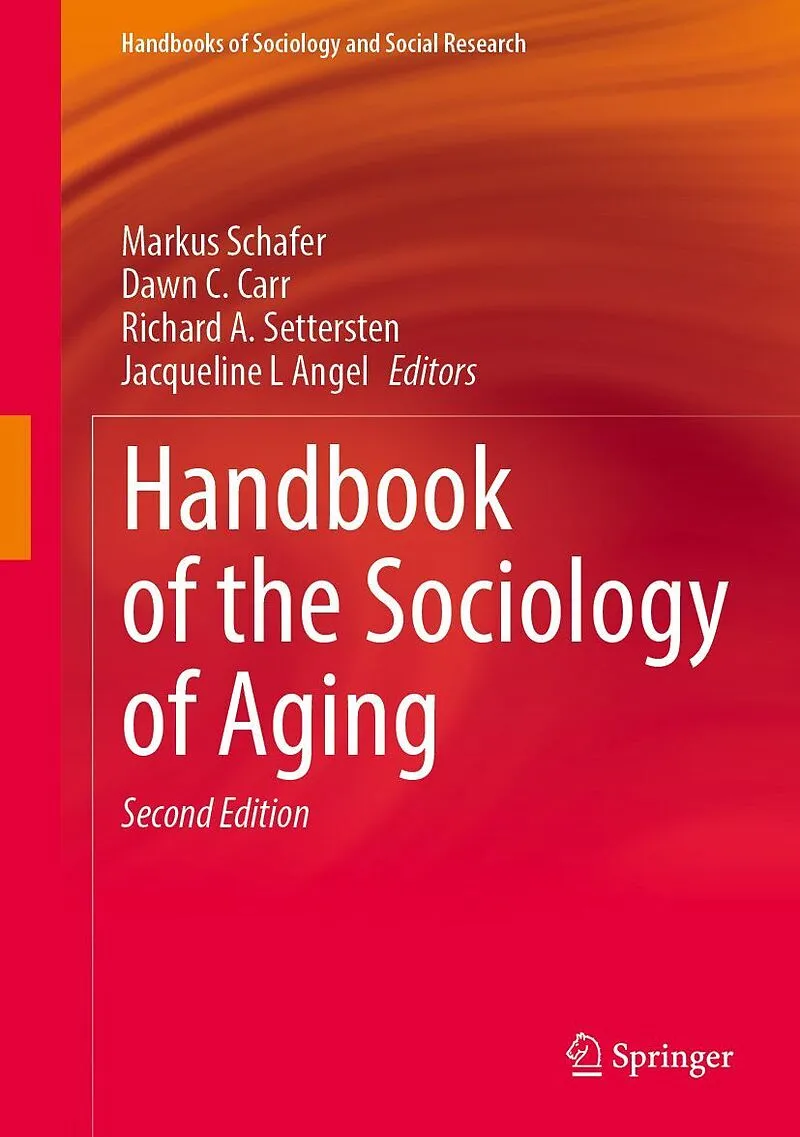
This second edition of the highly successful handbook builds on the first by offering a comprehensive, engaging, and up-to-date treatment of developments within the field of the sociology of aging. Beyond presenting an overview and update of foundational matt...
This second edition of the highly successful handbook builds on the first by offering a comprehensive, engaging, and up-to-date treatment of developments within the field of the sociology of aging. Beyond presenting an overview and update of foundational matters like advancements in theory and methodology, this edition addresses cutting-edge topics not covered in the first edition. These encompass intersectionality, sexuality, dementia, kinless aging, online social connectedness, grandparenting, death and dying, older adults in the workplace, politics, and the criminal justice system. It also considers aging in the context of crises, highlighting how the recent COVID-19 pandemic and environmental risks intersect with age-related policy, care, and inequality. This edition also extends the handbook's global reach, featuring 13 chapters with contributing authors based outside the United States.
Including chapters from both established and emerging scholars, this handbook is the go-to reference for students, scholars, and practitioners interested in the implications of aging for individuals, families, and societies.
Showcases the field's remarkable breadth and depth, capturing key developments over the past few decades Builds upon the success of the first edition by addressing cutting-edge subjects not covered earlier Expands the scope of the first edition by including several new contributions by authors based outside of the USA
Autorentext
Markus Schafer, PhD, is Professor of Sociology at Baylor University and is affiliated with The TX Aging Network within the Texas Center on Aging and Population Sciences. His scholarship examines how early-life circumstances shape the aging process as well as how social connectedness and networks both influence and are influenced by health in later life. A Fellow of the Gerontological Society of America (GSA), he serves as Deputy Editor of the Journal of Gerontology: Social Sciences and is a recipient of the GSA's Richard Kalish Innovative Publication Award.
Dawn Carr, PhD, is the Mildred and Claude Pepper Professor of Sociology in the Department of Sociology, and Director of the Claude Pepper Center at Florida State University. She is also the Co-Director of the Aging Research on Contexts, Health, and Inequality (ARCHI) lab. Her work seeks to identify factors that enhance health and wellbeing as people move through middle and later life and the resources and interventions that allow people to remain active and engaged members of society for as long as possible. Her recent work examines how paid work and volunteering influences physical, psychological, and cognitive health in middle and later life, and the role of psychological resources in shaping recovery from stressful exposures such as spousal loss, financial precarity, falls, and the onset of chronic health conditions.
Rick Settersten is University Distinguished Professor of Life Course and Human Development and Jo Anne Leonard Professor of Healthy Aging Research at Oregon State University, where he has also held leadership roles as Interim Dean, Vice Provost, and Founding Director of the Hallie Ford Center for Healthy Children and Families. Settersten is a specialist in longitudinal and life course studies, with expertise spanning adolescence, adulthood, and aging and research that focuses on transitions, social relationships and networks, social change, and social policies. In the American Sociological Association, he has served as Chair of the Section on Aging and the Life Course and been recognized with the Matilda White Riley Distinguished Scholar Award and the Outstanding Publication Award .
Jacqueline L. Angel (PhD Rutgers) is the Wilbur J. Cohen Professor of Health and Social Policy and Professor of Sociology and Public Affairs at the University of Texas at Austin. Her research focuses on aging, disability and inequalities in access, financing, and organization of community-based care. She is a Principal Investigator on the NIH/NIA Hispanic Established Populations for the Epidemiologic Study of the Elderly. Her forthcoming book, Latino Families in Later Life: A New Caregiver Paradigm (Routledge), forthcoming in 2026.
Inhalt
Introduction: Trends in the Sociology of Aging.- Theory and Method.- Theoretical persepctives.- Linkages between the Macro, Meso, and Micro in Aging Research.- Intersectionality in Aging Research.- Advances in Quantitative Aging Research.- Advances in Qualitative Aging Research.- Social Diversity and Inequalities of Aging.- Gender and Aging.- Race, Ethnicity, and Aging.- Immigration, Aging, and Health in the US.- Global Aging.- Sexuality and LGBTQ issues in aging.- Social Relationships and Aging.- Aging and Social Connectedness in an Increasingly Online World.- Intergenerational Relations in Families.- Partnership and Divorce in Later Life.- Sociology of Grandparenting.- Kinless Aging.- Social Institutions and Aging.- Retirement.- Barriers and Facilitators of Lifelong Learning.- Age-Friendly Communities.- Aging and the Criminal Justice System.- Age in the Workplace.- Religion, Places of Worship, and Aging.- Economies, Governments, and Aging.- Age and the Welfare State in the early 21st Century.- Consumption and Aging.- Age, Political Representation, and the Rise of Gerontocracy.- The Sociology of Health and Aging.- Mental Health and Aging.- Aging and Disabilities.- Critical Perspectives on Dementia and Cognitive Aging.- Care Arrangements and Aging.- Long-Term Care.- Caregiving and the Life Course.- Aging in Times of Crisis.- Aging and the COVID 19 Pandemic.- Environmental Threats: Aging, Older Adults, Emerging Vulernabilities.- The Social Construction of Population Aging as Crisis.- Conclusion: The Future of the Sociology of Aging.