
IHR WARENKORB IST AKTUELL LEER.
Haben Sie noch nichts passendes gefunden? Stöbern Sie durch unser komplettes Sortiment.
Oder melden Sie sich an bzw. registrieren Sie sich.
- Kostenlose Lieferung
- Kauf auf Rechnung
- Ex Libris Tiefpreis
- Filiallieferung und 650+ Abholorte
- Rabatt-Bons als Club-Mitglied
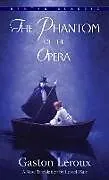
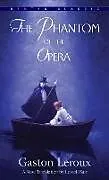
The Phantom of the Opera
Beschreibung
Zusatztext Ingenious . . . breathless suspense. The Nation Informationen zum Autor Gaston Leroux Klappentext Gaston Leroux is one of the originators of the detective story, and The Phantom of the Opera is his tour de force, as well as being the basis for the h...Format auswählen
- Poche format ACHF 10.10

Wird oft zusammen gekauft
Andere Kunden kauften auch
Beschreibung
Zusatztext Ingenious . . . breathless suspense. The Nation Informationen zum Autor Gaston Leroux Klappentext Gaston Leroux is one of the originators of the detective story, and The Phantom of the Opera is his tour de force, as well as being the basis for the hit Broadway musical. A superb suspense story and a dark tale of obsession, The Phantom of the Opera has thrilled and entertained audiences in adaptations throughout the century. This new translationthe first completely modern and Americanized translationunfurls the full impact of this classic thriller for modern readers. It offers a more complete rendering of the terrifying figure who emerges from the depths of the glorious Paris Opera House to take us into the darkest regions of the human heart. After the breathtaking performance of the lovely Christine Daae and her sudden disappearance, the old legend of the opera ghost becomes a horrifying reality as the ghost strikes out with increasing frequency and violencealways with the young singer at the center of his powerful obsession. Leroux has created a masterwork of love and murderand a tragic figure who awakens our deepest and most forbidden fears. This is the only complete, unabridged modern Americanized translation available. Lowell Bair is the acclaimed translator of such Bantam Classics as Madame Bovary, Les Liaisons Dangereuses, and Candide. Chapter One Is It the Ghost? It was the evening on which MM. Debienne and Poligny, the managers of the Opera, were giving a last gala performance to mark their retirement. Suddenly the dressing-room of La Sorelli, one of the principal dancers, was invaded by half-a-dozen young ladies of the ballet, who had come up from the stage after dancing Polyeucte. They rushed in amid great confusion, some giving vent to forced and unnatural laughter, others to cries of terror. Sorelli, who wished to be alone for a moment to run through the speech which she was to make to the resigning managers, looked around angrily at the mad and tumultuous crowd. It was little Jammesthe girl with the tip-tilted nose, the forget-me-not eyes, the rose-red cheeks and the lily-white neck and shoulderswho gave the explanation in a trembling voice: It's the ghost! And she locked the door. Sorelli's dressing-room was fitted up with official, commonplace elegance. A pier-glass, a sofa, a dressing-table and a cupboard or two provided the necessary furniture. On the walls hung a few engravings, relics of the mother, who had known the glories of the old Opera in the Rue le Peletier; portraits of Vestris, Gardel, Dupont, Bigottini. But the room seemed a palace to the brats of the corps de ballet, who were lodged in common dressing-rooms where they spent their time singing, quarreling, smacking the dressers and hair-dressers and buying one another glasses of cassis, beer, or even rhum, until the callboy's bell rang. Sorelli was very suspicious. She shuddered when she heard little Jammes speak of the ghost, called her a silly little fool and then, as she was the first to believe in ghosts in general, and the Opera ghost in particular, at once asked for details: Have you seen him? As plainly as I see you now! said little Jammes, whose legs were giving way beneath her, and she dropped with a moan into a chair. Thereupon little Girythe girl with eyes black as sloes, hair black as ink, a swarthy complexion and a poor little skin stretched over poor little boneslittle Giry added: If that's the ghost, he's very ugly! Oh, yes! cried the chorus of ballet-girls. And they all began to talk together. The ghost had appeared to them in the shape of a gentleman in dress-clothes, who had suddenly stood before them in the passage, without their knowing where he came from. He seemed to have come straight through the wall.<b...
#8220;Ingenious . . . breathless suspense.”—The Nation
Autorentext
Gaston Leroux
Klappentext
Gaston Leroux is one of the originators of the detective story, and The Phantom of the Opera is his tour de force, as well as being the basis for the hit Broadway musical. A superb suspense story and a dark tale of obsession, The Phantom of the Opera has thrilled and entertained audiences in adaptations throughout the century.
This new translation—the first completely modern and Americanized translation—unfurls the full impact of this classic thriller for modern readers. It offers a more complete rendering of the terrifying figure who emerges from the depths of the glorious Paris Opera House to take us into the darkest regions of the human heart. After the breathtaking performance of the lovely Christine Daae and her sudden disappearance, the old legend of the “opera ghost” becomes a horrifying reality as the ghost strikes out with increasing frequency and violence—always with the young singer at the center of his powerful obsession. Leroux has created a masterwork of love and murder—and a tragic figure who awakens our deepest and most forbidden fears.
This is the only complete, unabridged modern Americanized translation available. Lowell Bair is the acclaimed translator of such Bantam Classics as Madame Bovary, Les Liaisons Dangereuses, and *Candide.
*
Leseprobe
Chapter One
Is It the Ghost? It was the evening on which MM. Debienne and Poligny, the managers of the Opera, were giving a last gala performance to mark their retirement. Suddenly the dressing-room of La Sorelli, one of the principal dancers, was invaded by half-a-dozen young ladies of the ballet, who had come up from the stage after “dancing” Polyeucte. They rushed in amid great confusion, some giving vent to forced and unnatural laughter, others to cries of terror. Sorelli, who wished to be alone for a moment to “run through” the speech which she was to make to the resigning managers, looked around angrily at the mad and tumultuous crowd. It was little Jammes—the girl with the tip-tilted nose, the forget-me-not eyes, the rose-red cheeks and the lily-white neck and shoulders—who gave the explanation in a trembling voice:
“It’s the ghost!” And she locked the door.
Sorelli’s dressing-room was fitted up with official, commonplace elegance. A pier-glass, a sofa, a dressing-table and a cupboard or two provided the necessary furniture. On the walls hung a few engravings, relics of the mother, who had known the glories of the old Opera in the Rue le Peletier; portraits of Vestris, Gardel, Dupont, Bigottini. But the room seemed a palace to the brats of the corps de ballet, who were lodged in common dressing-rooms where they spent their time singing, quarreling, smacking the dressers and hair-dressers and buying one another glasses of cassis, beer, or even rhum, until the callboy’s bell rang.
Sorelli was very suspicious. She shuddered when she heard little Jammes speak of the ghost, called her a “silly little fool” and then, as she was the first to believe in ghosts in general, and the Opera ghost in particular, at once asked for details:
“Have you seen him?”
“As plainly as I see you now!” said little Jammes, whose legs were giving way beneath her, and she dropped with a moan into a chair.
Thereupon little Giry—the girl with eyes black as sloes, hair black as ink, a swarthy complexion and a poor little skin stretched over poor little bones—little Giry added:
“If that’s the ghost, he’s very ugly!”
“Oh, yes!” cried the chorus of ballet-girls.
And they all began to talk together. The ghost had appeared to them in the shape of a gentleman in dress-clothes, who had suddenly stood before them in the passage, without their knowing where he came from. He seemed to have come straight through the wall.
“Pooh!” said one of them, who had more or less kept her head. “…