Haben Sie noch nichts passendes gefunden? Stöbern Sie durch unser komplettes Sortiment.
Oder melden Sie sich an bzw. registrieren Sie sich.


Beschreibung
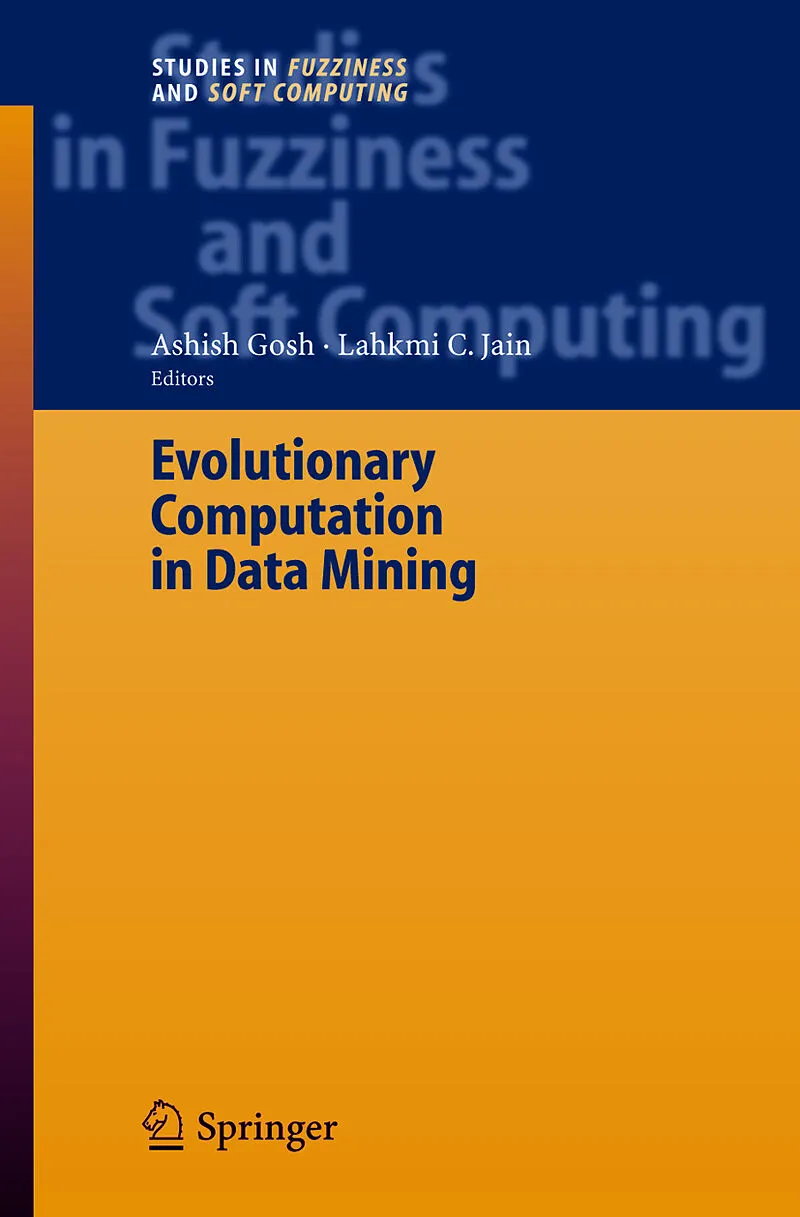
Data mining (DM) consists of extracting interesting knowledge from re- world, large & complex data sets; and is the core step of a broader process, called the knowledge discovery from databases (KDD) process. In addition to the DM step, which actually extr...Data mining (DM) consists of extracting interesting knowledge from re- world, large & complex data sets; and is the core step of a broader process, called the knowledge discovery from databases (KDD) process. In addition to the DM step, which actually extracts knowledge from data, the KDD process includes several preprocessing (or data preparation) and post-processing (or knowledge refinement) steps. The goal of data preprocessing methods is to transform the data to facilitate the application of a (or several) given DM algorithm(s), whereas the goal of knowledge refinement methods is to validate and refine discovered knowledge. Ideally, discovered knowledge should be not only accurate, but also comprehensible and interesting to the user. The total process is highly computation intensive. The idea of automatically discovering knowledge from databases is a very attractive and challenging task, both for academia and for industry. Hence, there has been a growing interest in data mining in several AI-related areas, including evolutionary algorithms (EAs). The main motivation for applying EAs to KDD tasks is that they are robust and adaptive search methods, which perform a global search in the space of candidate solutions (for instance, rules or another form of knowledge representation).
State of the art in the area of Data Mining and Knowledge Discovery with Evolutionary Algorithms Demonstrates how the different tools of evolutionary computation can be used for solving real-life problems in data mining and bioinformatics Includes supplementary material: sn.pub/extras
Autorentext
Ashish Ghosh is the Director of the International Institute of Information Technology Bhubaneswar, India, on deputation from the Indian Statistical Institute (ISI) Kolkata. He began as an electronic engineer, transitioned to computer science for his master s, and focused on artificial intelligence (AI) for his PhD. After postdoctoral research in Japan, he joined ISI Kolkata as a faculty member and is now a Senior Professor there. Ghosh has made significant contributions to AI, machine learning, image/video analysis, and data science, publishing over 300 research articles, editing 12 books, and achieving an h-index of 53. He ranks among the top 2% of scientists in computer science.Ashish Ghosh was part of the founding team for the National Center for Soft Computing Research at ISI Kolkata in 2004, funded by the Department of Science and Technology (DST), Government of India. He served as In-Charge of the Center, now recognized as an Associate Institute of ISI Kolkata, and led the Machine Intelligence Unit. Currently, he heads the Data Science Research Consortium Project under a national mission of DST and established the Technology Innovation Hub on Data Science, Big Data Analytics, and Data Curation at ISI Kolkata, funded with INR 100 Crores under the NMICPS mission.For his contributions to computational intelligence and image analysis, Ghosh received the Young Scientist Award from the Indian Science Congress Association (ISCA, 1992), the Young Scientist Medal from the Indian National Science Academy (INSA, 1995), and the Young Associateship of the Indian Academy of Sciences (IASc, 1997). He is a Fellow of the West Bengal Academy of Science and Technology (WAST, 2015), the National Academy of Sciences (NASI, 2019), the International Association for Pattern Recognition (IAPR, 2020), the Asia-Pacific Artificial Intelligence Association (AAIA, 2022), and the International Artificial Intelligence Industry Alliance (AIIA, 2023). He received the IEEE-GRSS Regional Leader Award in 2019 for his service to IEEE and is a member of various Research Advisory Committees and the Academic Council of Banasthali Vidyapith.Ghosh is an Associate Editor for several international journals, including the IEEE Journal of Selected Topics in Applied Earth Observations and Remote Sensing, IET Journal of Computer Vision, and Neural Networks. He has delivered lectures and conducted collaborative research in countries such as China, Germany, Japan, and the USA, and has served as a plenary/keynote speaker at numerous international conferences. As PI and Co-PI, he has completed 18 significant projects funded by the Government of India, European Commission, and Indo-Italy and Indo-US forums for science and technology.
Klappentext
This carefully edited book reflects and advances the state of the art in the area of Data Mining and Knowledge Discovery with Evolutionary Algorithms. It emphasizes the utility of different evolutionary computing tools to various facets of knowledge discovery from databases, ranging from theoretical analysis to real-life applications. "Evolutionary Computation in Data Mining" provides a balanced mixture of theory, algorithms and applications in a cohesive manner, and demonstrates how the different tools of evolutionary computation can be used for solving real-life problems in data mining and bioinformatics.
Inhalt
Evolutionary Algorithms for Data Mining and Knowledge Discovery.- Strategies for Scaling Up Evolutionary Instance Reduction Algorithms for Data Mining.- GAP: Constructing and Selecting Features with Evolutionary Computing.- Multi-Agent Data Mining using Evolutionary Computing.- A Rule Extraction System with Class-Dependent Features.- Knowledge Discovery in Data Mining via an Evolutionary Algorithm.- Diversity and Neuro-Ensemble.- Unsupervised Niche Clustering: Discovering an Unknown Number of Clusters in Noisy Data Sets.- Evolutionary Computation in Intelligent Network Management.- Genetic Programming in Data Mining for Drug Discovery.- Microarray Data Mining with Evolutionary Computation.- An Evolutionary Modularized Data Mining Mechanism for Financial Distress Forecasts.
Tief- preis