Beschreibung
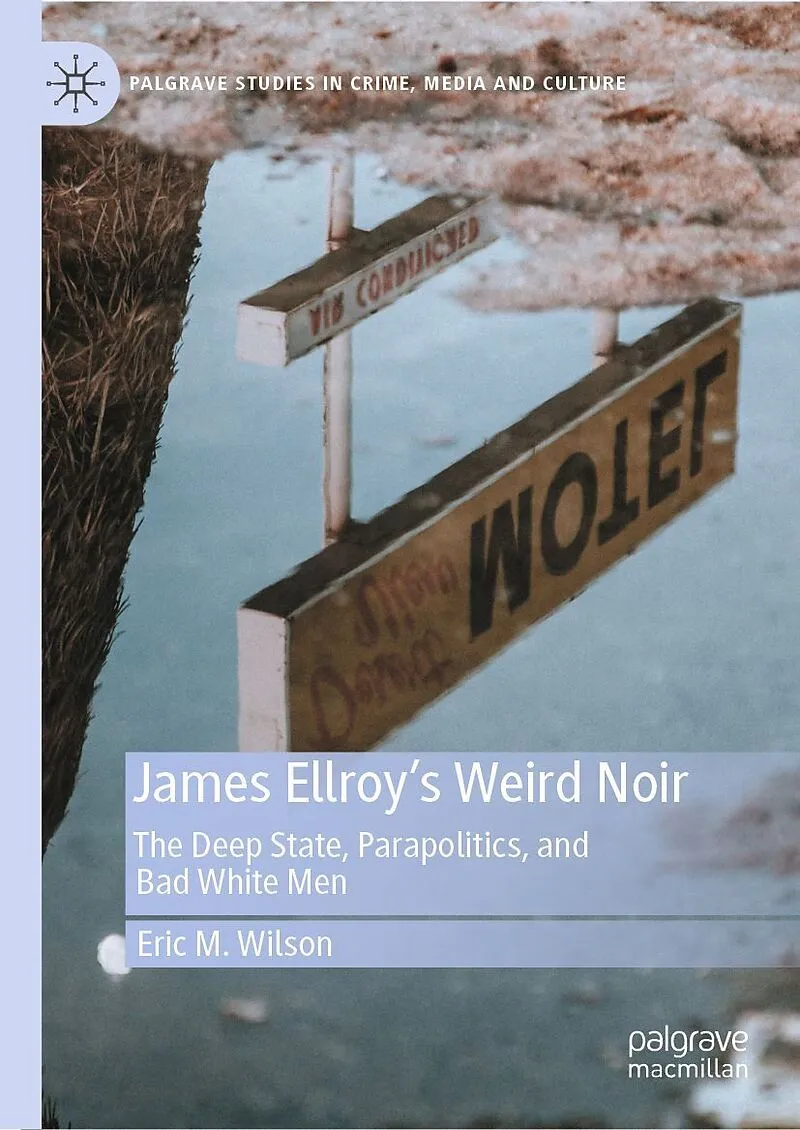
This book attempts to link the entirety of James Ellroy's work to major political trends, both historical and contemporary, in critical theory, as a unique, compelling deep-dive. Ellroy's crime fiction provides valuable insights into current trends of a distu...This book attempts to link the entirety of James Ellroy's work to major political trends, both historical and contemporary, in critical theory, as a unique, compelling deep-dive. Ellroy's crime fiction provides valuable insights into current trends of a disturbing, and possibly dangerous, nature. It analyzes the contestable political, social, and moral content of Ellroy's writings through the interpretative lenses of established political and literary theoristsin this instance,Frantz Fanon, Achille Mbembe, Paul Virilio, Carl Schmitt, and Walter Benjamin. The text assumes the form of an exegesis on the subversive potentialities of Ellroy's writings for what is understood as both the Left and the Right. But this formal exegesis is read against a second one that subliminally relates the critical interpretations of the first to certain difficult to articulate trends in the contemporary zeitgeist that have become even more pronounced following the U.S. federal election in November, 2024. It also implicitly suggests that traditional liberal democracy is ultimately incapable of resolving seemingly interminable political, social, and cultural crises within what is in essence a continental settler-colonial state. This book hopes to demonstrate the relevance of radical and cultural criminology to wider areas of contemporary political and cultural concern.
Speaks to those in Criminology, Literary Studies, and Masculinity Studies Explores how Ellroy offers some unique insight into conditions of contemporary politics Brings Ellroy into conversation with, Schmitt, Stirner, Fanon, Virilio, etc. with cultural criminology
Autorentext
Eric M. Wilson was Senior Lecturer in the Faculty of Law at Monash University, Australia, and is now retired.
Klappentext
This book attempts to link the entirety of James Ellroy’s work to major political trends, both historical and contemporary, in critical theory, as a unique, compelling deep-dive. Ellroy's crime fiction provides valuable insights into current trends of a disturbing, and possibly dangerous, nature. It analyzes the contestable political, social, and moral content of Ellroy’s writings through the interpretative lenses of established political and literary theorists—in this instance,Frantz Fanon, Achille Mbembe, Paul Virilio, Carl Schmitt, and Walter Benjamin. The text assumes the form of an exegesis on the subversive potentialities of Ellroy’s writings for what is understood as both the Left and the Right. But this formal exegesis is read against a second one that subliminally relates the critical interpretations of the first to certain difficult to articulate trends in the contemporary zeitgeist that have become even more pronounced following the U.S. federal election in November, 2024. It also implicitly suggests that traditional liberal democracy is ultimately incapable of resolving seemingly interminable political, social, and cultural crises within what is in essence a continental settler-colonial state. This book hopes to demonstrate the relevance of radical and cultural criminology to wider areas of contemporary political and cultural concern.
Eric M. Wilson was Senior Lecturer in the Faculty of Law at Monash University, Australia, and is now retired.
Inhalt
.- Chapter 1: The Bad White Men as the Mediators of the Deep State.- Chapter 2: El Monte or, The Big Nowhere of the Bad White Men.- Chapter 3: The Wonder or, the Noumena of Parapolitics.- Chapter 4: The Decomposition of the Bad White Men in the Underworld USA Trilogy.- Chapter 5: Bad men in Love with Strong Women or, the Divine Violence of the Cut-Out.