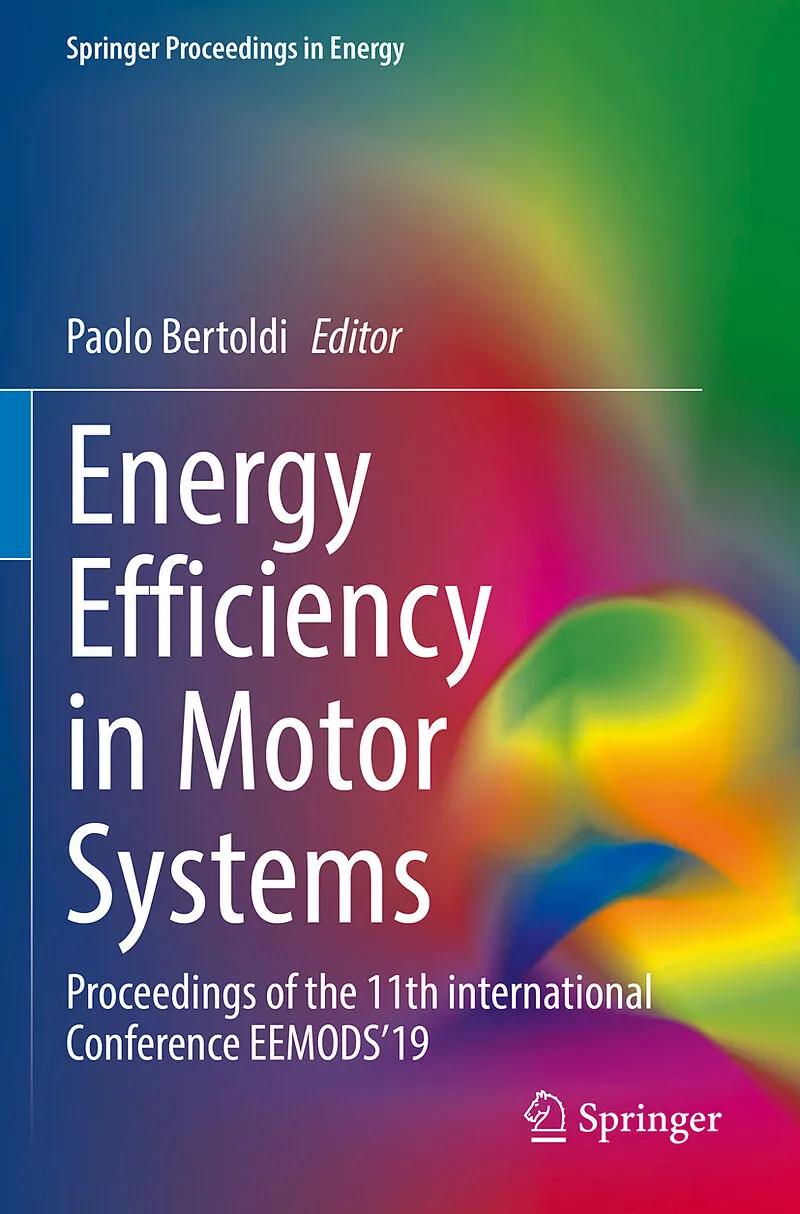
Energy Efficiency in Motor Systems
Beschreibung
This book contains selected, peer-reviewed papers presented at the 11 th International Conference on Energy Efficiency in Motor Systems (EEMODS'19), held in Tokyo, Japan from 17-19 September 2019. As with previous conferences in this series, EEMODS'19 provide...Format auswählen
- Kartonierter EinbandCHF 214.55
- Fester EinbandCHF 214.55
- E-Book (pdf)CHF 271.90

Wird oft zusammen gekauft
Andere Kunden kauften auch
Beschreibung
This book contains selected, peer-reviewed papers presented at the 11 th International Conference on Energy Efficiency in Motor Systems (EEMODS'19), held in Tokyo, Japan from 17-19 September 2019. As with previous conferences in this series, EEMODS'19 provided a scientific forum to discuss and debate the latest developments and impacts of electrical motor systems on energy and the environment, energy efficiency policies and programmes adopted and planned, standards (including ISO 50.001), and the technical and commercial advances made in the dissemination and penetration of energy-efficient motor systems. Topics covered include: technologies, research and innovation in the areas of electric motors from life cycle costing to 3D printing to artificial intelligence/machine learning-based monitoring systems; emerging motor technologies; power electronics and drives; pump systems, including life cycle costing, energy efficiency improvements, maintenance, and operationfor industrial, water supply and treatment, building, and irrigation; compressed air systems; fans /exhaust systems; refrigeration systems maintenance and operation; mechanical power transmission; motors in household appliances and HVAC (residential and commercial); motors and drives for transport applications including policies, programmes, regulation, and international standards; industrial management policies and standards; motor system audit and verification; policies, programmes and financing: analysis of motor system energy use and greenhouse gas emissions for motor systems, e-vehicles and related charging infrastructure; harmonization of global motor efficiency test standards; evaluation of utility programmes for improving energy efficiency in motor systems; and policy implementation, market surveillance and enforcement mechanisms, including case studies. The conference is international by nature and aims to attract high quality and innovative contributions from all corners ofthe globe, while the papers facilitate the development of new technologies, policies and strategies to increase energy efficiency.
Presents the most up-to-date scientific, market and policy review on the status of energy efficiency in motor systems Illustrates the main advances in the design of motors, drives, pumps and compressors using a systems approach Provides a selection of case studies on national policies sand programmes to improve energy efficiency in motor systems Offers a guide for those manufacturers interested in the design of advanced motors and for policy makers interested in implementing energy efficiency policies in this area
Autorentext
Paolo Bertoldi is as Senior Expert working at the European Commission since 1985. Since May 2001, he is at the European Commission Joint Research Centre (Ispra, Italy), in charge of research activities on energy efficiency policy analysis, the efficient use of electricity (in particular ICT) and innovative policy instruments for energy efficiency (e.g. white certificates, financing mechanisms, ESCO, EPC, emission trading). He also manages the Covenant of Mayors research activities at the JRC. He has been a Contributing Author for IPCC Assessment Report 4, Lead Author for IPCC Assessment Report 5 and the Special Report on 1.5 C and recently he has been nominated Lead Author for IPCC Assessment Report 6.
Klappentext
This book contains selected, peer-reviewed papers presented at the 11th International Conference on Energy Efficiency in Motor Systems (EEMODS'19), held in Tokyo, Japan from 17-19 September 2019. As with previous conferences in this series, EEMODS'19 provided a scientific forum to discuss and debate the latest developments and impacts of electrical motor systems on energy and the environment, energy efficiency policies and programmes adopted and planned, standards (including ISO 50.001), and the technical and commercial advances made in the dissemination and penetration of energy-efficient motor systems. Topics covered include: technologies, research and innovation in the areas of electric motors from life cycle costing to 3D printing to artificial intelligence/machine learning-based monitoring systems; emerging motor technologies; power electronics and drives; pump systems, including life cycle costing, energy efficiency improvements, maintenance, and operationfor industrial, water supply and treatment, building, and irrigation; compressed air systems; fans /exhaust systems; refrigeration systems maintenance and operation; mechanical power transmission; motors in household appliances and HVAC (residential and commercial); motors and drives for transport applications including policies, programmes, regulation, and international standards; industrial management policies and standards; motor system audit and verification; policies, programmes and financing: analysis of motor system energy use and greenhouse gas emissions for motor systems, e-vehicles and related charging infrastructure; harmonization of global motor efficiency test standards; evaluation of utility programmes for improving energy efficiency in motor systems; and policy implementation, market surveillance and enforcement mechanisms, including case studies. The conference is international by nature and aims to attract high quality and innovative contributions from all corners ofthe globe, while the papers facilitate the development of new technologies, policies and strategies to increase energy efficiency.
Inhalt
Chapter1. Novel Design of Delta Connected PM Synchronous Machines Considering Rotor Skewing.- Chapter2. EC-motors in a fan application: a case study.- Chapter3. A global update on the markets for motors, drives, and motor-driven equipment.- Chapter4. Increasing the Energy Savings of Motor Applications: The Extended Product Approach.- Chapter5. High Efficiency IE4 Line-Start Synchronous Reluctance Motors.- Chapter6. Coordination of IEC & ISO standards for energy efficient electric motor driven systems.- Chapter7. Surface Eddy Current Suppression on Additively Manufactured Solid Rotor Active Parts.- Chapter8. Energy Score Card: One of key execution to transform the market for energy efficient motors.- Chapter9. A Novel Approach To Predict Reed Critical Frequency Of Vertical Motors.- Chapter10. Evaluation of High-Tech Electrical Steel in a High-Speed Permanent Magnet Synchronous Machine for an Aircraft Application.- Chapter11. New Life calculation model for Hybrid Bearings.- Chapter12.Programme for In-depth Analyses of Electric Motor Systems in Industry (ProAnalySys).- Chapter13. Review of Updates to the US Rule Making Process Ways Regulators Can Improve Their National Policy Making Processes.- Chapter14. Electromagnetic Design of Propulsion Motors with Superconducting Field Coils for Electrified Aircraft.- Chapter15. Design methodology for a PM electrical variable transmission used in HEV.- Chapter16. IE3 Efficiency Class as MEPS for industrial motor: how Brazil got there.- Chapter17. A decision-making tool incorporating multiple benefits of motor systems retrofits.- Chapter18. European Ecodesign Material Efficiency standardization overview for Circular Economy aspects in Motor & Power drive systems.- Chapter19. Comparison between the Use of the Middle Ring and/or Skewed Bars in Induction Motor Rotor.- Chapter20. Efficiency measurement strategy for a planetary gearbox with 2 degrees of freedom.- Chapter21. Development of High-Precision Efficiency MeasuringDevice for High Power Motor Drive Systems.- Chapter22. Evaluation and Application of Existing Air Curtain Effectiveness Methodology.- Chapter23. Promoting CO2 water source heat pumps in Indian industrial sector .- Chapter24. 7.Refrigeration systems - Optimal temperature setpoint regarding the air-mixing in a HVAC system.- Chapter25. Modeling of Radial and Tangential Roebel Bar Force Distributions in Large Electrical Machines Considering Longitudinal Transposition.- Chapter26.…


