
IHR WARENKORB IST AKTUELL LEER.
Haben Sie noch nichts passendes gefunden? Stöbern Sie durch unser komplettes Sortiment.
Oder melden Sie sich an bzw. registrieren Sie sich.
- Kostenlose Lieferung
- Kauf auf Rechnung
- Ex Libris Tiefpreis
- Filiallieferung und 650+ Abholorte
- Rabatt-Bons als Club-Mitglied
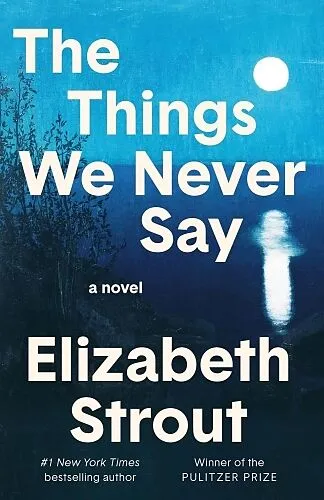
The Things We Never Say
Beschreibung
Pulitzer Prize–winning, #1 Artie Dam is living a double life. He spends his days teaching history to eleventh graders, expanding their young minds, correcting their casual cruelties, and lending a kind word to those who need it most. He goes to holiday p...Format auswählen
- Fester EinbandCHF 20.65

Wird oft zusammen gekauft
Andere Kunden kauften auch
Beschreibung
Pulitzer Prize–winning, #1 Artie Dam is living a double life. He spends his days teaching history to eleventh graders, expanding their young minds, correcting their casual cruelties, and lending a kind word to those who need it most. He goes to holiday parties with his wife of three decades, makes small talk with neighbors, and, on weekends, takes his sailboat out on the beautiful Massachusetts Bay. He is, by all appearances, present and alive. But inside, Artie is plagued by feelings of isolation. He looks out at a world gone mad--at himself and the people around him--and turns a question over and over in his mind: How is it that we know so little about one another, even those closest to us? And then, one day, Artie learns that life has been keeping a secret from him, one that threatens to upend his entire world. Once he learns it, he is forced to chart a new course, to reconsider the relationships he holds most dear--and to make peace with the mysteries at the heart of our existence. Elizabeth Strout, as we have come to expect, delivers a moving exploration of the human condition--one that brims with compassion for each and every one of her indelible characters. With exquisite prose and profound insight, <The Things We Never Say <takes one man’s fears and loneliness and makes them universal. And in the same breath, captures the abiding love that sustains and holds us all.
Autorentext
Elizabeth Strout is the #1 New York Times bestselling author of Tell Me Everything; Lucy by the Sea; Oh William!, which was shortlisted for the Booker Prize; Olive, Again; Anything Is Possible, winner of the Story Prize; My Name Is Lucy Barton; The Burgess Boys; Olive Kitteridge, winner of the Pulitzer Prize; Abide with Me; and Amy and Isabelle, winner of the Los Angeles Times Art Seidenbaum Award for First Fiction and the Chicago Tribune Heartland Prize. She has also been a finalist for the PEN/Faulkner Award and the Orange Prize in London.
Klappentext
*NEW YORK TIMES BESTSELLER • In this “profound, resplendent novel” from Pulitzer Prize–winning author Elizabeth Strout, a chance incident sparks a powerful realization in a beloved teacher’s life.
SHORTLISTED FOR THE BOOKER PRIZE • ONE OF BARACK OBAMA’S FAVORITE BOOKS OF THE SUMMER**
**
**“Strout’s capacious empathy and rigorous attention to the nuances of human behavior and psychology are as evident as ever.”—*The Boston Globe
“Artie Dam is someone you may never be able to forget.”—Financial Times*
Artie Dam is living a double life. He spends his days teaching history to eleventh graders, expanding their young minds, correcting their casual cruelties, and lending a kind word to those who need it most. He goes to holiday parties with his wife of three decades, makes small talk with neighbors, and, on weekends, takes his sailboat out on the beautiful Massachusetts Bay. He is, by all appearances, present and alive. But inside, Artie is plagued by feelings of isolation. He looks out at a world gone mad—at himself and the people around him—and turns a question over and over in his mind: How is it that we know so little about one another, even those closest to us?
And then, one day, Artie learns that life has been keeping a secret from him, one that threatens to upend his entire world. Once he learns it, he is forced to chart a new course, to reconsider the relationships he holds most dear—and to make peace with the mysteries at the heart of our existence.
Elizabeth Strout, as we have come to expect, delivers a moving exploration of the human condition—one that brims with compassion for each and every one of her indelible characters. With exquisite prose and profound insight, The Things We Never Say takes one man’s fears and loneliness and makes them universal. And in the same breath, captures the abiding love that sustains and holds us all.
Leseprobe
1
It was the middle of June and the sun all day had kept right on shining with sweet mightiness. “Stay jovial, please, Artie! Just promise me that. Please stay your old jovial self!” Flossie MacDonald had wiped her napkin across her weeping eyes and told this to Artie Dam the last time she had seen him, which had been on this spectacular evening in June. And he assured her that he would.
They had gone to Spud’s Bar and Grille, the place near Artie’s house that was right there on the water on the coast of Massachusetts; the bay, seen through the windows, was calm, and many boats sat there quietly, sailboats and fishing boats and boats large enough to sleep eight people. The sun, which was not yet fully headed down, shone against the water with a golden brilliance, and when Artie looked at Flossie her large black-rimmed glasses had sun reflecting off them.
He and Flossie had come here every other Tuesday night since Flossie’s husband died last year; her husband had been a retired math professor, and—to Artie’s way of thinking—a regal-looking, thin, hypercritical man. “He was such an asshole,” Flossie would say each time she and Artie were together, wiping her eyes, mascara dripping down her cheeks. “And I miss him so much!” But this was their last time in the place; Flossie was moving to Ohio to be near her daughter, Sophie. “Oh Artie,” Flossie had said, wrapping her arms around him outside by the door as they said goodbye, “I love you.” And he had told her the same.
As they left the place together, Artie saw the masts of sailboats in the bay, standing tall, motionless. He did not remember ever seeing the water so calm. “Amazing,” he had said to Flossie, and she had said, “What’s amazing is you.”
Artie’s wife, Evie, had never cared for Flossie, saying that she was “too much.” And Artie understood, but he loved Flossie for it; he loved her overly made-up face, her too-yellow hair piled on top of her head, the scent of perfume that followed her everywhere, the delicate way she would sit her large body down after waving to him enthusiastically when she came through the heavy wooden door at Spud’s. He loved her, but he was not remotely in love with her.
It was that he could be himself with her; he realized this only later.
“How was poor old Flossie?” Evie had asked Artie that night; she was sitting in the living room with a newspaper on her lap, and she looked up at him as he walked into the room. Evie was one of the few people Artie knew who still read a real newspaper.
“She misses Reginald,” Artie said, sitting down in a chair across from her. “She says it every time. Understandable, I guess. They were married forty-two years.” He added, “The water’s beautiful tonight. Flat, flat, flat.”
Evie said nothing. She folded the paper and put it on the coffee table in front of her.
“But she did say—she says it every time—that he was an asshole.” Artie chuckled, sticking his legs out in front of him.
Still, Evie made no comment.
“Well, he was lucky to go fast, only two months.” Artie said this looking around the room. Through the windows he could see the light on the end of the small wharf down past their lawn. The room they sat in had a high ceiling with rafters far up; theirs was a spacious house, with a newly renovated kitchen that also looked out over the water. In the living room was the grand piano that had been there for years (and which Artie, with no piano lessons to his name, would sit and compose little pieces on). There were different upholstered chairs, and a few small tables on which sat various framed photographs beside many small—tiny—…