New York
Beschreibung
Winner of the David J. Langum, Sr., Prize in American Historical Fiction Named one of the best books of the year by Edward Rutherfurd celebrates America’s greatest city in a rich, engrossing saga, weaving together tales of families rich and poor, native-...Format auswählen
- BroschiertCHF 20.30
Wird oft zusammen gekauft
Andere Kunden kauften auch
Beschreibung
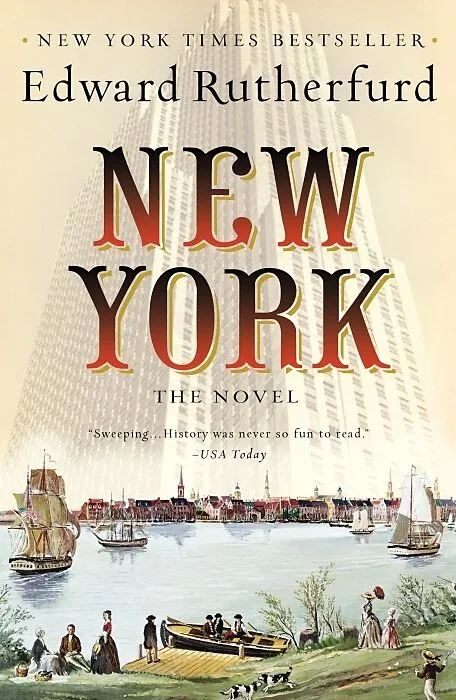
Winner of the David J. Langum, Sr., Prize in American Historical Fiction Named one of the best books of the year by Edward Rutherfurd celebrates America’s greatest city in a rich, engrossing saga, weaving together tales of families rich and poor, native-born and immigrant--a cast of fictional and true characters whose fates rise and fall and rise again with the city’s fortunes. From this intimate perspective we see New York’s humble beginnings as a tiny Indian fishing village, the arrival of Dutch and British merchants, the Revolutionary War, the emergence of the city as a great trading and financial center, the convulsions of the Civil War, the excesses of the Gilded Age, the explosion of immigration in the late nineteenth and early twentieth centuries, the trials of World War II, the near demise of New York in the 1970s and its roaring rebirth in the 1990s, and the attack on the World Trade Center. A stirring mix of battle, romance, family struggles, and personal triumphs, New York: The Novel gloriously captures the search for freedom and opportunity at the heart of our nation’s history.
160;
“Sweeping . . . History has never been so fun to read.”
—USA Today
 
“In the tradition of James Michener, Rutherfurd unfurls more than three centuries of the city’s history as seen through the eyes of the descendants of [the] van Dyck and Master [families]—and the many other colorful characters he introduces along the way.”
—Detroit Free Press
“Incredible storytelling . . . Readers will fall in love with the iconic city.”
—The Post and Courier
 
“[A] riotous, multilayered portrait.”
—*The Washington Post
-
Autorentext
Edward Rutherfurd was born in Salisbury, England, and educated at Cambridge University and Stanford University in California. His first bestselling novel, Sarum, is based on the history of Salisbury and Stonehenge. Russka, his second novel, recounted the sweeping history of Russia. London tells the two-thousand-year story of the great city, bringing all of the richness of London's past unforgettably to life. The Forest was set in England's ancient "New Forest." A former resident of London and New York City, Edward Rutherfurd has had a home in Dublin for more than ten years. He has two children.
Klappentext
A bestselling master of historical sagas ("London: The Novel") returns with the epic fictional journey of six New York families from the city's founding to the present day.
Zusammenfassung
Winner of the David J. Langum, Sr., Prize in American Historical Fiction
 
Named one of the best books of the year by The Washington Post and “Required Reading” by the New York PostEdward Rutherfurd celebrates America’s greatest city in a rich, engrossing saga, weaving together tales of families rich and poor, native-born and immigrant—a cast of fictional and true characters whose fates rise and fall and rise again with the city’s fortunes. From this intimate perspective we see New York’s humble beginnings as a tiny Indian fishing village, the arrival of Dutch and British merchants, the Revolutionary War, the emergence of the city as a great trading and financial center, the convulsions of the Civil War, the excesses of the Gilded Age, the explosion of immigration in the late nineteenth and early twentieth centuries, the trials of World War II, the near demise of New York in the 1970s and its roaring rebirth in the 1990s, and the attack on the World Trade Center. A stirring mix of battle, romance, family struggles, and personal triumphs, New York: The Novel gloriously captures the search for freedom and opportunity at the heart of our nation’s history.
Leseprobe
1664
So this was freedom. The canoe went with the river's tide, water bumping against the bow. Dirk van Dyck looked at the little girl and wondered: Was this journey a terrible mistake? Big river, calling him to the north. Big sky, calling him to the west. Land of many rivers, land of many mountains, land of many forests. How far did it continue? Nobody knew. Not for certain. High above the eagles, only the sun on its huge journey westward could ever see the whole of it. Yes, he had found freedom here, and love, in the wilderness. Van Dyck was a large man. He wore Dutch pantaloons, boots with turnover tops, and a leather jerkin over his shirt. Now they were approaching the port, he had put on a wide-brimmed hat with a feather in it. He gazed at the girl. His daughter. Child of his sin. His sin for which, religion said, he must be punished. How old was she? Ten, eleven? She had been so excited when he'd agreed to take her downriver. She had her mother's eyes. A lovely Indian child. Pale Feather, her people called her. Only her pale skin betrayed the rest of her story. "Soon we shall be there." The Dutchman spoke in Algonquin, the language of the local tribes. New Amsterdam. A trading post. A fort and little town behind a palisade. But it was important, all the same, in the worldwide com mercial empire of the Dutch.Van Dyck was proud to be Dutch. Their country might be small, but the indomitable Netherlanders had stood up to the mighty, occupying Spanish Empire, and won their independence. It was his people who had constructed the great dykes to reclaim huge tracts of fertile land from the rage of the sea. It was the maritime Dutch who had built up a trading empire that was the envy of the nations. Their cities—Amsterdam, Delft, Antwerp—where the rows of tall, gabled houses lined stately canals and waterways, were havens for artists, scholars and freethinkers from all over Europe, in this, the golden age of Rembrandt and Vermeer. Yes, he was proud to be Dutch.
In its lower reaches, the great river was tidal. This morning it was flowing down toward the ocean. During the afternoon, it would reverse itself and flow back toward the north.
The girl was looking forward, downstream. Van Dyck sat facing her, his back resting against a large pile of skins, beaver mostly, that filled the center of the canoe. The canoe was large and broad, its sides made of tree bark, sturdy but light. Four Indians paddled, two fore, two aft. Just behind them, a second boat, manned by his own men, followed them down the stream. He'd needed to take on this Indian canoe to carry all the cargo he had bought. Upriver, the late-spring sky was thunderous; above them, gray clouds. But ahead, the water was bright.
A sudden shaft of sunlight flashed from behind a cloud. The river made a tapping sound on the side of the boat, like a native drum giving him warning. The breeze on his face tingled, light as sparkling wine. He spoke again. He did not want to hurt her, but it had to be done.
"You must not say I am your father."
The girl glanced down at the little stone pendant that hung around her neck. A tiny carved face, painted red and black. The face hung upside down, Indian fashion. Logical, in fact: when you lifted the pendant to look at it, the face would be staring at you the right way up. A lucky charm. The Masked One, Lord of the Forest, the keeper of nature's balance.
Pale Feather did not answer him, but only gazed down at the face of her Indian god. What was she thinking? Did she understand? He could not tell.
From behind the rocky cliffs that stretched up the western bank like high, stone palisades, there now came a distant rumble of thunder. The little girl smiled. His own people, the Dutchman thought, as men of the sea, had no liking for thunder. To them it brought harms and fears. But the Indians were wiser. They knew what it meant when the thunder spoke: the gods who dwelt in the lowest of the twelve heavens were pro&sh…