
IHR WARENKORB IST AKTUELL LEER.
Haben Sie noch nichts passendes gefunden? Stöbern Sie durch unser komplettes Sortiment.
Oder melden Sie sich an bzw. registrieren Sie sich.
- Kostenlose Lieferung
- Kauf auf Rechnung
- Ex Libris Tiefpreis
- Filiallieferung und 650+ Abholorte
- Rabatt-Bons als Club-Mitglied
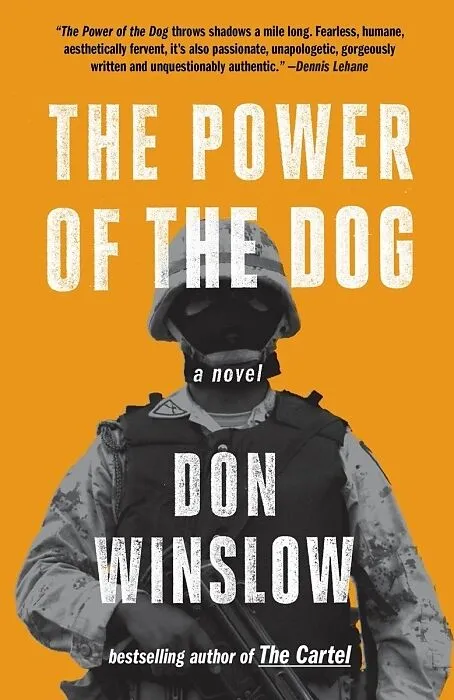
The Power of the Dog
Beschreibung
Zusatztext 52226177 Informationen zum Autor Don Winslow Klappentext From the New York Times bestselling author of The Cartel comes an explosive novel of the drug trade that takes you deep inside a world riddled with corruption, betrayal, and bloody revenge. Th...Format auswählen
- Kartonierter EinbandCHF 24.80

Wird oft zusammen gekauft
Andere Kunden kauften auch
Beschreibung
Zusatztext 52226177 Informationen zum Autor Don Winslow Klappentext From the New York Times bestselling author of The Cartel comes an explosive novel of the drug trade that takes you deep inside a world riddled with corruption, betrayal, and bloody revenge. The prequel to The Cartel, and set about 10 years earlier, The Power of the Dog introduces a brilliant cast of characters. Art Keller is an obsessive DEA agent. The Barrera brothers are heirs to a drug empire. Nora Hayden is a jaded teenager who becomes a high-class hooker. Father Parada is a powerful and incorruptible Catholic priest. Callan is an Irish kid from Hell's kitchen who grows up to be a merciless hit man. And they are all trapped in the world of the Mexican drug Federación. From the streets of New York City to Mexico City and Tijuana to the jungles of Central America, this is the war on drugs like you've never seen it. Badiraguato District State of Sinaloa Mexico 1975 The poppies burn. Red blossoms, red flames. Only in hell, Art Keller thinks, do flowers bloom fire. Art sits on a ridge above the burning valley. Looking down is like peering into a steaming soup bowlhe can't see clearly through the smoke, but what he can make out is a scene from hell. Hieronymus Bosch does the War on Drugs. CampesinosMexican peasant farmerstrot in front of the flames, clutching the few possessions they could grab before the soldiers put the torch to their village. Pushing their children in front of them, the campesinos carry sacks of food, family photographs bought at great price, some blankets, some clothes. Their white shirts and straw hatsstained yellow with sweatmake them ghost-like in the haze of smoke. Except for the clothes, Art thinks, it could be Vietnam. He's half-surprised, glancing at the sleeve of his own shirt, to see blue denim instead of army green. Reminds himself that this isn't Operation Phoenix but Operation Condor, and these aren't the bamboo-thick mountains of I Corps, but the poppy-rich mountain valleys of Sinaloa. And the crop isn't rice, it's opium. Art hears the dull bass whop-whop-whop of helicopter rotors and looks up. Like a lot of guys who were in Vietnam, he finds the sound evocative. Yeah, but evocative of what? he asks himself, then decides that some memories are better left buried. Choppers and fixed-wing planes circle overhead like vultures. The airplanes do the actual spraying; the choppers are there to help protect the planes from the sporadic AK-47 rounds fired by the remaining gomerosopium growerswho still want to make a fight of it. Art knows too well that an accurate burst from an AK can bring down a chopper. Hit it in the tail rotor and it will spiral down like a broken toy at a kid's birthday party. Hit the pilot, and, well . . . So far they've been lucky and no choppers have been hit. Either the gomeros are just bad shots, or they're not used to firing on helicopters. Technically, all the aircraft are Mexicanofficially, Condor is a Mexican show, a joint operation between the Ninth Army Corps and the State of Sinaloabut the planes were bought and paid for by the DEA and are flown by DEA contract pilots, most of them former CIA employees from the old Southeast Asia crew. Now there's a tasty irony, Keller thinksAir America boys who once flew heroin for Thai warlords now spray defoliants on Mexican opium. The DEA wanted to use Agent Orange, but the Mexicans had balked at that. So instead they are using a new compound, 24-D, which the Mexicans feel comfortable with, mostly, Keller chuckles, because the gomeros were already using it to kill the weeds around the poppy fields. So there was a ready supply. Yeah, Art thinks, it's a Mexican operation. We Americans are just down here as advisers. Like Vietnam. Just with different ball caps. From the New York Times bestselling author of The Cartel comes an explosive novel of the drug trade that takes you deep inside a world riddled with corruption, betrayal, and bloody revenge. The prequel to The Cartel, and set about 10 years earlier, The Power of the Dog introduces a brilliant cast of characters. Art Keller is an obsessive DEA agent. The Barrera brothers are heirs to a drug empire. Nora Hayden is a jaded teenager who becomes a high-class hooker. Father Parada is a powerful and incorruptible Catholic priest. Callan is an Irish kid from Hell's kitchen who grows up to be a merciless hit man. And they are all trapped in the world of the Mexican drug Federación. From the streets of New York City to Mexico City and Tijuana to the jungles of Central America, this is the war on drugs like you've never seen it.
Zusammenfassung
**From the New York Times bestselling author, here is the first novel in the explosive Power of the Dog series—an action-filled look at the drug trade that takes you deep inside a world riddled with corruption, betrayal, and bloody revenge.
**
**Book One of the Power of the Dog Series
**
Set about ten years prior to The Cartel, this gritty novel introduces a brilliant cast of characters. Art Keller is an obsessive DEA agent. The Barrera brothers are heirs to a drug empire. Nora Hayden is a jaded teenager who becomes a high-class hooker. Father Parada is a powerful and incorruptible Catholic priest. Callan is an Irish kid from Hell’s kitchen who grows up to be a merciless hit man. And they are all trapped in the world of the Mexican drug Federación. From the streets of New York City to Mexico City and Tijuana to the jungles of Central America, this is the war on drugs like you’ve never seen it.
Leseprobe
Badiraguato District
State of Sinaloa
Mexico
1975
The poppies burn.
Red blossoms, red flames.
Only in hell, Art Keller thinks, do flowers bloom fire.
Art sits on a ridge above the burning valley. Looking down is like peering into a steaming soup bowl—he can’t see clearly through the smoke, but what he can make out is a scene from hell.
Hieronymus Bosch does the War on Drugs.
Campesinos—Mexican peasant farmers—trot in front of the flames, clutching the few possessions they could grab before the soldiers put the torch to their village. Pushing their children in front of them, the campesinos carry sacks of food, family photographs bought at great price, some blankets, some clothes. Their white shirts and straw hats—stained yellow with sweat—make them ghost-like in the haze of smoke.
Except for the clothes, Art thinks, it could be Vietnam.
He’s half-surprised, glancing at the sleeve of his own shirt, to see blue denim instead of army green. Reminds himself that this isn’t Operation Phoenix but Operation Condor, and these aren’t the bamboo-thick mountains of I Corps, but the poppy-rich mountain valleys of Sinaloa.
And the crop isn’t rice, it’s opium.
Art hears the dull bass whop-whop-whop of helicopter rotors and looks up. Like a lot of guys who were in Vietnam, he finds the sound evocative. Yeah, but evocative of what? he asks himself, then decides that some memories are better left buried.
Choppers and fixed-wing planes circle overhead like vultures. The airplanes do the actual spraying; the choppers are there to help protect the planes from the sporadic AK-47 rounds fired by the remaining gomeros—opium growers—who still want to make a fight of it. Art knows too well that an accurate burst from an AK can bring down a chopper. Hit it in the tail rotor and it will spiral down like a broken toy at a kid’s birthday party. Hit the pilot, and, well . . . So far they’ve been lucky and no choppers have been hit. Either the gomeros are just bad shots, or they’re not used to firing on helicopters.
Technically, all the aircraft are Mexican—officially, Condor is a Mexican show, a joint operation between the Ninth Army Corps and the State of Sinaloa—but the…