
IHR WARENKORB IST AKTUELL LEER.
Haben Sie noch nichts passendes gefunden? Stöbern Sie durch unser komplettes Sortiment.
Oder melden Sie sich an bzw. registrieren Sie sich.
- Kostenlose Lieferung
- Kauf auf Rechnung
- Ex Libris Tiefpreis
- Filiallieferung und 650+ Abholorte
- Rabatt-Bons als Club-Mitglied
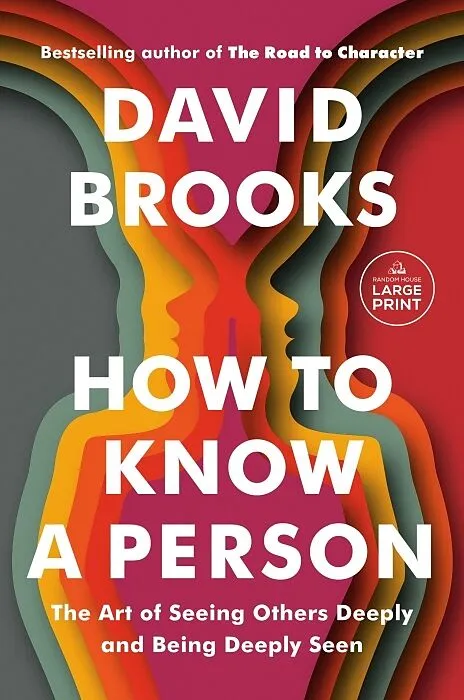
How to Know a Person
Beschreibung
A practical, heartfelt guide to the art of truly knowing another person in order to foster deeper connections at home, at work, and throughout our lives--from the #1 If you are going to care for someone, you must first understand them. If you’re going to...Format auswählen
- Kartonierter EinbandCHF 35.90
- Kartonierter EinbandCHF 15.40
Wird oft zusammen gekauft
Andere Kunden kauften auch
Beschreibung
A practical, heartfelt guide to the art of truly knowing another person in order to foster deeper connections at home, at work, and throughout our lives--from the #1 If you are going to care for someone, you must first understand them. If you’re going to hire, marry, or befriend someone, you have to be able to see them. If you are going to work closely with someone, you have to be able to make them feel recognized and valued. As David Brooks observes, “The older I get, the more I come to the certainty that there is one skill at the center of any healthy family, company, classroom, community or nation: the ability to see each other, to know other people, to make them feel valued, heard and understood.” And yet we humans don’t do this well. All around us are people who feel invisible, unseen, misunderstood. In Driven by his trademark sense of curiosity, Brooks draws from the fields of psychology and neuroscience, and from the worlds of theatre, history, and education, to present a welcoming, hopeful, integrated approach to human connection. The act of seeing another person, Brooks argues, is a profoundly creative act: How can we look somebody in the eye and see something large in them, and in turn, see something larger in ourselves? <How to Know a Person< is for anyone searching for connection, seeking to understand and yearning to be understood....
Autorentext
David Brooks
Klappentext
NEW YORK TIMES BESTSELLER • A practical, heartfelt guide to the art of truly knowing another person and fostering deeper connections at home, at work, and throughout our lives—from the author of The Road to Character and The Second Mountain
As David Brooks observes, “There is one skill that lies at the heart of any healthy person, family, school, community organization, or society: the ability to see someone else deeply and make them feel seen—to accurately know another person, to let them feel valued, heard, and understood.”
And yet all around are people who feel invisible, unseen, misunderstood. In How to Know a Person, Brooks sets out to help us do better, posing essential questions: If you want to know a person, what kind of attention should you cast on them? What kind of conversations should you have? What parts of a person’s story should you pay attention to?
Driven by his trademark sense of curiosity and determination to grow as a person, Brooks draws from the fields of psychology and neuroscience and the worlds of theater, philosophy, history, and education to present a welcoming, hopeful, integrated approach to human connection. How to Know a Person helps readers become more understanding and considerate toward others, and to find the joy that comes from being seen. Along the way it offers a possible remedy for a society that is riven by fragmentation, hostility, and misperception.
The act of seeing another person, Brooks argues, is profoundly creative: How can we look somebody in the eye and see something large in them and, in turn, see something larger in ourselves? How to Know a Person is for anyone searching for connection, and yearning to be understood.
Leseprobe
**ONE
The Power of Being Seen**
If you ever saw the old movie Fiddler on the Roof, you know how warm and emotional Jewish families can be. They are always hugging, singing, dancing, laughing, and crying together.
I come from the other kind of Jewish family.
The culture of my upbringing could be summed up by the phrase “Think Yiddish, act British.” We were reserved, stiff-upper-lip types. I’m not saying I had a bad childhood—far from it. Home was a stimulating place for me, growing up. Over our Thanksgiving dinner tables, we talked about the history of Victorian funerary monuments and the evolutionary sources of lactose intolerance (I’m not kidding). There was love in the home. We just didn’t express it.
Perhaps unsurprisingly, I became a bit detached. When I was four, my nursery school teacher apparently told my parents, “David doesn’t always play with the other children. A lot of the time he stands off to the side and observes them.” Whether it was nature or nurture, a certain aloofness became part of my personality. By high school I had taken up long-term residency inside my own head. I felt most alive when I was engaged in the solitary business of writing. Junior year I wanted to date a woman named Bernice. But after doing some intel gathering, I discovered she wanted to go out with another guy. I was shocked. I remember telling myself, “What is she thinking? I write way better than that guy!” It’s quite possible that I had a somewhat constrained view of how social life worked for most people.
Then, when I was eighteen, the admissions officers at Columbia, Wesleyan, and Brown decided I should go to the University of Chicago. I love my alma mater, and it has changed a lot for the better since I was there, but back then it wasn’t exactly the sort of get-in-touch-with-your-feelings place that would help thaw my emotional ice age. My favorite saying about Chicago is this one: It’s a Baptist school where atheist professors teach Jewish students Saint Thomas Aquinas. The students there still wear T-shirts that read, “Sure it works in practice, but does it work in theory?” And so into this heady world I traipsed and . . . shocker, I fit right in.
If you had met me ten years out of college, I think you would have found me a pleasant enough guy, cheerful but a tad inhibited—not somebody who was easy to get to know or who found it easy to get to know you. In truth, I was a practiced escape artist. When other people revealed some vulnerable intimacy to me, I was good at making meaningful eye contact with their shoes and then excusing myself to keep a vitally important appointment with my dry cleaner. I had a sense that this wasn’t an ideal way of being. I felt painfully awkward during those moments when someone tried to connect with me. I inwardly wanted to connect. I just didn’t know what to say.
Repressing my own feelings became my default mode for moving through the world. I suppose I was driven by the usual causes: fear of intimacy; an intuition that if I really let my feelings flow, I wouldn’t like what bubbled up; a fear of vulnerability; and a general social ineptitude. One seemingly small and stupid episode symbolizes this repressed way of living for me. I’m a big baseball fan, and though I have been to hundreds of games, I have never once caught a foul ball in the stands. One day about fifteen years ago, I was at a game in Baltimore when a hitter’s bat shattered, and the whole bat except the knob helicoptered over the dugout and landed at my feet. I reached down and grabbed it. Getting a bat at a game is a thousand times better than getting a ball! I should have been jumping up and down, waving my trophy in the air, high-fiving the people around me, becoming a temporary jumbotron celebrity. Instead, I just placed the bat at my feet and sat, still-faced, as everyone stared at me. Looking back, I want to scream at myself: “Show a little joy!” But when it came to spontaneous displays of emotion, I had the emotional capacity of a head of cabbage.
Life has a way of tenderizing you, though. Becoming a father was an emotional revolution, of course. Later, I absorbed my share of the blows that any adult suffers: broken relationships, public failures, the vulnerability that comes with getting older. The ensuing sense of my own frailty was good for me, introducing me to deeper, repressed parts of myself.
Another seemingly small event symbolizes the beginning of my ongoing journey toward becoming a full human being. As a commentator and pundit, I sometimes get asked to sit on panel di…