
IHR WARENKORB IST AKTUELL LEER.
Haben Sie noch nichts passendes gefunden? Stöbern Sie durch unser komplettes Sortiment.
Oder melden Sie sich an bzw. registrieren Sie sich.
- Kostenlose Lieferung
- Kauf auf Rechnung
- Ex Libris Tiefpreis
- Filiallieferung und 650+ Abholorte
- Rabatt-Bons als Club-Mitglied
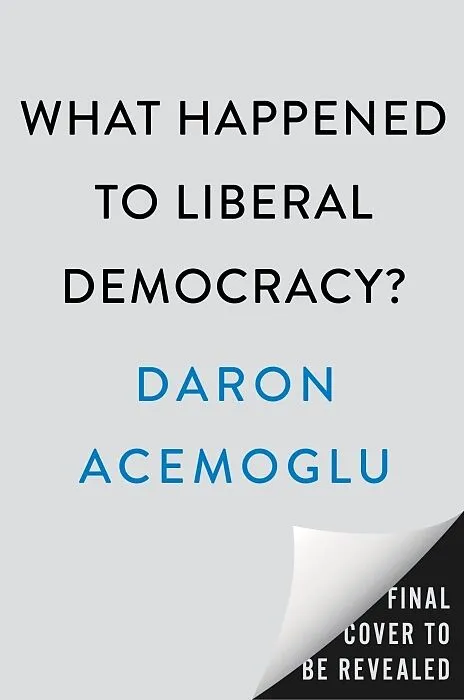
What Happened to Liberal Democracy?
Beschreibung
From Daron Acemoglu, 2024 Nobel laureate in economics and coauthor of With the fall of the Berlin Wall in 1989, it seemed like we were one step closer to the triumph of liberalism--with more and more of the world population living in liberal democracies and be...Format auswählen
- Fester EinbandCHF 33.50

Wird oft zusammen gekauft
Andere Kunden kauften auch
Beschreibung
From Daron Acemoglu, 2024 Nobel laureate in economics and coauthor of With the fall of the Berlin Wall in 1989, it seemed like we were one step closer to the triumph of liberalism--with more and more of the world population living in liberal democracies and benefiting from sustained growth and shared prosperity. A generation later, one can only ask: What happened? Liberal democracy flourished, Nobel laureate Daron Acemoglu argues in this powerful and persuasive book, when it pursued its core promises of shared prosperity, democratic governance at the local and national level, and the free pursuit of knowledge. But liberalism, a philosophy built to challenge power, neither fully adjusted to becoming the establishment. Nor was it able to deal with the economic and social disruptions that digital technologies wrought. Worse, liberalism lost its way in the postindustrial economy and turned its back on its core promises. Acemoglu, using the wide interdisciplinary lens that has won him acclaim, documents the extraordinary, unparalleled progress that liberalism created, and how this philosophy and liberal democratic institutions plunged themselves into a crisis over the last four decades. Looking at rapid advances in technology, shifts in regulatory environments, global political history, and economics, Acemoglu lucidly lays out the successes and failures of our most important political system. He explains how the postindustrial society where the college educated have come to be politically dominant and separated from the rest sowed the seeds of widespread inequality and intensifying social engineering. But this book is also an invitation to remake liberalism as a new and more effective political philosophy--in the form of <working class liberalism< prioritizing shared prosperity, valuing community, and differences in values and views....
Autorentext
Daron Acemoglu
Klappentext
**International Bestseller
From Daron Acemoglu, 2024 Nobel laureate in economics and coauthor of Why Nations Fail, an ambitious and expansive inquiry into the biggest story in global politics over the last hundred years: the rise and fall of liberal democracy.
"A very important work and a must-read." —Thomas Piketty, #1 New York Times bestselling author of *Capital in the Twenty-First Century
*"Daron Acemoglu is one of the most brilliant and insightful thinkers I’ve ever known. This book is a tour de force that left me feeling more optimistic about the future than I have in a long time." —Steven Levitt, #1 New York Times bestselling author of Freakonomics
**The dissolution of the Soviet Union in 1991 raised hopes that we were one step closer to the triumph of liberalism. Soon, many predicted, we would all be living in functional liberal democracies. Sustained economic growth would benefit all segments of society and war would be a relic of the past. A generation later, one can only ask: What happened?
Nobel laureate Daron Acemoglu argues in this powerful book that liberal democracy flourished when it pursued its core promises of shared prosperity, democratic governance, and the free pursuit of knowledge. But liberalism, a philosophy built to challenge power, never fully adjusted to becoming the establishment. Nor was it able to deal with the economic and social disruptions that digital technologies wrought. Worse, in the postindustrial economy, liberalism turned its back on its core promises. As a segment of college-educated elites became politically dominant and separated from the rest of society, they sowed the seeds of widespread inequality while intensifying efforts to reshape mass culture and values.
Acemoglu, using the interdisciplinary lens that has won him acclaim, documents the extraordinary, unparalleled progress that liberalism created, and recounts how liberal democratic institutions plunged themselves into crisis over the last several decades. Looking at rapid advances in technology, shifts in regulatory environments, global political history, and economics, Acemoglu lucidly lays out the successes and failures of our most important political system. And he envisions a new way forward, which he calls working-class liberalism: a philosophy that prioritizes shared prosperity, empowers communities, and accommodates a range of values and views.
Leseprobe
Chapter 1
Liberal Democracy in Crisis
But the century that began full of self-confidence in the
ultimate triumph of Western liberal democracy seems at its close to
be returning full circle to where it started: . . . to an unabashed
victory of economic and political liberalism.
-Francis Fukuyama
I follow the Moskva
Down to the Gorky Park
Listening to the wind of change.
-Scorpions
June 16, 1989. Six coffins rest beneath the monumental steps of the Mu˝csarnok colonnade, a neoclassical art museum dressed in black crepe for that day. Five hold the remains of Prime Minister Imre Nagy and his comrades, executed by the Soviets in 1958 for leading the uprising to end Soviet rule in Hungary. So secret were their graves that it took seven years to find them. The sixth is empty: a mute casket for every unnamed victim of the failed revolution. A quarter million Hungarians fill the square, hopeful that this is a new day for their country and fearful that the events of 1956-58 will repeat.
The last speech is delivered by a bearded young man representing Fidesz, the Alliance of Young Democrats, Viktor Mihály Orbán. With an unwavering voice, he bellows:
If we believe in our own strength, we are capable of bringing the communist dictatorship to an end. If we are determined enough, we can compel the ruling party to submit to free elections. If we have not lost sight of the ideas of fifty-six, we can vote for a government that will immediately enter into negotiations leading to the immediate beginning of Russian troop withdrawals.
Seventy thousand Soviet troops still occupied Hungary at the time, but that was about to end, partly thanks to Orbán's powerful call for democracy and independence from Soviet control. Orbán would then go on to serve as one of the youngest prime ministers in Europe.
This was the background to Francis Fukuyama's declaration that the end of history had arrived and that a brighter future for liberalism and liberal democracy was upon us. Fukuyama wasn't alone in his sentiments. Many believed the world had changed, that the drive toward greater democracy and liberty was unstoppable. In 1991, the legendary German rock band Scorpions would give another voice to these hopes by singing about the failed coup that spelled the collapse of the Soviet Union-an event that seemed to bring Fukuyama's prediction one step closer to reality.
Yet the widespread optimism has now given way to a sense of crisis, and Viktor Orbán is again at the forefront. By 2014, still in power, he had completely changed his tune. Gone were calls for liberty. Orbán instead proudly announced that he was "building an illiberal state" and "work-based society" while "defending European Christianity." He centralized executive powers in his hands, clamped down on freedom of speech, and closed media outlets and universities. Orbán is an inspiration to many antiliberal politicians across the world, including in the United States. He has become a symbol of the downward arc of "liberalism."
For a while, liberalism and liberal democracy inspired the world, delivering much of what people longed for. Then came the crisis. What happened?
The Meaning of Liberalism
"Liberalism" has a muddled meaning in common parlance. Depending on the context, it can be used with left-leaning or right-leaning connotations, such as progressive versus classical liberalism. Its meaning shifts with geography. Liberalism denotes a left-leaning ideology in the …