
IHR WARENKORB IST AKTUELL LEER.
Haben Sie noch nichts passendes gefunden? Stöbern Sie durch unser komplettes Sortiment.
Oder melden Sie sich an bzw. registrieren Sie sich.
- Kostenlose Lieferung
- Kauf auf Rechnung
- Ex Libris Tiefpreis
- Filiallieferung und 650+ Abholorte
- Rabatt-Bons als Club-Mitglied
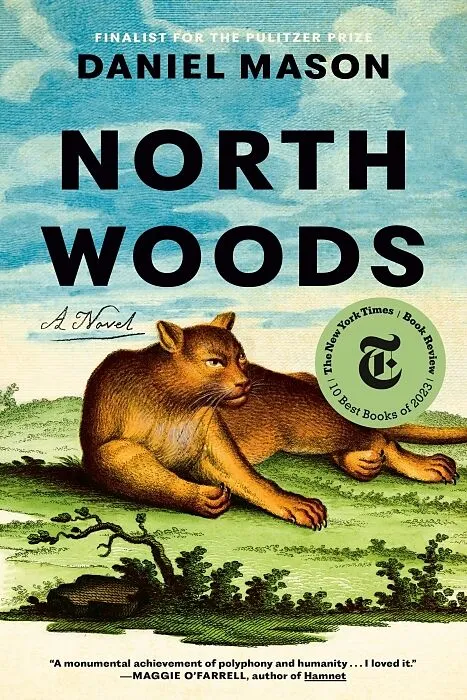
North Woods
Beschreibung
Informationen zum Autor Daniel Mason is the author of The Piano Tuner , A Far Country , The Winter Soldier , and A Registry of My Passage Upon the Earth , which was a finalist for the Pulitzer Prize. His work has been translated into twenty-eight languages, ad...Format auswählen
- Fester EinbandCHF 31.90
- Kartonierter EinbandCHF 33.20
- Kartonierter EinbandCHF 13.80

Wird oft zusammen gekauft
Andere Kunden kauften auch
Beschreibung
Informationen zum Autor Daniel Mason is the author of The Piano Tuner , A Far Country , The Winter Soldier , and A Registry of My Passage Upon the Earth , which was a finalist for the Pulitzer Prize. His work has been translated into twenty-eight languages, adapted for opera and the stage, and awarded, among others, a Guggenheim Fellowship, the Joyce Carol Oates Prize, a California Book Award, an O. Henry Prize, and a Fellowship from the National Endowment for the Arts. He is an assistant professor in the Stanford University department of psychiatry. Klappentext "When a pair of young lovers abscond from a Puritan colony, little do they know that their humble cabin in the woods will become the home of an extraordinary succession of human and nonhuman characters alike. An English soldier, destined for glory, abandons the battlefields of the New World to devote himself to apples. A pair of spinster twins navigate war and famine, envy and desire. A crime reporter unearths a mass grave--only to discover that the ancient trees refuse to give up their secrets. A lovelorn painter, a sinister conman, a stalking panther, a lusty beetle: as each inhabitant confronts the wonder and mystery around them, they begin to realize that the dark, raucous, beautiful past is very much alive"-- Leseprobe One They had come to the spot in the freshness of June, chased from the village by its people, threading deer path through the forest, the valleys, the fern groves, and the quaking bogs. Fast they ran! Steam rose from the fens and meadows. Bramble tore at their clothing, shredding it to rags that hung about their shoulders. They crashed through thickets, hid in tree hollows and bear caves, rattling sticks before they slipped inside. They fled as if it were a child's game, as if they had made off with plunder. My plunder, he whispered, as he touched her lips. They laughed with the glee of it. They could not be found! Solemn men marched past them with harquebuses cocked in their elbows, peered into the undergrowth, stuffed greasy pinches of tobacco into their pipes. The world had closed over them. Gone was England, gone the Colony. They were Nature's wards now, he told her, they had crossed into a Realm. Lying beneath him in the litter, in the low hollow of an oak, she arced her head to watch the belted boots and leather scabbards swinging across the wormy ceiling of the world. So close! she thought, biting his hand to stifle her joy. Entwined, they watched the stalking dogs and met their eyes, saw recognition cross their dog-faces, the conspiring shiver of their tails as they continued on. They ran. In open fields, they hid within the shadows of the bird flocks, in the rivers below the silvery ceiling of the fish. Their soles peeled from their shoes. They bound them with their rags, with bark, then lost them in the sucking fens. Barefoot they ran through the forest, and in the sheltered, sappy bowers, when they thought they were alone, he drew splinters from her feet. They were young and they could run for hours, and June had blessed them with her berries, her untended farmer's carts. They paused to eat, to sleep, to steal, to roll in the rustling meadows of goldenrod. In hidden ponds, he lifted her dripping from the water, set her on the mossy stone, and kissed the river streaming from her tresses and her legs. Did he know where he was going, she asked him, pulling him to her, tasting his mouth, and always he answered, Away! North they went, to the north woods and then toward sun-fall, trespassing like fire, but the mountains bent their course and the bogs detained them, and after a week they could have been anywhere. Did it matter? Rivers carried them off and settled them on distant, sun-warmed banks. The bramble parted, closed behind them. In the cataracts, she felt the spring melt pounding her shoulders, watched him picking h...
Autorentext
Daniel Mason is the author of The Piano Tuner, A Far Country, The Winter Soldier, and A Registry of My Passage Upon the Earth, which was a finalist for the Pulitzer Prize. His work **has been translated into twenty-eight languages, adapted for opera and the stage, and awarded, among others, a Guggenheim Fellowship, the Joyce Carol Oates Prize, a California Book Award, an O. Henry Prize, and a Fellowship from the National Endowment for the Arts. He is an assistant professor in the Stanford University department of psychiatry.
Klappentext
"When a pair of young lovers abscond from a Puritan colony, little do they know that their humble cabin in the woods will become the home of an extraordinary succession of human and nonhuman characters alike. An English soldier, destined for glory, abandons the battlefields of the New World to devote himself to apples. A pair of spinster twins navigate war and famine, envy and desire. A crime reporter unearths a mass grave--only to discover that the ancient trees refuse to give up their secrets. A lovelorn painter, a sinister conman, a stalking panther, a lusty beetle: as each inhabitant confronts the wonder and mystery around them, they begin to realize that the dark, raucous, beautiful past is very much alive"--
Zusammenfassung
**NATIONAL BESTSELLER • A NEW YORK TIMES BOOK REVIEW TOP TEN BOOK OF THE YEAR
A WASHINGTON POST TOP TEN BOOK OF THE YEAR • FINALIST FOR THE NATIONAL BOOK CRITICS CIRCLE AWARD AND THE MARK TWAIN AMERICAN VOICE IN LITERATURE AWARD**
**A sweeping novel about a single house in the woods of New England, told through the lives of those who inhabit it across the centuries—“a time-spanning, genre-blurring work of storytelling magic” (The Washington Post) from the Pulitzer Prize finalist and author of The Piano Tuner and The Winter Soldier.
“With the expansiveness and immersive feeling of two-time Booker Prize nominee David Mitchell’s fiction (Cloud Atlas), the wicked creepiness of Edgar Allan Poe, and Mason’s bone-deep knowledge of and appreciation for the natural world that’s on par with that of Thoreau, North Woods fires on all cylinders.”—San Francisco Chronicle**
New York Times Book Review Editors’ Choice • A BEST BOOK OF THE YEAR: Time, The Boston Globe, NPR, Chicago Public Library, The Star Tribune, The Economist, The Christian Science Monitor, Real Simple, Kirkus Reviews, Publishers Weekly, Library Journal, Bookreporter
When two young lovers abscond from a Puritan colony, little do they know that their humble cabin in the woods will become the home of an extraordinary succession of human and nonhuman characters alike. An English soldier, destined for glory, abandons the battlefields of the New World to devote himself to growing apples. A pair of spinster twins navigate war and famine, envy and desire. A crime reporter unearths an ancient mass grave—only to discover that the earth refuse to give up their secrets. A lovelorn painter, a sinister con man, a stalking panther, a lusty beetle: As the inhabitants confront the wonder and mystery around them, they begin to realize that the dark, raucous, beautiful past is very much alive.
This magisterial and highly inventive novel from Pulitzer Prize finalist Daniel Mason brims with love and madness, humor and hope. Following the cycles of history, nature, and even language, North Woods shows the myriad, magical ways in which we’re connected to our environment, to history, and to one another. It is not just an unforgettable novel about secrets and destinies, but a way of looking at the world that asks the timeless question: How do we live on, even after we’re gone?
Leseprobe
One
They had come to the spot in the freshness of June, chased from the village by its people, threading deer path through the forest, the valleys, the fern groves, and the quaking bogs.
Fast they ran! Steam rose from th…