
IHR WARENKORB IST AKTUELL LEER.
Haben Sie noch nichts passendes gefunden? Stöbern Sie durch unser komplettes Sortiment.
Oder melden Sie sich an bzw. registrieren Sie sich.
- Kostenlose Lieferung
- Kauf auf Rechnung
- Ex Libris Tiefpreis
- Filiallieferung und 650+ Abholorte
- Rabatt-Bons als Club-Mitglied
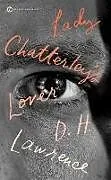
Lady Chatterley's Lover
Beschreibung
Informationen zum Autor The son of a miner, the prolific novelist, poet, and travel writer David Herbert Lawrence was born in Eastwood, Nottinghamshire, in 1885. He attended Nottingham University and found employment as a schoolteacher. His first novel, The Wh...Format auswählen
- Poche format ACHF 8.70
Wird oft zusammen gekauft
Andere Kunden kauften auch
Beschreibung
Informationen zum Autor The son of a miner, the prolific novelist, poet, and travel writer David Herbert Lawrence was born in Eastwood, Nottinghamshire, in 1885. He attended Nottingham University and found employment as a schoolteacher. His first novel, The White Peacock , was published in 1911, the same year his beloved mother died and he quit teaching after contracting pneumonia. The next year Lawrence published Sons and Lovers and ran off to Germany with Frieda Weekley, his former tutor's wife. His masterpieces The Rainbow and Women in Love were completed in quick succession, but the first was suppressed as indecent and the second was not published until 1920. Lawrence's lyrical writings challenged convention, promoting a return to an ideal of nature where sex is seen as a sacrament. In 1928 Lawrence's final novel, Lady Chatterley's Lover , was banned in England and the United States for indecency. He died of tuberculosis in 1930 in Venice. Klappentext Lady Chatterley's Lover is both one of the most beautiful and notorious love stories in modern fiction. The summation of D.H. Lawrence's artistic achievement, it sharply illustrates his belief that tenderness and passion were the only weapons that could save man from self-destruction. Chapter One Ours is essentially a tragic age, so we refuse to take it tragically. The cataclysm has happened, we are among the ruins, we start to build up new little habits, to have new little hopes. It is rather hard work: there is now no smooth road into the future: but we go round, or scramble over the obstacles. We've got to live, no matter how many skies have fallen. This was more or less Constance Chatterley's position. The war had brought the roof down over her head. And she had realized that one must live and learn. She married Clifford Chatterley in 1917, when he was home for a month on leave. They had a month's honeymoon. Then he went back to Flanders: to be shipped over to England again six months later, more or less in bits. Constance, his wife, was then twenty-three years old, and he was twenty-nine. His hold on life was marvellous. He didn't die, and the bits seemed to grow together again. For two years he remained in the doctor's hands. Then he was pronounced a cure, and could return to life again, with the lower half of his body, from the hips down, paralyzed for ever. This was in 1920. They returned, Clifford and Constance, to his home, Wragby Hall, the family seat. His father had died, Clifford was now a baronet, Sir Clifford, and Constance was Lady Chatterley. They came to start housekeeping and married life in the rather forlorn home of the Chatterleys on a rather inadequate income. Clifford had a sister, but she had departed. Otherwise there were no near relatives. The elder brother was dead in the war. Crippled for ever, knowing he could never have any children, Clifford came home to the smoky Midlands to keep the Chatterley name alive while he could. He was not really downcast. He could wheel himself about in a wheeled chair, and he had a bath-chair with a small motor attachment, so he could drive himself slowly round the garden and into the fine melancholy park, of which he was really so proud, though he pretended to be flippant about it. Having suffered so much, the capacity for suffering had to some extent left him. He remained strange and bright and cheerful, almost, one might say, chirpy, with his ruddy, healthy-looking face, and his pale-blue, challenging bright eyes. His shoulders were broad and strong, his hands were very strong. He was expensively dressed, and wore handsome neckties from Bond Street. Yet still in his face one saw the watchful look, the slight vacancy of a cripple. He had so very nearly lost his life, that what remained was wonderfully precious to him. It was obvious in the anxious brightness of his eyes, how p...
Autorentext
The son of a miner, the prolific novelist, poet, and travel writer David Herbert Lawrence was born in Eastwood, Nottinghamshire, in 1885. He attended Nottingham University and found employment as a schoolteacher. His first novel, The White Peacock, was published in 1911, the same year his beloved mother died and he quit teaching after contracting pneumonia. The next year Lawrence published Sons and Lovers and ran off to Germany with Frieda Weekley, his former tutor’s wife. His masterpieces The Rainbow and Women in Love were completed in quick succession, but the first was suppressed as indecent and the second was not published until 1920. Lawrence’s lyrical writings challenged convention, promoting a return to an ideal of nature where sex is seen as a sacrament. In 1928 Lawrence’s final novel, Lady Chatterley’s Lover, was banned in England and the United States for indecency. He died of tuberculosis in 1930 in Venice.
Klappentext
Lady Chatterley's Lover is both one of the most beautiful and notorious love stories in modern fiction. The summation of D.H. Lawrence's artistic achievement, it sharply illustrates his belief that tenderness and passion were the only weapons that could save man from self-destruction.
Zusammenfassung
THE AUTHORIZED UNEXPURGATED EDITION—Lady Chatterley’s Lover is one of the most beautiful and most notorious love stories in modern fiction.
The Signet Classics edition is D. H. Lawrence’s masterpiece just as he wrote it. It is the complete unexpurgated text of the original Orioli edition first published in Italy in 1928, the last approved by Lawrence himself.
The summation of D. H. Lawrence’s artistic achievement, this controversial novel about an upper-class woman stifled by a loveless marriage who begins a passionate affair with her husband’s gamekeeper sharply illustrates Lawrence’s belief that materialism robbed life of its vitality and purpose...that tenderness and passion were the only weapons that could save man from self-destruction.
“This Signet Classics edition is the only complete unexpurgated version of Lady Chatterley’s Lover authorized by the estate of Frieda Lawrence for U.S. publication. No other edition is entitled to make this claim.”—Laurence Pollinger, Literary Executor to the Estate of Mrs. Frieda Lawrence
Leseprobe
Chapter One
Ours is essentially a tragic age, so we refuse to take it tragically. The cataclysm has happened, we are among the ruins, we start to build up new little habits, to have new little hopes. It is rather hard work: there is now no smooth road into the future: but we go round, or scramble over the obstacles. We’ve got to live, no matter how many skies have fallen.
This was more or less Constance Chatterley’s position. The war had brought the roof down over her head. And she had realized that one must live and learn.
She married Clifford Chatterley in 1917, when he was home for a month on leave. They had a month’s honeymoon. Then he went back to Flanders: to be shipped over to England again six months later, more or less in bits. Constance, his wife, was then twenty-three years old, and he was twenty-nine.
His hold on life was marvellous. He didn’t die, and the bits seemed to grow together again. For two years he remained in the doctor’s hands. Then he was pronounced a cure, and could return to life again, with the lower half of his body, from the hips down, paralyzed for ever.
This was in 1920. They returned, Clifford and Constance, to his home, Wragby Hall, the family “seat.” His father had died, Clifford was now a baronet, Sir Clifford, and Constance was Lady Chatterley. They came to start housekeeping and married life in the rather forlorn home of the Chatterleys on a rather inadequate income. Clifford had a sister, but she had departed. Otherwise there were no near relatives. The elder brother was dead in the war. Crippled for ever, kn…