
IHR WARENKORB IST AKTUELL LEER.
Haben Sie noch nichts passendes gefunden? Stöbern Sie durch unser komplettes Sortiment.
Oder melden Sie sich an bzw. registrieren Sie sich.
- Kostenlose Lieferung
- Kauf auf Rechnung
- Ex Libris Tiefpreis
- Filiallieferung und 650+ Abholorte
- Rabatt-Bons als Club-Mitglied
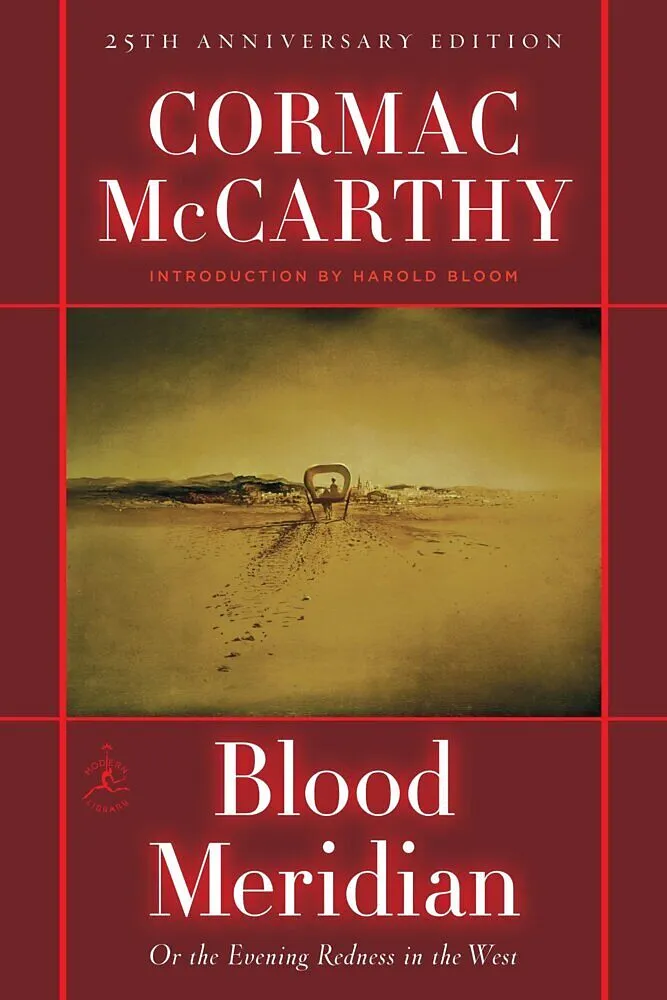
Blood Meridian
Beschreibung
Zusatztext "McCarthy is a writer to be read! to be admired! and quite honestlyenvied." Ralph Ellison "McCarthy is a born narrator! and his writing has! line by line! the stab of actuality. He is here to stay." Robert Penn Warren Informationen zum Autor Cormac ...Format auswählen
- Fester EinbandCHF 25.10

Wird oft zusammen gekauft
Andere Kunden kauften auch
Beschreibung
Zusatztext "McCarthy is a writer to be read! to be admired! and quite honestlyenvied." Ralph Ellison "McCarthy is a born narrator! and his writing has! line by line! the stab of actuality. He is here to stay." Robert Penn Warren Informationen zum Autor Cormac McCarthy Klappentext The masterpiece (Michael Herr) of the New York Times bestselling, Pulitzer Prizewinning author of The Road, No Country for Old Men, The Passenger, and Stella Maris The book that seems the most prescient about the United States of America in 2026.Lauren Groff for Time , 25 Books That Capture This American Moment Cormac McCarthy is the worthy disciple both of Melville and Faulkner. I venture that no other living American novelist, not even Pynchon, has given us a book as strong and memorable.Harold Bloom, from his Introduction McCarthy is a writer to be read, to be admired, and quite honestlyenvied.Ralph Ellison One of The Atlantic 's Great American Novels of the Past 100 Years Widely considered one of the finest novels by a living writer, Blood Meridian is an epic tale of the violence and corruption that attended America's westward expansion, brilliantly subverting the conventions of the Western novel and the mythology of the Wild West. Its wounded hero, the Kid, a fourteen-year-old Tennessean, must confront the extraordinary brutality of the Glanton gang, a murderous cadre on an official mission to scalp Indians. Seeming to preside over this nightmarish world is the diabolical Judge Holden, one of the most unforgettable characters in American fiction. Based on historical events that took place on the Texas-Mexico border in the 1850s, Blood Meridian represents a genius vision of the historical West, one whose stature has only grown in the years since its publication. Leseprobe Chapter 1 Childhood in Tennessee Runs away New Orleans Fights Is shot To Galveston Nacogdoches The Reverend Green Judge Holden An affray Toadvine Burning of the hotel Escape. See the child. He is pale and thin, he wears a thin and ragged linen shirt. He stokes the scullery fire. Outside lie dark turned fields with rags of snow and darker woods beyond that harbor yet a few last wolves. His folk are known for hewers of wood and drawers of water but in truth his father has been a schoolmaster. He lies in drink, he quotes from poets whose names are now lost. The boy crouches by the fire and watches him. Night of your birth. Thirty-three. The Leonids they were called. God how the stars did fall. I looked for blackness, holes in the heavens. The Dipper stove. The mother dead these fourteen years did incubate in her own bosom the creature who would carry her off. The father never speaks her name, the child does not know it. He has a sister in this world that he will not see again. He watches, pale and unwashed. He can neither read nor write and in him broods already a taste for mindless violence. All history present in that visage, the child the father of the man. At fourteen he runs away. He will not see again the freezing kitchenhouse in the predawn dark. The firewood, the washpots. He wanders west as far as Memphis, a solitary migrant upon that flat and pastoral landscape. Blacks in the fields, lank and stooped, their fingers spiderlike among the bolls of cotton. A shadowed agony in the garden. Against the sun's declining figures moving in the slower dusk across a paper skyline. A lone dark husbandman pursuing mule and harrow down the rain-blown bottomland toward night. A year later he is in Saint Louis. He is taken on for New Orleans aboard a flatboat. Forty-two days on the river. At night the steamboats hoot and trudge past through the black waters all alight like cities adrift. They break up the f...
"McCarthy is a writer to be read, to be admired, and quite honestly—envied."
—Ralph Ellison
"McCarthy is a born narrator, and his writing has, line by line, the stab of actuality. He is here to stay."
—Robert Penn Warren
Autorentext
Cormac McCarthy
Klappentext
**The “masterpiece” (Michael Herr) of the New York Times bestselling, Pulitzer Prize–winning author of The Road, No Country for Old Men, The Passenger, and Stella Maris
“The book that seems the most prescient about the United States of America in 2026.”—Lauren Groff for Time, “25 Books That Capture This American Moment”
“Cormac McCarthy is the worthy disciple both of Melville and Faulkner. I venture that no other living American novelist, not even Pynchon, has given us a book as strong and memorable.”—Harold Bloom, from his Introduction
“McCarthy is a writer to be read, to be admired, and quite honestly—envied.”—Ralph Ellison**
One of The Atlantic’s Great American Novels of the Past 100 Years
Widely considered one of the finest novels by a living writer, Blood Meridian is an epic tale of the violence and corruption that attended America’s westward expansion, brilliantly subverting the conventions of the Western novel and the mythology of the “Wild West.” Its wounded hero, the Kid, a fourteen-year-old Tennessean, must confront the extraordinary brutality of the Glanton gang, a murderous cadre on an official mission to scalp Indians. Seeming to preside over this nightmarish world is the diabolical Judge Holden, one of the most unforgettable characters in American fiction.
Based on historical events that took place on the Texas-Mexico border in the 1850s, Blood Meridian represents a genius vision of the historical West, one whose stature has only grown in the years since its publication.
Leseprobe
Chapter 1
**Childhood in Tennessee – Runs away – New Orleans – Fights – Is shot – To Galveston – Nacogdoches – The Reverend Green – Judge Holden – An affray – Toadvine – Burning of the hotel – Escape.
**
See the child. He is pale and thin, he wears a thin and ragged linen shirt. He stokes the scullery fire. Outside lie dark turned fields with rags of snow and darker woods beyond that harbor yet a few last wolves. His folk are known for hewers of wood and drawers of water but in truth his father has been a schoolmaster. He lies in drink, he quotes from poets whose names are now lost. The boy crouches by the fire and watches him.
Night of your birth. Thirty-three. The Leonids they were called. God how the stars did fall. I looked for blackness, holes in the heavens. The Dipper stove.
The mother dead these fourteen years did incubate in her own bosom the creature who would carry her off. The father never speaks her name, the child does not know it. He has a sister in this world that he will not see again. He watches, pale and unwashed. He can neither read nor write and in him broods already a taste for mindless violence. All history present in that visage, the child the father of the man.
At fourteen he runs away. He will not see again the freezing kitchenhouse in the predawn dark. The firewood, the washpots. He wanders west as far as Memphis, a solitary migrant upon that flat and pastoral landscape. Blacks in the fields, lank and stooped, their fingers spiderlike among the bolls of cotton. A shadowed agony in the garden. Against the sun’s declining figures moving in the slower dusk across a paper skyline. A lone dark husbandman pursuing mule and harrow down the rain-blown bottomland toward night.
A year later he is in Saint Louis. He is taken on for New Orleans aboard a flatboat. Forty-two days on the river. At night the steamboats hoot and trudge past through the black waters all alight like cities adrift. They break up the float and sell the lumber and he walks in the streets and hears tongues he has not heard before. He lives in a room above a courtyard behind a tavern and he comes down at night like some fair…