Fibonacci Analysis
Beschreibung
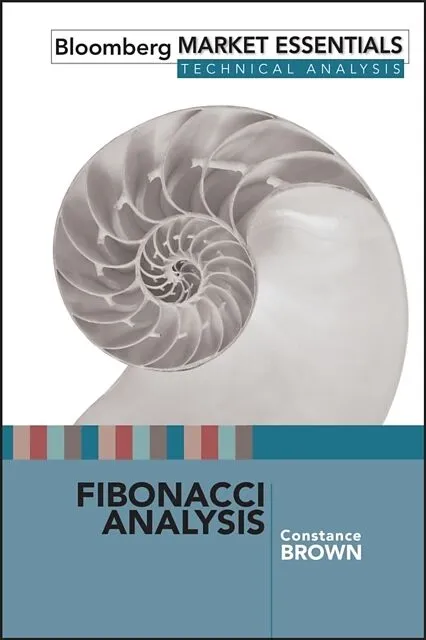
Part of the new Bloomberg Market Essentials series, Fibonacci Analysis provides a concise and accessible assessment of how Fibonacci works, the basic strategies with which it is linked and how iti can be used to identify future market prices. Informationen zum...Format auswählen
- Fester EinbandCHF 42.80

Wird oft zusammen gekauft
Andere Kunden kauften auch
Beschreibung
Part of the new Bloomberg Market Essentials series, Fibonacci Analysis provides a concise and accessible assessment of how Fibonacci works, the basic strategies with which it is linked and how iti can be used to identify future market prices.
Informationen zum Autor CONSTANCE BROWN (CMT) founded Aerodynamic Investments Inc. after working for more than twenty years as an institutional trader in New York. She is an active trader and frequently advises financial institutions and banks around the world. Brown's second book, Technical Analysis for the Trading Professional , was selected by the Market Technicians Association as required reading to prepare for CMT Level 3, the final examination that awards professionals the industry's Chartered Market Technician accreditation. She is also a member of the American Association of Professional Technical Analysts. Brown has written seven books and is the editor of Market Technicians Association's Journal of Technical Analysis . She lives in South Carolina. Klappentext Fibonacci analysis--named after the thirteenth-century Italian mathematician--is an extremely effective tool for understanding market movement. Nevertheless, Fibonacci analysis can be difficult to understand, preventing most traders from taking full advantage of this valuable technique. Fibonacci Analysis gives traders a concise and clear explanation of what this tool is, how it works, and how to apply it in today's markets. Constance Brown covers a wide range of topics including Fibonacci analysis in cycles of expansion and contraction, Fibonacci ratios for price projection, and applications for time analysis. Brown offers practical guidance on such specific tools as rhythmic wave diagrams, support and resistance, proportional analysis, and use with oscillators. Fibonacci Analysis is eminently practical, showing the most effective use of a technique that can increase the probability of trading success. Inhaltsverzeichnis List of Illustrations ix Acknowledgments xiii Introduction xv 1 The Mystery of Phi (1.618) and phi (0.618) 1 2 The Concept of Market Expansion and Contraction 15 3 Support, Resistance, and Price Projections 43 4 Bridging the Gap Between the Nautilus Shell and a Market Chart 61 5 Fibonacci Channels, Angles, and Cycles with Oscillators 77 6 Fibonacci Expansion Targets and Confluence in Time 105 7 Rhythmic Wave Diagrams 137 8 Harmonic Unity Within Market Price and Time 143 Appendix A 163 Appendix B: Common Errors 165 Selected Bibliography 171 Index 177 ...
Klappentext
Fibonacci analysis-named after the thirteenth-century Italian mathematician-is an extremely effective tool for understanding market movement. Nevertheless, Fibonacci analysis can be difficult to understand, preventing most traders from taking full advantage of this valuable technique.
Fibonacci Analysis gives traders a concise and clear explanation of what this tool is, how it works, and how to apply it in today's markets. Constance Brown covers a wide range of topics including Fibonacci analysis in cycles of expansion and contraction, Fibonacci ratios for price projection, and applications for time analysis. Brown offers practical guidance on such specific tools as rhythmic wave diagrams, support and resistance, proportional analysis, and use with oscillators.
Fibonacci Analysis is eminently practical, showing the most effective use of a technique that can increase the probability of trading success.
Inhalt
List of Illustrations ix
Acknowledgments xiii
Introduction xv
1 The Mystery of Phi (1.618) and phi (0.618) 1
2 The Concept of Market Expansion and Contraction 15
3 Support, Resistance, and Price Projections 43
4 Bridging the Gap Between the Nautilus Shell and a Market Chart 61
5 Fibonacci Channels, Angles, and Cycles with Oscillators 77
6 Fibonacci Expansion Targets and Confluence in Time 105
7 Rhythmic Wave Diagrams 137
8 Harmonic Unity Within Market Price and Time 143
Appendix A 163
Appendix B: Common Errors 165
Selected Bibliography 171
Index 177