Haben Sie noch nichts passendes gefunden? Stöbern Sie durch unser komplettes Sortiment.
Oder melden Sie sich an bzw. registrieren Sie sich.


Beschreibung
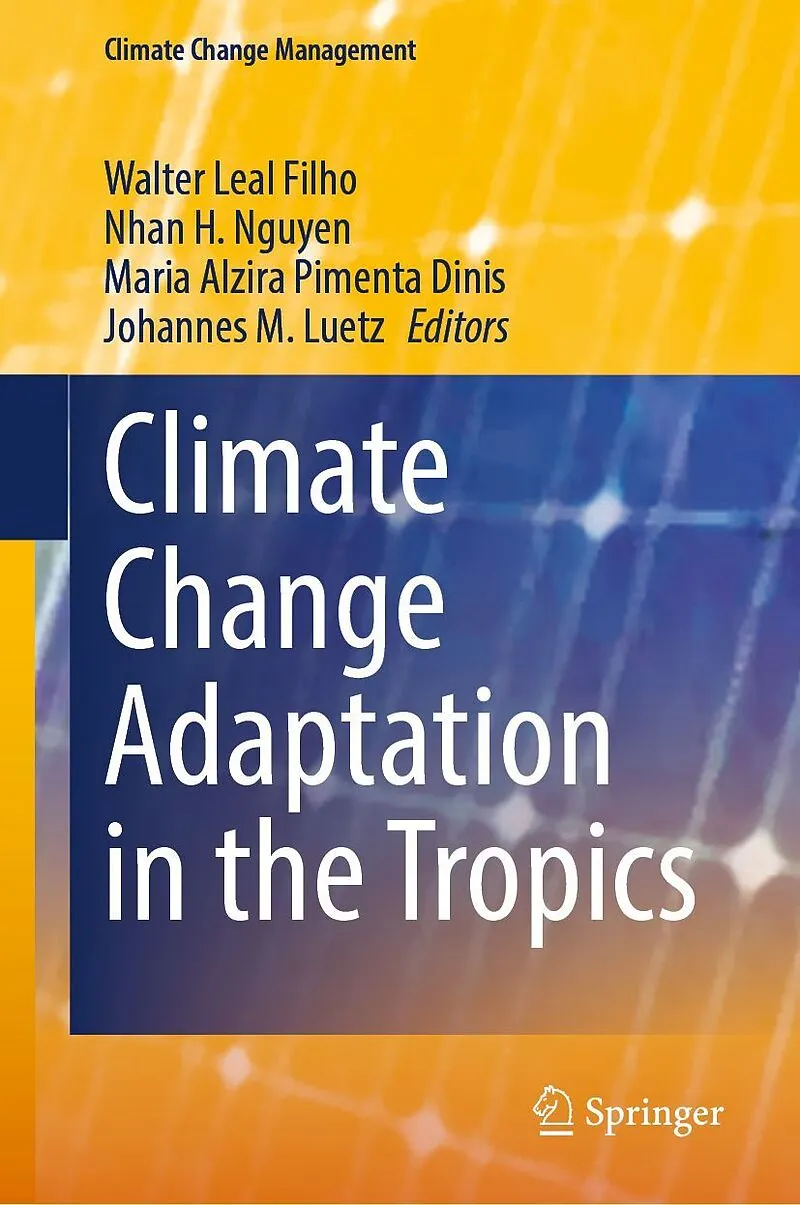
The tropics are ground zero for the climate crisis, but they are woefully underrepresented in the record of climate scholarship. This part of the world is home to the most biodiverse ecosystems and a third of the world's population and suffers at its core the...
The tropics are ground zero for the climate crisis, but they are woefully underrepresented in the record of climate scholarship. This part of the world is home to the most biodiverse ecosystems and a third of the world's population and suffers at its core the paradox of where those who have contributed least to emissions now face the most intensive impacts of climate change: collapsing coral reefs, vector-borne diseases, and the threat of unprecedented humid heat. This book fills a gap in understanding these problems through the tropical lens which is the main focus. Its importance lies in how it goes against the temperate-centric framing of climate, change, presenting instead a more complex picture of the links between rising temperatures and vulnerabilities already seen in the developing world. By combining state of the art science with frontline adaptation strategies, including indigenous knowledge systems, the volume makes the case that researchers, policymakers and practitioners need to craft effective interventions, so as to assist countries in the tropics to handle the many challenges climate change poses to them.
This book fills a gap in understanding problems related to Climate Change through the tropical lens The volume makes the case that researchers, policymakers and practitioners need to craft effective interventions Shows how to sustainable development issues are integrated into international relations and education programmes
Autorentext
Walter Leal Filho is a Senior Professor and Head of the Research and Transfer Centre "Sustainable Development and Climate Change Management at Hamburg University of Applied Sciences in Germany, and Chair of Environment and Technology at Manchester Metropolitan University, UK. He is the initiator of the Word Sustainable Development Symposia (WSSD-U) series, and chairs the Inter-University Sustainable Development Research Programme. Professor Leal Filho has written, co-written, edited or co-edited more than 800 publications, including books, book chapters and papers in refereed journals.
Mr. Nhan Nguyen has championed environmental awareness in Vietnam since 2008 when he organized the first Earth Day event in the country. Since then he has co-founded a number of non-profit, social enterprises including Vietnam Clean and Green, the Vietnam Zero Waste Alliance, and most recently the Green Turtle Hero. Aside from his philanthropic work, he is a Lecturer and Associate Program Manager at RMIT University Vietnam's Business School.
Maria Alzira Pimenta Dinis, Habilitation, PhD, MSc is Associate Professor at the Faculty of Science and Technology, University Fernando Pessoa, Porto, Portugal. Graduated in Metallurgical Engineering and Master Science in Materials Engineering at the Faculty of Engineering, University of Porto, Portugal. PhD in Earth Sciences and Habilitation in Ecology and Environmental Health at the Faculty of Science and Technology, University Fernando Pessoa, Portugal. Co-Coordinator of the Earth Sciences doctoral program. Researcher at Centro de Ciências do Mar e do Ambiente/Marine and Environmental Sciences Centre (MARE), University of Coimbra in environment-related topics. Experienced author, editor and reviewer. Sustainability expertise.
Dr Johannes M. Luetz is Professor of Sustainability and Religion, Director of Graduate Research and Research Development, and Human Research Ethics Chair at Alphacrucis University College, based in Brisbane, Australia. He is an interdisciplinary social scientist whose work examines ecological and climate adaptation challenges through spiritual, humanitarian, and policy lenses, with a particular focus on worldview-inclusive learning. Raised across Sierra Leone, Switzerland, Germany, and Australia, he has conducted research at the sciencefaith, interfaith, and sciencepolicy interfaces. He is Adjunct Associate Professor at the University of New South Wales and Adjunct Professor at the University of the Sunshine Coast, and serves on the editorial boards of international journals.
Inhalt
Chapter 1. A Knowledge Co-Production Framework for Climate Adaptation: Integrating Indigenous and Scientific Epistemologies in the Tropics.- Chapter 2. Integrating Indigenous and Scientific Knowledge Systems: A Case Study from Kenya.- Chapter 3.Biocultural Governance and Ecological Outcomes: A Systematic Review of Southwest Nigerian Sacred Groves, 2012-2024.- Chapter 4. Customary Practices, Collective Action, and Climate Resilience: Lessons from Indonesia's Archipelagic Communities.- Chapter 5. Climate Change Impacts and Energy Sector Resilience in the Tropics: Pathways to Sustainability in the 21st Century.- Chapter 6. Tropical Hazards in a Warming World: Climate Change and Disaster Risk in Belize.- Chapter 7. RESPONSES TO CLIMATE CHANGE AND SUSTAINABILITY IN AN AFRICAN ISLAND CONTEXT: THE CASE OF SÃO TOMÉ AND PRÍNCIPE.- Chapter 8. CLIMATE CHANGE AND VULNERABILITIES IN NIGERIA: IMPLICATIONS FOR ADAPTATION AND MITIGATION.- Chapter 9. Mainstreaming Renewable Energy into Climate Adaptation: Regulatory Pathways for a Resilient Bangladesh.- Chapter 10. Urban Heat Islands and the Built Sustainable Environment: Policies for Mitigation, Infrastructure Resilience, and Equitable Adaptation.- Chapter 11. An Empirical Study of the LandFoodClimate Nexus in Sub Saharan Africa.- Chapter 12. Management of sugarcane cultivation and processing to increase resilience and adaptation to climate change in tropical regions.- Chapter 13. Climate Finance, Trade Structure, and Vulnerability in Tropical Economies: Structural Evidence from Post-2010 Developing Country Data.- Chapter 14. Climate Change and Safety Issues in Indonesian Seaweed-Based Food Products.- Chapter 15. Climate Shocks and Rural Livelihoods: A Development Economics Perspective on Flood Impacts and Household Adaptation in Kenya.- Chapter 16. Climate change, Technology Adoption, and Poverty Dynamics in the Sahel.- Chapter 17. Climate Resilience Investments and Agricultural Household Livelihoods: Lessons from a Climate-Vulnerable Economy.- Chapter 18. Financing Constraints, Uncertainty, and Climate Change Adaptation Decisions: The Case of Vietnamese Farmers in the Mekong Delta Region.- Chapter 19. Unintended Consequences: Maladaptive Practices in Climate Change Adaptation Among Cocoa Farmers in Ghana.- Chapter 20. Climate Shocks as Barriers to Green Job Transitions: Evidence from Vietnamese Smallholder Farmers.- Chapter 21. Legal and Policy in Climate Response for Women from Plain-Land Indigenous Communities in Bangladesh.- Chapter 22. Women's Transformational Adaptation to Climate Change in the Tropics: Evidence from Northern Bangladesh.- Chapter 23. Gendered Vulnerability and Nexus Governance in Tropical Contexts: Integrating Climate, Energy, and Health Policy in Tanzania.- Chapter 24. Unveiling Silenced Realities: A Feminist Deconstruction of Policy Discourses in Ethiopia's Climate Change-Food Security-Gender Policies in Pastoral Contexts.- Chapter 25. Building Climate Resilience Through Community-Based Media and Social Learning in Sub-Saharan Africa: A Systematic Review.- Chapter 26. Strengthening Climate Resilience through Community Radio: Qualitative Insights from a ForestSavannah Transitional Ecological Zone in Ghana.- Chapter 27. Leveraging Social Media for Climate Communication and Resilience in Nigeria.