Beschreibung
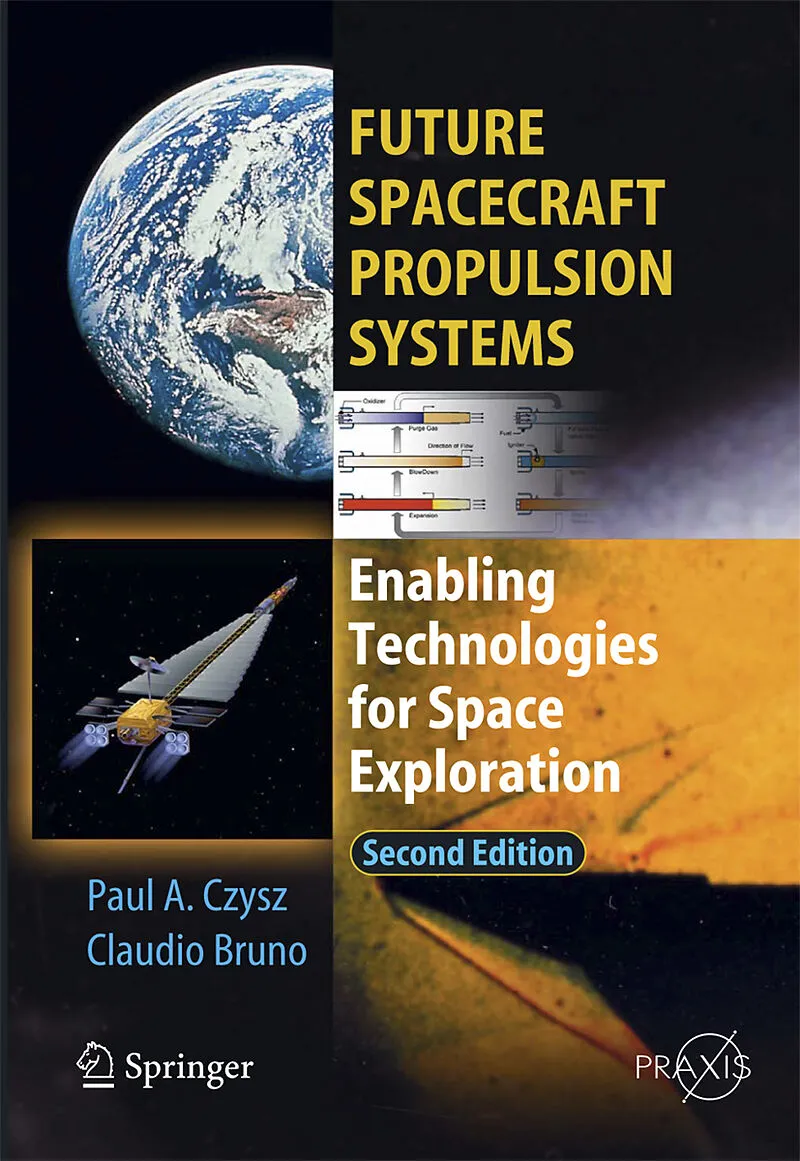
Once again comprehensive and authoritative, this second edition puts spacecraft propulsion systems in perspective, from earth orbit launchers to astronomical/space exploration vehicles. It includes new material on fusion propulsion, new figures and updates. Th...Once again comprehensive and authoritative, this second edition puts spacecraft propulsion systems in perspective, from earth orbit launchers to astronomical/space exploration vehicles. It includes new material on fusion propulsion, new figures and updates.
This third edition of Future Spacecraft Propulsion Systems and Integration Enabling Technologies for Space Exploration, has been updated and expanded. The major addition addresses the multi-disciplinary integration between the spectrum of hypersonic vehicles to reach Earth orbit and that of their propulsion systems. A best-practice sizing approach is presented to define the solution spaces and facilitate the correct design of these integrated flight vehicles to mission. This pragmatic approach is the essential capability sought after by design teams, technology forecasters and strategic planners alike, and includes lesson learned and space launchers as examples from the past. Among novel systems, the chapter on future combined engines includes now description and performance of pulsed detonation engines. All aspects of space flight discussed in the first two editions have been updated and augmented to account for the many changes in technology, policy and space objectives following the demise of the US Shuttle and the appearance of private space companies. Accordingly, the chapters dealing with near-Earth, interplanetary, galactic and future breakthrough propulsion have been expanded to include new applications, such as nuclear magnetic pulses, recent concept powered by inertial fusion, and new issues as, for instance, space radiation, a major obstacle to space exploration and commercialization in the years to come. This book can be useful to graduate students and teachers, as well as industrial organizations and planners.
Updates and expands the information in the first edition of Future Spacecraft Propulsion Systems Includes new material on fusion propulsion Puts spacecraft propulsion in perspective, from earth orbit launchers to astronomical/space exploration vehicles Demonstrates the logical expansion of propulsion concepts Looks at the design limitations imposed by the mission requirements Assesses the industrial capability required to construct and operate modern spacecraft. Suggests a step-by-step approach to the design of new space propulsion systems for future operations. Reviews nuclear and high-energy space propulsion, essential for fast Solar System exploration Looks ahead to possible future developments of propulsion systems for journeys to the stars
Autorentext
Dr. Claudio Bruno joined the Mechanical Engineering Department, University of Connecticut, USA in 2016. Prior to that he was Head of the High Speed Group at the United Technologies Research Center from 2011; Professor in the Aerospace Engineering Department at the University of Rome "La Sapienza" from 1989, with a simultaneous appointment as Combustion Leader at the Center for Scientific and Applied Research (CRS4), Italy, from 1991 to 1996; a member of the Italian National Research Council since 1983; Chief Scientist at Catalytic Energy Corporation (1981-1983); Research Staff at Princeton University from 1977 to 1981; and Senior Scientist at Physics International, San Leandro, California, from 1975 to 1977. He received his MEng. degree (summa cum laude) from the University of Rome (1965), where he did also graduate work at the School of Aerospace Engineering, and obtained his MA and PhD in Aerospace and Mechanical Sciences from Princeton University, in 1972 and 1977. He has been a Visiting Scientist at the Hypersonic Aerodynamic Institute of China's CARDC Center three times; three times invited scientist under the USAF Windows on Science program and has lectured at the Von Karman Institute in Belgium four times. He has been European Chair of the NATO group on SCRJ propulsion and chaired the Physics Advisory Group to ESA (2006 to 2011). He is an AIAA Associate Member and a Full Member of the International Academy of Astronautics. He has authored and coauthored more than 350 papers and four books on most aspects of gas dynamics, combustion and propulsion. Prof. Bruno has been elected to the Connecticut Academy of Science and Engineering (CASE) in 2017.
Inhalt
Overview.- Our progress appears to be impeded.- Commercial near-Earth space launcher: a perspective.- Commercial near-Earth launcher: propulsion.- Earth orbit on-orbit operations in near-Earth orbit, a necessary second step.- Earth-Moon system: establishing a Solar System presence.- Exploration of our Solar System.- Stellar and interstellar precursor missions.- View to the future and exploration of our Galaxy.