
IHR WARENKORB IST AKTUELL LEER.
Haben Sie noch nichts passendes gefunden? Stöbern Sie durch unser komplettes Sortiment.
Oder melden Sie sich an bzw. registrieren Sie sich.
- Kostenlose Lieferung
- Kauf auf Rechnung
- Ex Libris Tiefpreis
- Filiallieferung und 650+ Abholorte
- Rabatt-Bons als Club-Mitglied
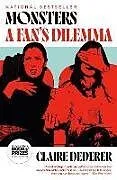
Monsters
Beschreibung
A • A timely, passionate, provocative, blisteringly smart interrogation of how we make and experience art in the age of cancel culture, and of the link between genius and monstrosity. Can we love the work of controversial classic and contemporary artists ...Format auswählen
- Poche format BCHF 20.00
Wird oft zusammen gekauft
Andere Kunden kauften auch
Beschreibung
A • A timely, passionate, provocative, blisteringly smart interrogation of how we make and experience art in the age of cancel culture, and of the link between genius and monstrosity. Can we love the work of controversial classic and contemporary artists but dislike the artist? A Best Book of the Year: "A lively, personal exploration of how one might think about the art of those who do bad things" -- “ "[Dederer] breaks new ground, making a complex cultural conversation feel brand new." --Ada Calhoun, author of From the author of the Can we love the work of artists such as Hemingway, Sylvia Plath, Miles Davis, Polanski, or Picasso? Should we? Dederer explores the audience''s relationship with artists from Michael Jackson to Virginia Woolf, asking: How do we balance our undeniable sense of moral outrage with our equally undeniable love of the work? Is male monstrosity the same as female monstrosity? And if an artist is also a mother, does one identity inexorably, and fatally, interrupt the other? In a more troubling vein, she wonders if an artist needs to be a monster in order to create something great. Does genius deserve special dispensation? Does art have a mandate to depict the darker elements of the psyche? And what happens if the artist stares too long into the abyss? Highly topical, morally wise, honest to the core, <Monsters< is certain to incite a conversation about whether and how we can separate artists from their art....
Autorentext
Claire Dederer
Zusammenfassung
**A NEW YORK TIMES NOTABLE BOOK • NATIONAL BESTSELLER • A timely, passionate, provocative, blisteringly smart interrogation of how we make and experience art in the age of cancel culture, and of the link between genius and monstrosity. Can we love the work of controversial classic and contemporary artists but dislike the artist?
**
**"A lively, personal exploration of how one might think about the art of those who do bad things" —Vanity Fair • "[Dederer] breaks new ground, making a complex cultural conversation feel brand new." —Ada Calhoun, author of Also a Poet **
From the author of the New York Times best seller Poser and the acclaimed memoir Love and Trouble, Monsters is “part memoir, part treatise, and all treat” (The New York Times). This unflinching, deeply personal book expands on Claire Dederer’s instantly viral Paris Review essay, "What Do We Do with the Art of Monstrous Men?"
Can we love the work of artists such as Hemingway, Sylvia Plath, Miles Davis, Polanski, or Picasso? Should we? Dederer explores the audience's relationship with artists from Michael Jackson to Virginia Woolf, asking: How do we balance our undeniable sense of moral outrage with our equally undeniable love of the work? Is male monstrosity the same as female monstrosity? And if an artist is also a mother, does one identity inexorably, and fatally, interrupt the other? In a more troubling vein, she wonders if an artist needs to be a monster in order to create something great. Does genius deserve special dispensation? Does art have a mandate to depict the darker elements of the psyche? And what happens if the artist stares too long into the abyss?
Highly topical, morally wise, honest to the core, Monsters is certain to incite a conversation about whether and how we can separate artists from their art.
**“Monsters leaves us with Dederer’s passionate commitment to the artists whose work most matters to her, and a framework to address these questions about the artists who matter most to us." —*The Washington Post
A Best Book of the Year: The New York Times, NPR, The Washington Post, The New Yorker, Vulture, Elle, Esquire, Kirkus*
Leseprobe
Chapter 1
Roll Call
Woody Allen
I started keeping a list.
Roman Polanski, Woody Allen, Bill Cosby, William Burroughs, Richard Wagner, Sid Vicious, V. S. Naipaul, John Galliano, Norman Mailer, Ezra Pound, Caravaggio, Floyd Mayweather, though if we start listing athletes we’ll never stop. And what about the women? The list immediately becomes much more tentative: Anne Sexton? Joan Crawford? Sylvia Plath? Does self-harm count? Okay, well, it’s back to the men, I guess: Pablo Picasso, Lead Belly, Miles Davis, Phil Spector. Add your own; add a new one every week, every day. Charlie Rose. Carl Andre. Johnny Depp.
They did or said something awful, and made something great. The awful thing disrupts the great work; we can’t watch or listen to or read the great work without remembering the awful thing. Flooded with knowledge of the maker’s monstrousness, we turn away, overcome by disgust. Or . . . we don’t. We continue watching, separating or trying to separate the artist from the art. Either way: disruption.
How do we separate the maker from the made? Do we undergo a willful forgetting when we decide to listen to, say, Wagner’s Ring cycle? (Forgetting is easier for some than others; Wagner’s work has rarely been performed in Israel since 1938.) Or do we believe genius gets special dispensation, a behavioral hall pass?
And how does our answer change from situation to situation? Are we consistent in the ways we apply the punishment, or rigor, of the withdrawal of our audience-ship? Certain pieces of art seem to have been rendered unconsumable by their maker’s transgressions—how can one watch The Cosby Show after the rape allegations against Bill Cosby? I mean, obviously it’s technically doable, but are we even watching the show? Or are we taking in the spectacle of our own lost innocence?
And is it simply a matter of pragmatics? Do we withhold our support if the person is alive and therefore might benefit financially from our consumption of their work? Do we vote with our wallets? If so, is it okay to stream, say, a Roman Polanski movie for free? Can we, um, watch it at a friend’s house?
These questions became more urgent as the years went by—as, in fact, we entered a new era. Here’s the thing about new eras: You don’t really recognize them as they show up. They’re not carrying signposts. And maybe “new era” is not quite the right phrase. Maybe we entered an era where certain stark realities began to be clearer to people who had heretofore been able to ignore them. One such reality was made clear on October 7, 2016. I sat in my living room, the same room where on sunlit afternoons and black evenings I guiltily lost myself in the films of Roman Polanski, and I watched the Access Hollywood tape over and over.
This was a very specific way of being an audience—watching something compulsively, as if you could somehow change it or take responsibility for it by keeping your eyes on it. I remembered it from the two Gulf wars, and from 9/11, and before that from my early childhood, when my family gathered around the TV to watch the Watergate trials. As if watching could Do Something.
I drank coffee and ate buttered toast and watched as the Republican presidential candidate talked about grabbing women by the pussy. You don’t need me to remind you.
I watched with all the old memories inside my body, the kind of memories so many women have. And the denial of the memories was in there too. The denial was so deep that when I heard . . .
Grab ’em by the pussy. You can do anything.
. . . I didn’t even realize he was describing assault. Didn’t realize until I went on social media to monitor the response to the news and some dude named it: “This is assault.”
On that awful day, one good thing happened, a thing that foretold a growing movement: it happened on th…