
IHR WARENKORB IST AKTUELL LEER.
Haben Sie noch nichts passendes gefunden? Stöbern Sie durch unser komplettes Sortiment.
Oder melden Sie sich an bzw. registrieren Sie sich.
- Kostenlose Lieferung
- Kauf auf Rechnung
- Ex Libris Tiefpreis
- Filiallieferung und 650+ Abholorte
- Rabatt-Bons als Club-Mitglied
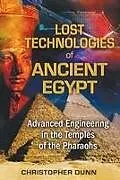
Lost Technologies of Ancient Egypt
Beschreibung
Zusatztext . . . Chris Dunn! with over 20 years of investigation! possessing unique technical skills! and showing a keen! perceptive eye for detail! has unlocked the door to knowledge that will eventually overturn established thinking about the civilization we...Format auswählen
- Kartonierter EinbandCHF 32.40
Wird oft zusammen gekauft
Andere Kunden kauften auch
Beschreibung
Zusatztext . . . Chris Dunn! with over 20 years of investigation! possessing unique technical skills! and showing a keen! perceptive eye for detail! has unlocked the door to knowledge that will eventually overturn established thinking about the civilization we call 'Ancient Egypt'. Informationen zum Autor Christopher Dunn is a manufacturing engineer with 50 years of experience. He has worked primarily in aerospace with an emphasis on precision and laser application. He has published a dozen articles on his theories about ancient technology and is the author of The Giza Power Plant. He lives in Illinois. Klappentext A unique study of the engineering and tools used to create Egyptian monuments • Presents a stone-by-stone analysis of key Egyptian monuments, including the statues of Ramses II and the tunnels of the Serapeum • Reveals that highly refined tools and mega-machines were used in ancient Egypt From the pyramids in the north to the temples in the south, ancient artisans left their marks all over Egypt, unique marks that reveal craftsmanship we would be hard pressed to duplicate today. Drawing together the results of more than 30 years of research and nine field study journeys to Egypt, Christopher Dunn presents a stunning stone-by-stone analysis of key Egyptian monuments, including the statue of Ramses II at Luxor and the fallen crowns that lay at its feet. His modern-day engineering expertise provides a unique view into the sophisticated technology used to create these famous monuments in prehistoric times. Using modern digital photography, computer-aided design software, and metrology instruments, Dunn exposes the extreme precision of these monuments and the type of advanced manufacturing expertise necessary to produce them. His computer analysis of the statues of Ramses II reveals that the left and right sides of the faces are precise mirror images of each other, and his examination of the mysterious underground tunnels of the Serapeum illuminates the finest examples of precision engineering on the planet. Providing never-before-seen evidence in the form of more than 280 photographs, Dunn's research shows that while absent from the archaeological record, highly refined tools, techniques, and even mega-machines must have been used in ancient Egypt.Chapter 5 SHADOWS OF THE SERAPEUM Before visiting the temples in Upper Egypt, I descended into the shadows of what must be the most confounding and enigmatic archaeological site in the world--the Serapeum. The site has little left above ground to identify it except a gaffirs' hut and low walls on both sides of an inclined path that lead to formidable dungeonlike iron doors. Attached to the iron bars that form a transom above the doors there is a sign in Arabic and English that reads: SERAPEUM DYN XVIII PTOLEMY XII C.140530 B.C.E Though dark and dusty, the Serapeum was a welcome relief from the heat. Shadows were thrown at intervals along the numerous tunnels by incandescent bulbs, and alcoves or crypts cut at right angles on each side of the tunnel made the place even more mysterious. Both the tunnels and the crypts had barrel-shaped, vaulted ceilings that had suffered damage over the millennia with places where large pieces of limestone had separated from the bedrock and fallen. Some areas had wooden frames with thick plywood sheets on top for protection. A fine dust kicked up from the floor hung in the air. In the center of each crypt was placed a large granite box with a lid on top. All of the boxes were finished on the inside and the bottom side of the lid, but not all were finished on the outside. It appears that work stopped suddenly in the Serapeum, for there were boxes in several stages of completion: boxes with lids, boxes that yet had to have the lid placed on them, and a rough box and lid near the entrance. The historical explanation for the boxes in the Serap...
ldquo;. . . Chris Dunn, with over 20 years of investigation, possessing unique technical skills, and showing a keen, perceptive eye for detail, has unlocked the door to knowledge that will eventually overturn established thinking about the civilization we call ‘Ancient Egypt’.”
Autorentext
Christopher Dunn is a manufacturing engineer with 50 years of experience. He has worked primarily in aerospace with an emphasis on precision and laser application. He has published a dozen articles on his theories about ancient technology and is the author of The Giza Power Plant. He lives in Illinois.
Klappentext
A unique study of the engineering and tools used to create Egyptian monuments
• Presents a stone-by-stone analysis of key Egyptian monuments, including the statues of Ramses II and the tunnels of the Serapeum
• Reveals that highly refined tools and mega-machines were used in ancient Egypt
From the pyramids in the north to the temples in the south, ancient artisans left their marks all over Egypt, unique marks that reveal craftsmanship we would be hard pressed to duplicate today. Drawing together the results of more than 30 years of research and nine field study journeys to Egypt, Christopher Dunn presents a stunning stone-by-stone analysis of key Egyptian monuments, including the statue of Ramses II at Luxor and the fallen crowns that lay at its feet. His modern-day engineering expertise provides a unique view into the sophisticated technology used to create these famous monuments in prehistoric times.
Using modern digital photography, computer-aided design software, and metrology instruments, Dunn exposes the extreme precision of these monuments and the type of advanced manufacturing expertise necessary to produce them. His computer analysis of the statues of Ramses II reveals that the left and right sides of the faces are precise mirror images of each other, and his examination of the mysterious underground tunnels of the Serapeum illuminates the finest examples of precision engineering on the planet. Providing never-before-seen evidence in the form of more than 280 photographs, Dunn’s research shows that while absent from the archaeological record, highly refined tools, techniques, and even mega-machines must have been used in ancient Egypt.
Zusammenfassung
A unique study of the engineering and tools used to create Egyptian monuments
Leseprobe
Chapter 5
SHADOWS OF THE SERAPEUM
Before visiting the temples in Upper Egypt, I descended into the shadows of what must be the most confounding and enigmatic archaeological site in the world--the Serapeum. The site has little left above ground to identify it except a gaffirs’ hut and low walls on both sides of an inclined path that lead to formidable dungeonlike iron doors. Attached to the iron bars that form a transom above the doors there is a sign in Arabic and English that reads:
SERAPEUM DYN XVIII PTOLEMY XII C.1405–30 B.C.E
Though dark and dusty, the Serapeum was a welcome relief from the heat. Shadows were thrown at intervals along the numerous tunnels by incandescent bulbs, and alcoves or crypts cut at right angles on each side of the tunnel made the place even more mysterious. Both the tunnels and the crypts had barrel-shaped, vaulted ceilings that had suffered damage over the millennia with places where large pieces of limestone had separated from the bedrock and fallen. Some areas had wooden frames with thick plywood sheets on top for protection. A fine dust kicked up from the floor hung in the air.
In the center of each crypt was placed a large granite box with a lid on top. All of the boxes were finished on the inside and the bottom side of the lid, but not all were finished on the outside. It appears that work stopped suddenly in the Serapeum, for there were boxes in several stages of completion: boxes with lids, boxes that yet had to have the lid placed on them, and a rough box and lid near the entrance…