
IHR WARENKORB IST AKTUELL LEER.
Haben Sie noch nichts passendes gefunden? Stöbern Sie durch unser komplettes Sortiment.
Oder melden Sie sich an bzw. registrieren Sie sich.
- Kostenlose Lieferung
- Kauf auf Rechnung
- Ex Libris Tiefpreis
- Filiallieferung und 650+ Abholorte
- Rabatt-Bons als Club-Mitglied
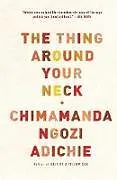
The Thing Around Your Neck
Beschreibung
Zusatztext 77579188 Informationen zum Autor Chimamanda Ngozi Adichie Klappentext From the award-winning, bestselling author of Americanah and We Should All Be Feminists a dazzling story collection filled with "indelible characters who jump off the page and int...Format auswählen
- Poche format BCHF 20.00
- E-Book (epub)CHF 6.90
Wird oft zusammen gekauft
Andere Kunden kauften auch
Beschreibung
Zusatztext 77579188 Informationen zum Autor Chimamanda Ngozi Adichie Klappentext From the award-winning, bestselling author of Americanah and We Should All Be Feminists a dazzling story collection filled with "indelible characters who jump off the page and into your head and heart" ( USA Today ). In these twelve riveting stories, the award-winning Chimamanda Ngozi Adichie explores the ties that bind men and women, parents and children, Africa and the United States. Searing and profound, suffused with beauty, sorrow, and longing, these stories map, with Adichie's signature emotional wisdom, the collision of two cultures and the deeply human struggle to reconcile them.CELL ONEThe first time our house was robbed, it was our neighbor Osita who climbed in through the dining room window and stole our TV, our VCR, and the Purple Rain and Thriller videotapes my father had brought back from America. The second time our house was robbed, it was my brother Nnamabia who faked a break-in and stole my mother's jewelry. It happened on a Sunday. My parents had traveled to our hometown, Mbaise, to visit our grandparents, so Nnamabia and I went to church alone. He drove my mother's green Peugeot 504. We sat together in church as we usually did, but we did not nudge each other and stifle giggles about somebody's ugly hat or threadbare caftan, because Nnamabia left without a word after about ten minutes. He came back just before the priest said, The Mass is ended. Go in peace. I was a little piqued. I imagined he had gone off to smoke and to see some girl, since he had the car to himself for once, but he could at least have told me where he was going. We drove home in silence and, when he parked in our long driveway, I stopped to pluck some ixora flowers while Nnamabia unlocked the front door. I went inside to find him standing still in the middle of the parlor.We've been robbed! he said in English.It took me a moment to understand, to take in the scattered room. Even then, I felt that there was a theatrical quality to the way the drawers were flung open, as if it had been done by somebody who wanted to make an impression on the discoverers. Or perhaps it was simply that I knew my brother so well. Later, when my parents came home and neighbors began to troop in to say ndo , and to snap their fingers and heave their shoulders up and down, I sat alone in my room upstairs and realized what the queasiness in my gut was: Nnamabia had done it, I knew. My father knew, too. He pointed out that the window louvers had been slipped out from the inside, rather than outside (Nnamabia was really much smarter than that; perhaps he had been in a hurry to get back to church before Mass ended), and that the robber knew exactly where my mother's jewelry wasthe left corner of her metal trunk. Nnamabia stared at my father with dramatic, wounded eyes and said, I know I have caused you both terrible pain in the past, but I would never violate your trust like this. He spoke English, using unnecessary words like terrible pain and violate, as he always did when he was defending himself. Then he walked out through the back door and did not come home that night. Or the next night. Or the night after. He came home two weeks later, gaunt, smelling of beer, crying, saying he was sorry and he had pawned the jewelry to the Hausa traders in Enugu and all the money was gone.How much did they give you for my gold? my mother asked him. And when he told her, she placed both hands on her head and cried, Oh! Oh! Chi m egbuo m! My God has killed me! It was as if she felt that the least he could have done was get a good price. I wanted to slap her. My father asked Nnamabia to write a report: how he had sold the jewelry, what he had spent the money on, with whom he had spent it. I didn't think Nnamabia would tell the truth, and I don't think my father though...
"Affecting . . . The Africa in Adichie's collection isn't the Africa that Americans are familiar with from TV news or newspaper headlines. Her stories are not about civil war or government corruption or deadly illnesses. She is interested in how clashes between tradition and modernity, familial expectations and imported dreams affect relationships between husbands and wives, parents and children.
In these stories, which take place in Nigeria and the United States, questions of belonging and loyalty are multiplied several times over. Her characters, many of whom grew up in Nigeria and emigrated (or saw their relatives emigrate) to America, find themselves unmoored, many stumbling into danger or confusion. Rather than becoming cosmopolitan members of a newly globalized world, they tend to feel dislocated on two continents and caught on the margins of two cultures that are themselves in a rapid state of flux. . . . The most powerful stories in this volume depict immensely complicated, conflicted characters, many of [whom] have experienced the random perils of life firsthand. . . . Adichie demonstrates that she is adept at conjuring the unending personal ripples created by political circumstance, at conjuring both the 'hard, obvious' facts of history, and 'the soft, subtle things that lodge themselves into the soul.'"
–Michiko Kakutani, The New York Times
"Haunting . . . In the first of these 12 stories set in Nigeria and the U. S., a spoiled college student doing a stint in a Nigerian prison finds he can't keep silent when the police harass an elderly inmate. In another, what seems like an excellent arranged marriage is doomed once the bride joins her husband in Brooklyn and learns he's an overbearing bore. And for the lonely narrator of the title story, falling in love means 'the thing that wrapped itself around your neck, that nearly choked you before you fell asleep,' is finally loosened. Adichie, a Nigerian who has studied in the U. S., writes with wisdom and compassion about her countrymen's experiences as foreigners, both in America and in their changing homeland. Here is one of fiction's most compelling new voices."
–Vick Boughton, People, A People Pick
"Imagine how hard it must be to write stories that make American readers understand what it might be like to visit a brother in a Nigerian jail, to be the new bride in an arranged marriage, to arrive in Flatbush from Lagos to meet a husband or to hide in a basement, waiting for a riot to subside, wondering what happened to a little sister who let go of your hand when you were running. How would it feel to be a woman who smuggled her journalist husband out of Nigeria one day and had her 4-year-old son shot by government thugs the next? If reading stories can make you feel . . . caught between two worlds and frightened, what would it be like to live them? This is Adichie's third book, and it is fascinating. . . . Characters (many in their teens and early 20s) feel a yanking on invisible collars as they try to strike out on their own. Sometimes, ties are cut by distance, leaving a protagonist disoriented and alone . . . Sometimes a lie or a death cuts the lines of trust that tie a character to the world they inhabit. Most of Adichie's characters are alone, adrift in a strange physical or emotional landscape. . . . These characters feel invisible, erased. They can't go home. They want to melt into America. What would it be like to feel that sinister thing, memory, around your neck? Perhaps you can imagine after all."
—Susan Salter Reynolds, Los Angeles Times Book Review
"Don't let Adichie's highbrow resume scare you away from her accessible and compelling short-story collection. Yes, the 31-year-old Nigerian writer won a 2008 MacArthur Genius award. But unlike many literary authors, she eschews pretentious obscurity in favor of clarity. In these stories set both in Nigeria and in the USA, she touches on religion, corruption, Nigeria's civil war and living in America as a lonely…