
IHR WARENKORB IST AKTUELL LEER.
Haben Sie noch nichts passendes gefunden? Stöbern Sie durch unser komplettes Sortiment.
Oder melden Sie sich an bzw. registrieren Sie sich.
- Kostenlose Lieferung
- Kauf auf Rechnung
- Ex Libris Tiefpreis
- Filiallieferung und 650+ Abholorte
- Rabatt-Bons als Club-Mitglied
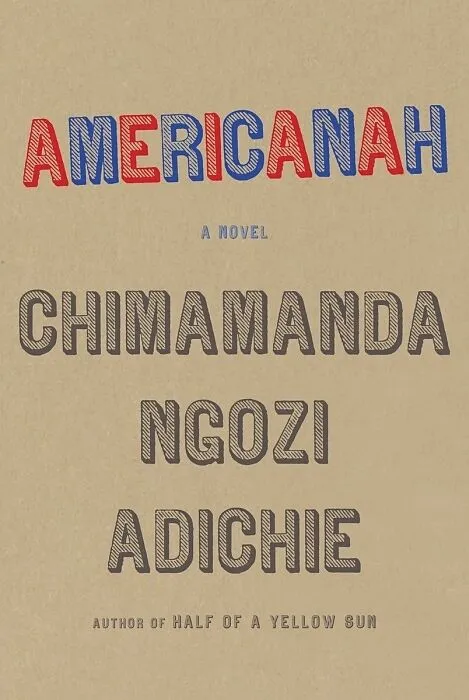
Americanah
Beschreibung
Zusatztext 87518238 Informationen zum Autor CHIMAMANDA NGOZI ADICHIE grew up in Nigeria. Her work has been translated into more than fifty-five languages. She is the author of the novels Purple Hibiscus, which won the Commonwealth Writers' Prize; Half of a Yel...Format auswählen
- Fester EinbandCHF 34.00
Wird oft zusammen gekauft
Andere Kunden kauften auch
Beschreibung
Zusatztext 87518238 Informationen zum Autor CHIMAMANDA NGOZI ADICHIE grew up in Nigeria. Her work has been translated into more than fifty-five languages. She is the author of the novels Purple Hibiscus, which won the Commonwealth Writers' Prize; Half of a Yellow Sun, which was the recipient of the Women's Prize for Fiction Best of the Best award; Americanah, which won the National Book Critics Circle Award; the story collection The Thing Around Your Neck and the essays We Should All Be Feminists and Dear Ijeawele, or A Feminist Manifesto in Fifteen Suggestions . Her most recent work is an essay about losing her father, Notes on Grief, and Mama's Sleeping Scarf, a children's book written as Nwa Grace-James. A recipient of a MacArthur Fellowship, she divides her time between the United States and Nigeria. Klappentext One of The New York Times Book Review's Ten Best Books of the YearLONGLISTED 2015 - International IMPAC Dublin Literary Award From the award-winning author of Half of a Yellow Sun, a dazzling new novel: a story of love and race centered around a young man and woman from Nigeria who face difficult choices and challenges in the countries they come to call home.As teenagers in a Lagos secondary school, Ifemelu and Obinze fall in love. Their Nigeria is under military dictatorship, and people are leaving the country if they can. Ifemelu-beautiful, self-assured-departs for America to study. She suffers defeats and triumphs, finds and loses relationships and friendships, all the while feeling the weight of something she never thought of back home: race. Obinze-the quiet, thoughtful son of a professor-had hoped to join her, but post-9/11 America will not let him in, and he plunges into a dangerous, undocumented life in London. Years later, Obinze is a wealthy man in a newly democratic Nigeria, while Ifemelu has achieved success as a writer of an eye-opening blog about race in America. But when Ifemelu returns to Nigeria, and she and Obinze reignite their shared passion-for their homeland and for each other-they will face the toughest decisions of their lives. Fearless, gripping, at once darkly funny and tender, spanning three continents and numerous lives, Americanah is a richly told story set in today's globalized world: Chimamanda Ngozi Adichie's most powerful and astonishing novel yet. Princeton, in the summer, smelled of nothing, and although Ifemelu liked the tranquil greenness of the many trees, the clean streets and stately homes, the delicately overpriced shops, and the quiet, abiding air of earned grace, it was this, the lack of a smell, that most appealed to her, perhaps because the other American cities she knew well had all smelled distinctly. Philadelphia had the musty scent of history. New Haven smelled of neglect. Baltimore smelled of brine, and Brooklyn of sun-warmed garbage. But Princeton had no smell. She liked taking deep breaths here. She liked watching the locals who drove with pointed courtesy and parked their latest model cars outside the organic grocery store on Nassau Street or outside the sushi restaurants or outside the ice cream shop that had fifty different flavors including red pepper or outside the post office where effusive staff bounded out to greet them at the entrance. She liked the campus, grave with knowledge, the Gothic buildings with their vine-laced walls, and the way everything transformed, in the half-light of night, into a ghostly scene. She liked, most of all, that in this place of affluent ease, she could pretend to be someone else, someone specially admitted into a hallowed American club, someone adorned with certainty. But she did not like that she had to go to Trenton to braid her hair. It was unreasonable to expect a braiding salon in Princetonthe few black locals she had seen were so light-skinned and lank-haired she could not imagine them wearing bra...
“What’s as American as the invention of race? Self-invention. So we are reminded by Adichie’s engaging third novel . . . Adichie is uniquely positioned to compare racial hierarchies in the United States to social striving in her native Nigeria. She does so in this new work with a ruthless honesty about the ugly and beautiful sides of both nations. Americanah is social satire masquerading as romantic comedy. . . . Beyond race, the book is about the immigrant’s quest: self-invention, which is the American subject. Americanah is unique among the booming canon of immigrant literature of the last generation (including writers Junot Díaz, Jhumpa Lahiri, Gary Shteyngart, Chang-rae Lee, Dinaw Mengestu and Susan Choi). Its ultimate concern isn’t the challenge of becoming American or the hyphenation that requires, but the challenge of going back home. . . . Affecting.” —Emily Raboteau, The Washington Post
“Adichie’s brave, sprawling novel tackles the U.S. race complex with a directness and brio no U.S. writer of any color would risk. . . . There’s no question on this or any novel’s resolving [our] race sickness. If it’s so hard to say or do the right thing, what is to be done? [But] Americanah brings a cleansing frankness to a scab on the face of the Republic.” —John Timpane, Philadelphia Inquirer
“Big, moving, deeply provocative . . . A tiny pinprick in the giant balloon of hot air that has swollen around the subject of race in post-civil-rights-era America. Adichie’s finely observed new book, which combines perfectly calibrated social satire and heartfelt emotion, stands with Invisible Man and The Bluest Eye as a defining work about the experience of being black in America. More than race, Americanah is about all the ways people form their identities: what we put on and what we take off, the things we accumulate and those we discard along the way. . . . Adichie is as precise on the details of contemporary American life as Updike or Franzen . . . [Her] remarkable powers of observation drive this novel. Every detail feels relevant, because they all work as markers of what the novel calls ‘costume’: the mannerisms and affectations that we use to create an image of ourselves in the eyes of others, and even ourselves. . . . Americanah shrugs off pretense and speaks the truth about how hard it is to live a life divided, whether between two people or two countries. . . . It is rare to come upon a novel that genuinely alters one’s view of the world. For me, Americanah was one of those books, because it forced me to confront so many things that I myself have glossed over or pretended not to notice. I understand Obinze’s story, and others in this book, through the force of Adichie’s talent.” —Ruth Franklin, Bookforum
“[Americanah] is propelled by Adichie’s clean, attractive prose. . . . An epic love story . . . A book full of passion.” —Michael Shank, Baltimore City Paper
“Adichie’s new novel is part love story, part social critique, and one of the best you’ll read this year. These characters are richly drawn, as are even those who make fleeting appearances, from the ladies at Ifemelu’s braid shop to Obinze’s boss in England. . . . Adichie digs in deeply, finding a way to make them fresh.” —Carolyn Kellogg, Los Angeles Times
“Epic . . . A near-flawless novel—one whose language beautifully captures the surreal experience of an African becoming an American . . . Americanah is both intellectually expansive and urgently intimate, a story about the crushing experience of finding your way in a new land—and the physical and emotional lengths one goes to to feel whole again. Ifemelu—smart, pretty, brutally honest, often hilariously so—will steal your heart.” —Tyrone Beason, The Seattle Times
“A thrill…