Villette
Beschreibung
Zusatztext "Brontë's finest novel." --Virginia Woolf Informationen zum Autor Charlotte Brontë was born in Yorkshire in 1816. As a child, she was sent to boarding school, where two of her sisters died; she was subsequently educated at home with her younger sibl...Format auswählen
- Fester EinbandCHF 31.60
- Poche format BCHF 17.30
- E-Book (epub)CHF 7.50
Wird oft zusammen gekauft
Andere Kunden kauften auch
Beschreibung
Zusatztext "Brontë's finest novel." --Virginia Woolf Informationen zum Autor Charlotte Brontë was born in Yorkshire in 1816. As a child, she was sent to boarding school, where two of her sisters died; she was subsequently educated at home with her younger siblings, Emily, Branwell and Anne. As an adult, Charlotte worked as a governess and taught in a school in Brussels. Jane Eyre was first published in 1847 under the pen-name Currer Bell, and was followed by Shirley (1848), Villette (1853) and The Professor (posthumously published in 1857). In 1854 Charlotte married her father's curate, Arthur Bell Nicholls. She died in March of the following year. Klappentext Part of Penguin's beautiful hardback Clothbound Classics series, designed by the award-winning Coralie Bickford-Smith, these delectable and collectible editions are bound in high-quality colourful, tactile cloth with foil stamped into the design. With neither friends nor family, Lucy Snowe sets sail from England to find employment in a girls' boarding school in the small town of Villette. There, she struggles to retain her self-possession in the face of unruly pupils, the hostility of headmistress Madame Beck, and her own complex feelings - first for the school's English doctor and then for the dictatorial professor Paul Emanuel. Drawing on her own deeply unhappy experiences as a governess in Brussels, Charlotte Brontë'sautobiographical novel, the last published during her lifetime, is a powerfully moving study of loneliness and isolation, and the pain of unrequited love, narrated by a heroine determined to preserve an independent spirit in the face of adverse circumstances. Helen M. Cooper's new introduction places the novel in the context of Brontë's life and career and argues for the importance of the novel as an exploration of imperialism. 'I am only just returned to a sense of real wonder about me, for I have been reading Villette ' George Eliot 'Her finest novel' Virginia Woolf Leseprobe My godmother lived in a handsome house in the clean and ancient town of Bretton. Her husband's family had been residents there for generations, and bore, indeed, the name of their birthplaceBretton of Bretton: whether by coincidence, or because some remote ancestor had been a personage of sufficient importance to leave his name to his neighbourhood, I know not. When I was a girl I went to Bretton about twice a year, and well I liked the visit. The house and its inmates specially suited me. The large peaceful rooms, the well-arranged furniture, the clear wide windows, the balcony outside, looking down on a fine antique street, where Sundays and holidays seemed always to abideso quiet was its atmosphere, so clean its pavementthese things pleased me well. One child in a household of grown people is usually made very much of, and in a quiet way I was a good deal taken notice of by Mrs. Bretton, who had been left a widow, with one son, before I knew her; her husband, a physician, having died while she was yet a young and handsome woman. She was not young, as I remember her, but she was still handsome, tall, well-made, and though dark for an English-woman, yet wearing always the clearness of health in her brunette cheek, and its vivacity in a pair of fine, cheerful black eyes. People esteemed it a grievous pity that she had not conferred her complexion on her son, whose eyes were bluethough, even in boyhood, very piercingand the colour of his long hair such as friends did not venture to specify, except as the sun shone on it, when they called it golden. He inherited the lines of his mother's features, however; also her good teeth, her stature (or the promise of her stature, for he was not yet full-grown), and, what was better, her health without flaw, and her spirits of that tone and equality which are better than a fortune to the poss...
"Brontë’s finest novel."
--Virginia Woolf
Autorentext
Charlotte Brontë was born in Yorkshire in 1816. As a child, she was sent to boarding school, where two of her sisters died; she was subsequently educated at home with her younger siblings, Emily, Branwell and Anne. As an adult, Charlotte worked as a governess and taught in a school in Brussels. Jane Eyre was first published in 1847 under the pen-name Currer Bell, and was followed by Shirley (1848), Villette (1853) and The Professor (posthumously published in 1857). In 1854 Charlotte married her father's curate, Arthur Bell Nicholls. She died in March of the following year.
Klappentext
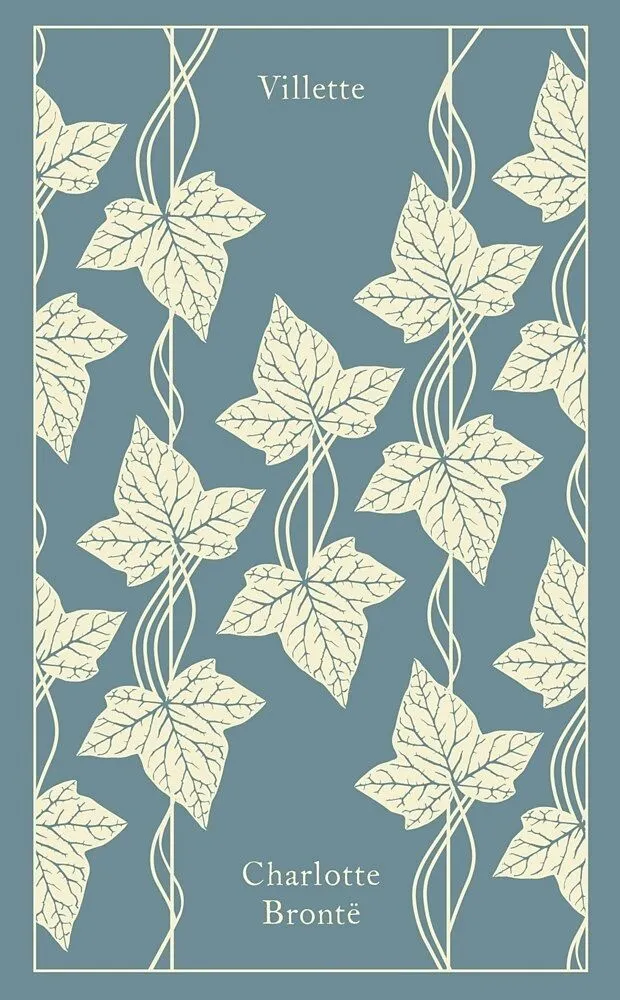
Part of Penguin's beautiful hardback Clothbound Classics series, designed by the award-winning Coralie Bickford-Smith, these delectable and collectible editions are bound in high-quality colourful, tactile cloth with foil stamped into the design.
With neither friends nor family, Lucy Snowe sets sail from England to find employment in a girls' boarding school in the small town of Villette. There, she struggles to retain her self-possession in the face of unruly pupils, the hostility of headmistress Madame Beck, and her own complex feelings - first for the school's English doctor and then for the dictatorial professor Paul Emanuel. Drawing on her own deeply unhappy experiences as a governess in Brussels, Charlotte Brontë'sautobiographical novel, the last published during her lifetime, is a powerfully moving study of loneliness and isolation, and the pain of unrequited love, narrated by a heroine determined to preserve an independent spirit in the face of adverse circumstances.
Helen M. Cooper's new introduction places the novel in the context of Brontë's life and career and argues for the importance of the novel as an exploration of imperialism.
'I am only just returned to a sense of real wonder about me, for I have been reading Villette'
George Eliot
'Her finest novel'
Virginia Woolf
Zusammenfassung
With neither friends nor family, Lucy Snowe sets sail from England to find employment in a girls' boarding school in the small town of Villette. There, she struggles to retain her self-possession in the face of unruly pupils, the hostility of headmistress Madame Beck, and her own complex feelings first for the school's English doctor and...
Leseprobe
My godmother lived in a handsome house in the clean and ancient town of Bretton. Her husband's family had been residents there for generations, and bore, indeed, the name of their birthplace—Bretton of Bretton: whether by coincidence, or because some remote ancestor had been a personage of sufficient importance to leave his name to his neighbourhood, I know not.
When I was a girl I went to Bretton about twice a year, and well I liked the visit. The house and its inmates specially suited me. The large peaceful rooms, the well-arranged furniture, the clear wide windows, the balcony outside, looking down on a fine antique street, where Sundays and holidays seemed always to abide—so quiet was its atmosphere, so clean its pavement—these things pleased me well.
One child in a household of grown people is usually made very much of, and in a quiet way I was a good deal taken notice of by Mrs. Bretton, who had been left a widow, with one son, before I knew her; her husband, a physician, having died while she was yet a young and handsome woman.
She was not young, as I remember her, but she was still handsome, tall, well-made, and though dark for an English-woman, yet wearing always the clearness of health in her brunette cheek, and its vivacity in a pair of fine, cheerful black eyes. People esteemed it a grievous pity that she had not conferred her complexion on her son, whose eyes were blue—though, even in boyhood, very piercing—and the colour of his long hair such as friends did not venture to specify, except as the sun shone on it, when they called it golden. He inherited the lines of his mother's features, however; also her good teeth, her stature (or th…