
IHR WARENKORB IST AKTUELL LEER.
Haben Sie noch nichts passendes gefunden? Stöbern Sie durch unser komplettes Sortiment.
Oder melden Sie sich an bzw. registrieren Sie sich.
- Kostenlose Lieferung
- Kauf auf Rechnung
- Ex Libris Tiefpreis
- Filiallieferung und 650+ Abholorte
- Rabatt-Bons als Club-Mitglied
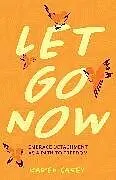
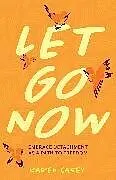
Let Go Now
Beschreibung
“Karen Casey teaches us how to row our boat (note: not other people’s boats) gently down the stream. When we row gently, we don’t yell who or what must be on the bank around the bend. We peacefully accept what comes and this makes us very me...
Format auswählen
- Kartonierter EinbandCHF 26.70

Beschreibung
“Karen Casey teaches us how to row our boat (note: not other people’s boats) gently down the stream. When we row gently, we don’t yell who or what must be on the bank around the bend. We peacefully accept what comes and this makes us very merry. We quietly bless the people who are there, knowing that is exactly where they should be. We let go and allow the River to carry us home, certain that the River is our God-given will, our safety, our comfort, and our peace. Let Go Now is one of the most profoundly spiritual and helpful books I have read.”
—Hugh Prather, author of Morning Notes and The Little Book of Letting Go
“You just can’t go wrong with Karen Casey. In Let Go Now she steers a course though the at-times confusing waters of detachment. She takes the reader though 200 little classes explaining what detachment is and what it is not. This book would help anyone trying to live a life as serene yet productive as possible in this often busy time.”
—Earnie Larsen, author of Stage II Recovery: Life Beyond Addiction and From Anger to Forgiveness
“A cornerstone concept of both Eastern philosophy and Twelve Step programs, detachment is often misunderstood and misapplied. In Let Go Now Karen Casey elegantly brings this time-honored term into everyday situations so that it can become a true, userfriendly tool for recovery. She not only tells us what detachment means, she shows us how to do it, one day at a time.”
—Tian Dayton, PhD, author of Emotional Sobriety: From Relationship Trauma to Resilience and Balance
“Casey has given us a wonderful guidebook for one of life’s ongoing challenges—detachment—so essential to our spiritual health. No one with a caring heart would want to miss this essential read. Another winner for Karen Casey and thus for all of us!”
—Marilyn J. Mason, PhD, author of
Igniting the Spirit at Work and coauthor of Facing Shame: Families in Recovery
“My measure of a book’s worth: 1. Does it open a window in my
mind? 2. Do I change? 3. Is my life improved? The answer? Yes
on all counts for Let Go Now.”
—Anne Katherine, author of Boundaries and Lick It!
Vorwort
The three million devoted readers of her genre-defining books mention in reviews how well-loved their early editions are. They mention dog-eared pages, notes scribbled in margins, highlighted passages, and pages untucked from their bindings. Life-long readers buy copies for fellow women in recovery, receive her books for their recovery achievements, and even give away their own copies to others in need of Casey’s messages of hope. Karen Casey is a widely published author who has forged many strong connections with authors over her extensive writing career. She can promote the new edition release through these connections. She has been a guest speaker at numerous AA, Al-Anon recovery meetings and continues to work on the conference/workshop circuit, so she can promote the new edition release through these channels.
Autorentext
Millions of fans around the world spend moments of quiet contemplation with Karen Casey daily. Karen is a writer and 12-step recovery workshop facilitator with over forty published titles in over ten different languages. She travels throughout the United States and internationally carrying her message of hope for others in recovery. She is the best-selling author of Each Day a New Beginning, the first daily meditation book written for women recovering from addiction. Oher titles include Let Go Now, Change Your Mind and Your Life Will Follow, 20 Things I Know For Sure, It's Up to You, Codependence and the Power of Detachment, and Peace a Day at a Time. Karen lives in Minneapolis, Minnesota, and Naples, Florida.
Klappentext
Using 200 meditations, Karen reminds us that we cannot control anyone or anything beyond ourselves. Inspiring and easy to read, Let Go Now guides us away from taking care of others, and toward taking care of ourselves.
Leseprobe
53
Detachment is letting others have their own opinions.
MY FAMILY OF ORIGIN DIDN'T ALLOW FOR DIFFERING opinions. My father insisted that we agree with him, or all hell broke loose. Whether the topic was politics or music, his opinion was the only right one and having one that ran counter to it was evidence of insubordination. I locked horns with him for years. I felt compelled to disagree, on my own behalf and on behalf of my mom and younger brother, too. My older sisters seldom got involved in the dance he and I did, a dance that continued long after I left home.
I grew into adulthood steeped in this pattern of behavior, a pattern that didn't allow much room for discussion with anyone. I had to be right, just as my dad had had to be right. It wasn't until my own recovery from drugs and alcohol that I understood what the need to be right was about. Fear was the root cause for my dad's attempts to control how others thought. Fear prompted my own, too. Now I know there is nothing to fear. We come together by design. We learn by design. We let go, we detach, by design too, and peace blossoms within.

Letting go of someone else's journey is the most freeing experience we can have today. And it's by far the best gift we can offer someone, too.
54
Detachment is being able to let others journey whever they need to go.
IT'S NOT UNCOMMON TO ASSUME THAT SINCE WE ARE generally in the company of family and friends, that our journeys must be similar. And there always will be some aspects that are similar. But what any one of us is here to learn is quite specific. The reason we are journeying side by side is that we need each other for support and suggestions; there is a difference, however, between sharing what has worked for us and trying to control how someone else should live his or her life.
Being able to detach from our loved ones is seldom easy. It doesn't feel natural. In fact, it more commonly feels unsympathetic and self-centered. But that's the value of practice. We learned our math tables by practicing them. We learn how to be skillful at golf or tennis or bridge through many hours of practice. In fact, Malcolm Gladwell, author of Outliers: The Story of Success, says that the key to success in any field requires practicing for it for ten thousand hours. Detaching is a skill too, and we can hone it if we are willing to work at it. The payoff is that our companions learn how to take responsibility for themselves and then rely on their Higher Power, and we learn how to focus on the only journey over which we have any real control: our own.
Watching our loved ones move through their experiences, and praying for them if the need arises, is our assignment, little else.
Inhalt
ContentsIntroduction
MEDITATIONS
Detachment is simply watching the events that are unfolding around you, getting involved only when your journey is part of the experience.
Detachment is stepping back from an experience in order to allow room for God to do His or Her part.
Detachment promises quiet contentment.
Detachment is making no one a project.
Detachment means taking no hostages.
Detachment means giving up outcomes.
Detachment is letting the solutions be determined by God.
Detachment is understanding that we are never the cause of someone else’s actions.
Detachment is getting over "it," whatever "it" is.
Detachment frees up our time.
PAUSE AND REFLECT …