
IHR WARENKORB IST AKTUELL LEER.
Haben Sie noch nichts passendes gefunden? Stöbern Sie durch unser komplettes Sortiment.
Oder melden Sie sich an bzw. registrieren Sie sich.
- Kostenlose Lieferung
- Kauf auf Rechnung
- Ex Libris Tiefpreis
- Filiallieferung und 650+ Abholorte
- Rabatt-Bons als Club-Mitglied
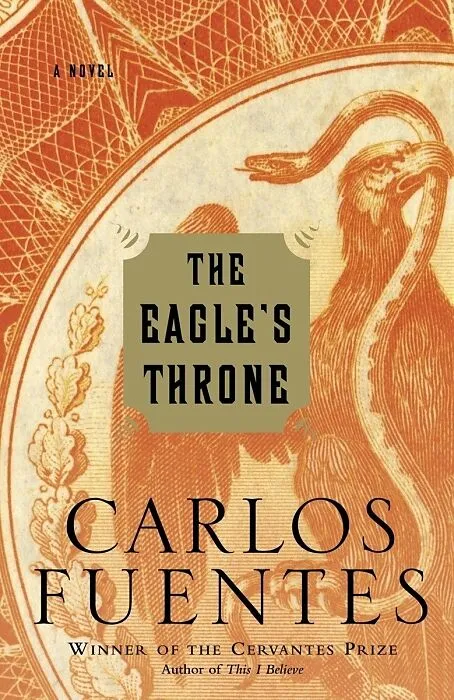
The Eagle's Throne
Beschreibung
Informationen zum Autor Carlos Fuentes Klappentext Here is a true literary event-the long-awaited new novel by Carlos Fuentes, one of the world's great writers. By turns a tragedy and a farce, an acidic black comedy and an indictment of modern politics, The Ea...Format auswählen
- Kartonierter EinbandCHF 20.00

Wird oft zusammen gekauft
Andere Kunden kauften auch
Beschreibung
Informationen zum Autor Carlos Fuentes Klappentext Here is a true literary event-the long-awaited new novel by Carlos Fuentes, one of the world's great writers. By turns a tragedy and a farce, an acidic black comedy and an indictment of modern politics, The Eagle's Throne is a seriously entertaining and perceptive story of international intrigue, sexual deception, naked ambition, and treacherous betrayal. In the near future, at a meeting of the United Nations Security Council, Mexico's idealistic president has dared to vote against the U.S. occupation of Colombia and Washington's refusal to pay OPEC prices for oil. Retaliation is swift. Concocting a "glitch in a Florida satellite, America's president cuts Mexico's communications systems-no phones, faxes, or e-mails-and plunges the country into an administrative nightmare of colossal proportions. Now, despite the motto that "a Mexican politician never puts anything in writing, people have no choice but to communicate through letters, which Fuentes crafts with a keen understanding of man's motives and desires. As the blizzard of activity grows more and more complex, political adversaries come out to prey. The ineffectual president, his scheming cabinet secretary, a thuggish and ruthless police chief, and an unscrupulous, sensual kingmaker are just a few of the fascinating characters maneuvering and jockeying for position to achieve the power they all so desperately crave.1 MARÍA DEL ROSARIO GALVÁN TO NICOLÁS VALDIVIA You are going to think badly of me. You are going to say I'm a capricious woman. And you'll be right. But who would have guessed that things could change so radically overnight? Yesterday, when I first met you, I told you, When it comes to politics, never put anything in writing. Today, I have no other way of communicating with you. That should give you an idea of how dire the situation has become. . . . You will say that your interest in methe interest you showed the minute we laid eyes on each other in the vestibule outside the interior secretary's officeis not political. It's romantic interest, perhaps physical attraction, or maybe even just simple human affection. You must know at once, Nicolás Valdivia, that with me everything is political, even sex. You may be shocked by this kind of professional voracity. But there's no changing it. I'm forty-five now, and ever since the age of twenty-two I've arranged my life around a single purpose: to be, to shape, to eat, to dream, to savor, and to suffer politics. That is my nature. My vocation. Don't think this means I've had to put aside what I like as a woman, my sexual pleasure, my desire to make love to a young, handsome manlike you. . . . Simply put, I consider politics to be the public expression of private passions. Including, perhaps most of all, romantic passion. But passions are very arbitrary forms of conduct, and politics is a discipline. We act with the greatest measure of freedom granted us by a universe that is at once multitudinous, uncertain, random, and necessary, fighting for power, competing for a tiny sphere of authority. Do you think it's the same with love? You're wrong. Love has a power that knows no limits, a power that's called imagination. Even if you were to be locked up in the castle at San Juan de Ulúa, you would still have the freedom of desire, for a man is always the master of his own erotic imagination. In politics, on the other hand, what good is wishing and imagining if you don't have the power? I repeat, power is my nature. Power is my vocation. That's the first thing I want to warn you about. You are a thirty-four-year-old boy. I was drawn to your physical beauty right away. But I can also tell you, lest it go to your head, that attractive men are few and far between in the vestibule to the office of the interior secretary, Bernal Herrera. Beautiful women are also conspicuously ...
Autorentext
Carlos Fuentes
Klappentext
Here is a true literary event-the long-awaited new novel by Carlos Fuentes, one of the world's great writers. By turns a tragedy and a farce, an acidic black comedy and an indictment of modern politics, The Eagle's Throne is a seriously entertaining and perceptive story of international intrigue, sexual deception, naked ambition, and treacherous betrayal.
In the near future, at a meeting of the United Nations Security Council, Mexico's idealistic president has dared to vote against the U.S. occupation of Colombia and Washington's refusal to pay OPEC prices for oil. Retaliation is swift. Concocting a "glitch” in a Florida satellite, America's president cuts Mexico's communications systems-no phones, faxes, or e-mails-and plunges the country into an administrative nightmare of colossal proportions.
Now, despite the motto that "a Mexican politician never puts anything in writing,” people have no choice but to communicate through letters, which Fuentes crafts with a keen understanding of man's motives and desires. As the blizzard of activity grows more and more complex, political adversaries come out to prey. The ineffectual president, his scheming cabinet secretary, a thuggish and ruthless police chief, and an unscrupulous, sensual kingmaker are just a few of the fascinating characters maneuvering and jockeying for position to achieve the power they all so desperately crave.
Zusammenfassung
Here is a true literary event–the long-awaited new novel by Carlos Fuentes, one of the world’s great writers. By turns a tragedy and a farce, an acidic black comedy and an indictment of modern politics, The Eagle’s Throne is a seriously entertaining and perceptive story of international intrigue, sexual deception, naked ambition, and treacherous betrayal.
In the near future, at a meeting of the United Nations Security Council, Mexico’s idealistic president has dared to vote against the U.S. occupation of Colombia and Washington’s refusal to pay OPEC prices for oil. Retaliation is swift. Concocting a “glitch” in a Florida satellite, America’s president cuts Mexico’s communications systems–no phones, faxes, or e-mails–and plunges the country into an administrative nightmare of colossal proportions.
Now, despite the motto that “a Mexican politician never puts anything in writing,” people have no choice but to communicate through letters, which Fuentes crafts with a keen understanding of man’s motives and desires. As the blizzard of activity grows more and more complex, political adversaries come out to prey. The ineffectual president, his scheming cabinet secretary, a thuggish and ruthless police chief, and an unscrupulous, sensual kingmaker are just a few of the fascinating characters maneuvering and jockeying for position to achieve the power they all so desperately crave.
Leseprobe
1
MARÍA DEL ROSARIO GALVÁN TO NICOLÁS VALDIVIA
You are going to think badly of me. You are going to say I’m a capricious woman. And you’ll be right. But who would have guessed that things could change so radically overnight? Yesterday, when I first met you, I told you, When it comes to politics, never put anything in writing. Today, I have no other way of communicating with you. That should give you an idea of how dire the situation has become. . . .
You will say that your interest in me—the interest you showed the minute we laid eyes on each other in the vestibule outside the interior secretary’s office—is not political. It’s romantic interest, perhaps physical attraction, or maybe even just simple human affection. You must know at once, Nicolás Valdivia, that with me everything is political, even sex. You may be shocked by this kind of professional voracity. But there’s no changing it. I’m forty-five now, and ever since the age of twenty-two I’ve arr…