Haben Sie noch nichts passendes gefunden? Stöbern Sie durch unser komplettes Sortiment.
Oder melden Sie sich an bzw. registrieren Sie sich.


Beschreibung
This book offers a critical examination of contemporary cultural psychology through the lens of the Brazilian anthropophagic tradition. Inspired by the concept of symbolic cannibalization as an act of creative appropriation, transformation, and reinvention, t...
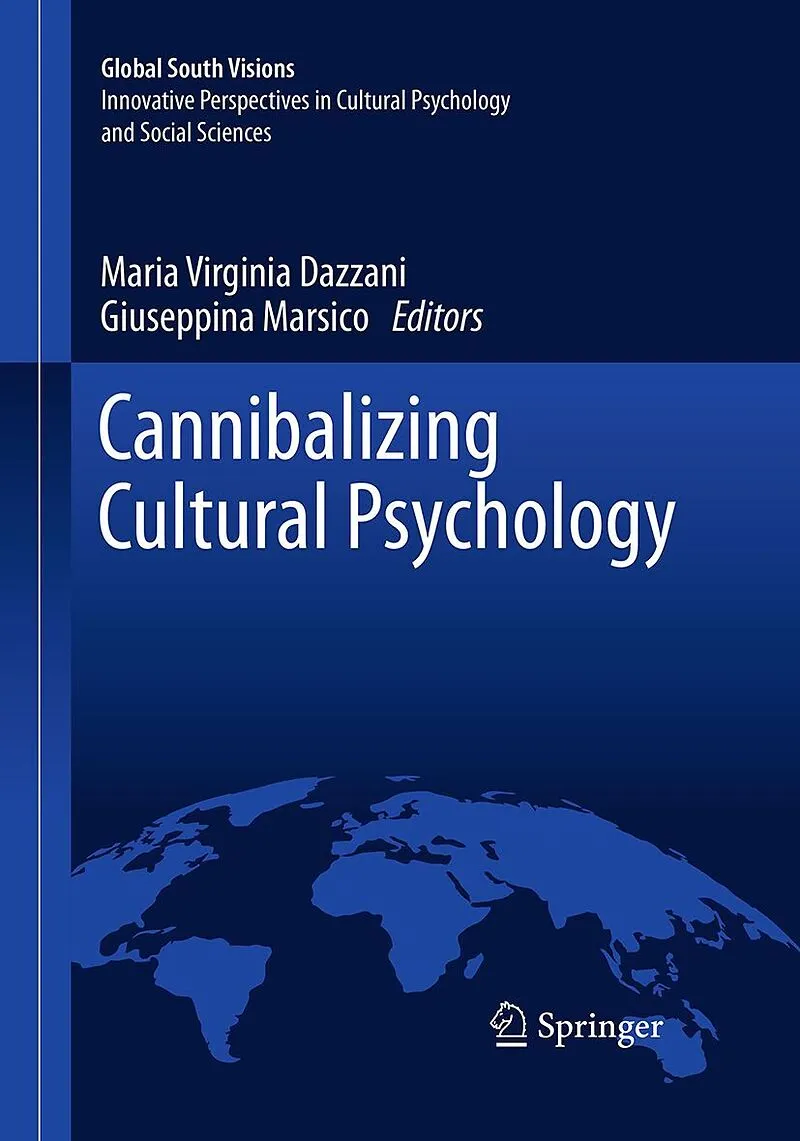
This book offers a critical examination of contemporary cultural psychology through the lens of the Brazilian anthropophagic tradition. Inspired by the concept of symbolic cannibalization as an act of creative appropriation, transformation, and reinvention, the volume explores how established theories and methods in Psychology can be reworked to generate new perspectives on culture, subjectivity, and human development.
Originating from debates at the 8th International Seminar on Cultural Psychology, the book brings together original chapters and scholarly commentaries that foster dialogue across generations, disciplines, and intellectual traditions. Contributors engage with key themes in semiotic cultural psychology, such as meaning making beyond language, embodiment, affective and microgenetic processes, proculturation, polyculturalism and lived experience.
Rather than presenting a unified framework, the volume advances a pluralistic approach to psychological inquiry. Through theoretical reflection, methodological critique, and empirical discussion, it questions the predominance of narrative-centered models and examines alternative pathways for understanding symbolic dynamics, identity, social transformation, and psychological adaptation in diverse cultural contexts.
By bringing anthropophagic thought into conversation with contemporary cultural psychology, Cannibalizing Cultural Psychology contributes to ongoing debates on epistemology, knowledge production, and the future directions of the field. It will be of interest to researchers and graduate students in cultural psychology, developmental psychology, qualitative research, semiotics, dialogical studies, and related areas of the human and social sciences.
Offers a critical examination of cultural psychology through the lens of the Brazilian anthropophagic tradition Reframes cultural psychology through anthropophagy and Global South epistemologies Contributes to ongoing debates on epistemology, knowledge production, and the future directions of cultural psychology
Autorentext
Maria Virginia Dazzani is Full Professor of Psychology at the Federal University of Bahia, Brazil, and a CNPq research productivity fellow. Her work spans cultural psychology, educational psychology, and psychoanalytic approaches to development, with a focus on poverty, schooling, and developmental trajectories. She coordinates the CULTS research group and serves on Springer's Cultural Psychology of Education series committee and the Human Arenas editorial board.
Giuseppina (Pina) Marsico is Associate Professor of Developmental and Educational Psychology at the University of Salerno, Italy, and a leading scholar in cultural psychology of education. She is Editor-in-Chief of the Springer series Cultural Psychology of Education and co-editor of several international book series and journals. Her research advances interdisciplinary approaches to borders, dialogical processes, and developmental mereotopology within cultural and global psychology.
Inhalt
Chapter 1: Cannibalizing Cultural Psychology: An Epistemological Provocation.- Chapter 2: Beyond Words: Cultural Psychology in Trouble.- Chapter 3: Researchers and Research Participants' Troubles: A Possible Dialogue With Valsiner's Beyond Words: Cultural Psychology in Trouble (2025).- Chapter 4: Aphasia and Amnesia: Reflecting on a Cultural Psychology Beyond Words.- Chapter 5: Beyond Words: Toward a Methodological Revolution in Cultural Psychology.- Chapter 6: Are There Meanings Without Words? A Critical Dialogue With Jaan Valsiner on Language, Signification, and the Nature of Experience.- Chapter 7: The Role of Corporeality in Cultural Psychology of Semiotic Dynamics: a Comment on Jaan Valsiner's Post-narrative Cultural Psychology.- Chapter 8: A Recipe for the Trouble on the table. Can Moving post Narrative Mean Going Back or Even Staying in it?.- Chapter 9: Beyond the Disquiet: Constrained Microgenesis.- Chapter 10: The Dialogical Self from a Semiotic Cultural Psychology Perspective.- Chapter 11: The Game of Difference: Ontological Alternatives to Self-Other-World configuration.- Chapter 12: Cannibalizing Angela Branco's Irradiating Dialogical Self-Positioning Construct.- Chapter 13: Dialogical Self and Psychobiological Regulation: Psychological Intervention Based in Hypergeneralized Affective-semiotic Fields (HASFs).- Chapter 14: The Possible Collective Component of the Dialogical Self Positioning Process and its Expression.- Chapter 15: Racialized Identities in Dialogue: An Intersectional Approach to Self-Positioning.- Chapter 16: Post Salvador Seminar: Advancing New Theoretical Ideas to the Articulation Between Cultural Psychology and Dialogical Self Theory Commentary.- Chapter 17: When the Rest of The World Becomes Dim or Making Art in the Focus.- Chapter 18: Commentary on Making art: creating an alternative world, by Katrin Kullasepp.- Chapter 19: Notes on Artistic Creation or What is Possible Through It.- Chapter 20: Does Art Matter? How to do Science Through Art.- Chapter 21: Making Art Disturbs and Comforts the Artist.- Chapter 22: Reconceptualizing Cultural Dynamics: Polyculturalism and Proculturation as Frameworks for Inclusive Societies and Psychological Adaptation.- Chapter 23: From Migrants To Locals: Expanding The Scope Of Proculturation.- Chapter 24: Migration, Agency, and Decoloniality: Reflections on Proculturation in the Brazilian Context.- Chapter 25: Sociological Insights on Proculturation and Polyculturalism: Figuration, Reproduction And Reflexivity Of Self And Culture.- Chapter 26: Creativity in Data Interpretation in Psychology: Expressiveness and Communication in the Interpretative Act of Qualitative Research.- Chapter 27: Openness to Novelty: Analyzing Qualitative Research.- Chapter 28: The Art of Cooking Data: Affection, Flavors, and Creativity in Research.- Chapter 29: Poetics, Affects, and Narratives: Approaches to Creative and Critical Interpretation in Qualitative Research.- Chapter 30: Brief Response to the Chapter Comments. Creativity in Data Interpretation in Psychology: Expressiveness and Communication in the Interpretative Act of Qualitative Research.- Chapter 31: Intimacy in Motherhood: A Lived Experience of Encounter and Transformation.- Chapter 32: Dialogicity as interwind with motherhood: An integrative view on the concept of intimacy Commentary to the paper Intimacy in Motherhood: A Lived Experience of Encounter and Transformation.- Chapter 33: Mother-child Bond: Physical and Emotional Closeness Go Hand in Hand.- Chapter 34: The Foundations of Intimacy in Motherhood: Pre-subjective Experiences.- Chapter 35: Reply to Cannibals.