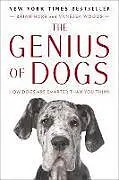
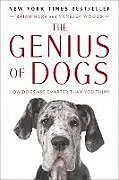
The Genius of Dogs
Beschreibung
Zusatztext Many authors have tried to anecdotally capture the emotional bond between humans and dogs. Here at last is a book that digs deep into cognitive science to unravel the mysteries of the canine brain. Thoroughly researched and written in the likable vo...Format auswählen
- Poche format BCHF 25.90

Wird oft zusammen gekauft
Andere Kunden kauften auch
Beschreibung
Zusatztext Many authors have tried to anecdotally capture the emotional bond between humans and dogs. Here at last is a book that digs deep into cognitive science to unravel the mysteries of the canine brain. Thoroughly researched and written in the likable voice of a brainy scientist sitting at your kitchen table! The Genius of Dogs is a fascinating look at what goes on between the ears of the animals we share our lives with. I found it entertaining! fast-moving! and filled with gee-whiz insights that gave me a new appreciation for the complex social intelligence of man's best friend. John Grogan! author of Marley & Me and The Longest Trip Home The Genius of Dogs is a fantastic book. It makes it very clear that there are different kinds of intelligence. All dog lovers should read this book. Temple Grandin! author of Animals Make Us Human and Animals in Translation The definitive dog book of our time by the researcher who started a revolution. Daniel J. Levitin! author of This is Your Brain on Music and The World in Six Songs A masterful account of the way science is revealing just how smart dogs can be. Fascinating and highly readable. John Bradshaw! University of Bristol! author of Dog Sense With the help of some wolves! Russian foxes! New Guinea singing dogs and a Labrador Retriever named Oreo! Brian Hare tells us about his fascinating search for an understanding of how dogs think and communicate. Stanley Coren! author of Do Dogs Dream and Born to Bark Based on Brian Hare's game-changing research! The Genius of Dogs brilliantly explains the canine mind and in doing so illuminates the natural history of all intelligence. This book will captivate anyone interested in dog! ape or human mentality. Richard Wrangham! Harvard University! author of Catching Fire This is the best book in existence! by far! for learning about the recent revolution in our understanding of the minds of dogs. And its fun! too. Mike Tomasello! Co-Director! Max Planck Institute for Evolutionary Anthropology The Genius of Dogs is not just about dogs! and not just about genius. It's an exciting detective story by two comparative biologists with amazing discoveries to report. Bernd Heinrich! author of Mind of the Raven A fascinating! riveting! utterly engaging romp through the mind of man's best friend. I promise: You will never look at your dog the same way again. Maria Goodavage! author of Soldier Dogs Informationen zum Autor Brian Hare is an associate professor in the Department of Evolutionary Anthropology and the Center for Cognitive Neuroscience at Duke University, where he founded the Duke Canine Cognition Center. Vanessa Woods is a research scientist at the Center as well as an award-winning journalist and the author of Bonobo Handshake . Hare and Woods are married and live in North Carolina. Klappentext The perfect gift for dog lovers and readers of Inside of a Dog by Alexandra Horowitzthis New York Times bestseller offers mesmerizing insights into the thoughts and lives of our smartest and most beloved pets. Does your dog feel guilt? Is she pretending she can't hear you? Does she want affectionor just your sandwich? In their New York Times bestselling book The Genius of Dogs , husband and wife team Brian Hare and Vanessa Woods lay out landmark discoveries from the Duke Canine Cognition Center and other research facilities around the world to reveal how your dog thinks and how we humans can have even deeper relationships with our best four-legged friends. Breakthroughs in cognitive science have proven dogs have a kind of genius for getting along with people that is unique in the animal kingdom. This dog genius revol...
Autorentext
Brian Hare is an associate professor in the Department of Evolutionary Anthropology and the Center for Cognitive Neuroscience at Duke University, where he founded the Duke Canine Cognition Center.
Vanessa Woods is a research scientist at the Center as well as an award-winning journalist and the author of Bonobo Handshake. Hare and Woods are married and live in North Carolina.
Klappentext
*The perfect gift for dog lovers and readers of Inside of a Dog by Alexandra Horowitz—this New York Times* bestseller offers mesmerizing insights into the thoughts and lives of our smartest and most beloved pets.
*Does your dog feel guilt? Is she pretending she can't hear you? Does she want affection—or just your sandwich? In their New York Times bestselling book The Genius of Dogs*, husband and wife team Brian Hare and Vanessa Woods lay out landmark discoveries from the Duke Canine Cognition Center and other research facilities around the world to reveal how your dog thinks and how we humans can have even deeper relationships with our best four-legged friends.
Breakthroughs in cognitive science have proven dogs have a kind of genius for getting along with people that is unique in the animal kingdom. This dog genius revolution is transforming how we live and work with dogs of all breeds, and what it means for you in your daily life with your canine friend.
Leseprobe
When we brought our new baby home from the hospital, our dog Tassie was faced with a dilemma. Since the day we adopted him from a shelter as a puppy, Tassie has had a basket of stuffed toys. Growing up, his favorite activity was to rip out the stuffing and leave it all over the house. Every now and then we would fill up the basket with new toys he could rip up all over again.
We also gave our baby, Malou, a basket of stuffed toys, which was almost identical to Tassie’s. As Malou started to crawl, she quickly developed the habit of dragging the toys out of her basket and leaving them all over the house.
Here was the dilemma. Of the dozens of toys, Tassie had to figure out which ones were his to rip up, or Malou was going to find her favorite toys in a heap of stuffing and there would be trouble.
Tassie turned out to be rather good at it. Of course, we were hopeful Tassie would have this ability, since Brian’s colleague at the Max Planck Institute for Evolutionary Anthropology in Germany, Juliane Kaminski, studied a dog named Rico who had solved a similar problem. Kaminski received a phone call one day from a very nice German lady saying she had a Border collie who understood more than two hundred German words, mostly the names of children’s toys. This was impressive but not unheard of. Language-trained bonobos, bottlenose dolphins, and African grey parrots have learned a similar number of names for objects. What was different about Rico was how he learned the names of these objects.
If you show a child a red block and a green block, then ask for “the chromium block, not the red block,” most children will give you the green block, despite not knowing that the word chromium can refer to a shade of green. The child inferred the name of the object.
Kaminski gave Rico a similar test. She placed a new object Rico had never seen before in a different room with seven of his toys that he knew by name. Then she asked him to fetch a toy using a new word he had never heard before, like Sigfried. She did this with dozens of new objects and words.
Just like children, Rico inferred that the new words referred to the new toys.
Without any training, Tassie has never ripped up one of Malou’s toys instead of his own. His toys and her toys can be lying in a jumble on the floor, and he will carefully extract his toys and play with them, giving her toys only a longing glance or a quick sniff. He adapted quicker than we did to life with a new baby.
      *
In the last ten years, there has been something of a revolution in the study of canine intelligence. We have learned more about how dogs think in the past decade than we have in the previous century.
This book is about how cognitive science has come to understand the genius of dogs through experimen…