
IHR WARENKORB IST AKTUELL LEER.
Haben Sie noch nichts passendes gefunden? Stöbern Sie durch unser komplettes Sortiment.
Oder melden Sie sich an bzw. registrieren Sie sich.
- Kostenlose Lieferung
- Kauf auf Rechnung
- Ex Libris Tiefpreis
- Filiallieferung und 650+ Abholorte
- Rabatt-Bons als Club-Mitglied
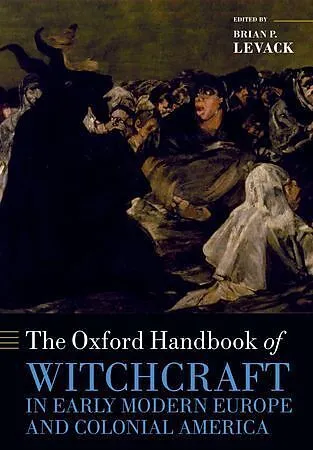
The Oxford Handbook of Witchcraft in Early Modern Europe and Colonial America
Beschreibung
A collection of essays from leading scholars in the field that collectively study the rise and fall of witchcraft prosecutions in the various kingdoms and territories of Europe and in English, Spanish, and Portuguese colonies in the Americas. Zusatztext The es...Format auswählen
- Kartonierter Einband (Kt)CHF 58.40

Wird oft zusammen gekauft
Andere Kunden kauften auch
Beschreibung
A collection of essays from leading scholars in the field that collectively study the rise and fall of witchcraft prosecutions in the various kingdoms and territories of Europe and in English, Spanish, and Portuguese colonies in the Americas.
Zusatztext The essays in this collection succeed well in representing the field in its rich complexity, regional variation and historical contours. The Oxford Handbook of Witchcraft offers a broad historiographical entrée into witchcraft studies ... as well as an up-to-date glimpse into the debates and claims of the field for scholars seeking a reliable and suitably deep overview ... this volume ranks among the best. Informationen zum Autor Brian P. Levack has published widely on English and Scottish legal history and the history of witchcraft prosecutions. His books on witchcraft include The Witch-Hunt in Early Modern Europe (3rd ed., 2006) and Witch-Hunting in Scotland: Law, Politics and Religion (2008). He is co-author of Witchcraft and Magic in Europe: The Eighteenth and Nineteenth Centuries (1999) and the editor of The Witchcraft Sourcebook (2004). Klappentext The essays in this Handbook, written by leading scholars working in the rapidly developing field of witchcraft studies, explore the historical literature regarding witch beliefs and witch trials in Europe and colonial America between the early fifteenth and early eighteenth centuries. During these years witches were thought to be evil people who used magical power to inflict physical harm or misfortune on their neighbours. Witches were also believed to have made pacts with the devil and sometimes to have worshipped him at nocturnal assemblies known as sabbaths. These beliefs provided the basis for defining witchcraft as a secular and ecclesiastical crime and prosecuting tens of thousands of women and men for this offence. The trials resulted in as many as fifty thousand executions.These essays study the rise and fall of witchcraft prosecutions in the various kingdoms and territories of Europe and in English, Spanish, and Portuguese colonies in the Americas. They also relate these prosecutions to the Catholic and Protestant reformations, the introduction of new forms of criminal procedure, medical and scientific thought, the process of state-building, profound social and economic change, early modern patterns of gender relations, and the wave of demonic possessions that occurred in Europe at the same time. The essays survey the current state of knowledge in the field, explore the academic controversies that have arisen regarding witch beliefs and witch trials, propose new ways of studying the subject, and identify areas for future research. Zusammenfassung A collection of essays from leading scholars in the field that collectively study the rise and fall of witchcraft prosecutions in the various kingdoms and territories of Europe and in English, Spanish, and Portuguese colonies in the Americas. Inhaltsverzeichnis IntroductionPart I: Witch Beliefs1: Richard Kieckhefer: Magic and its Hazards in the Late Medieval West2: Hans Peter Broedel: Fifteenth-Century Witch Beliefs3: Edward Bever: Popular Witch Beliefs and Magical Practices4: Gerhild Scholz Williams: Demonologies5: Willem de Blécourt: Sabbath Stories: Towards a New History of Witches' Assemblies6: Walter Stephens: The Sceptical Tradition7: Diane Purkiss: Witchcraft in Early Modern Literature8: Charles Zika: Images of Witchcraft in Early Modern EuropePart II: Witchcraft Prosecutions9: Richard Kieckhefer: The First Wave of Trials for Diabolical Witchcraft10: Thomas Robisheaux: The German Witch Trials11: Robin Briggs: Witchcraft and the Local Communities: The Rhine-Moselle Region12: William Monter: Witchcraft Trials in France13: Hans de Waardt: Witchcraft and Wealth: The Case of the Netherlands14: Tamar Herzig: Witchcraft Prosecutions in Italy15: William Monter: Witchcraft in Iberia16: Malcolm Gaskill: Witchcraft Trials in England17: Julian Goodare: Witchcraft in Scotland18: Michael Ostling: Witchcraft in Poland: Milk and Malefice19: Ildikó Sz. Kristóf: Witch-Hunting in Early Modern Hungary20: Valerie Kivelson: Witchcraft Trials in Russ...
Autorentext
Brian P. Levack has published widely on English and Scottish legal history and the history of witchcraft prosecutions. His books on witchcraft include The Witch-Hunt in Early Modern Europe (3rd ed., 2006) and Witch-Hunting in Scotland: Law, Politics and Religion (2008). He is co-author of Witchcraft and Magic in Europe: The Eighteenth and Nineteenth Centuries (1999) and the editor of The Witchcraft Sourcebook (2004).
Klappentext
The essays in this Handbook, written by leading scholars working in the rapidly developing field of witchcraft studies, explore the historical literature regarding witch beliefs and witch trials in Europe and colonial America between the early fifteenth and early eighteenth centuries. During these years witches were thought to be evil people who used magical power to inflict physical harm or misfortune on their neighbours. Witches were also believed to have made pacts with the devil and sometimes to have worshipped him at nocturnal assemblies known as sabbaths. These beliefs provided the basis for defining witchcraft as a secular and ecclesiastical crime and prosecuting tens of thousands of women and men for this offence. The trials resulted in as many as fifty thousand executions. These essays study the rise and fall of witchcraft prosecutions in the various kingdoms and territories of Europe and in English, Spanish, and Portuguese colonies in the Americas. They also relate these prosecutions to the Catholic and Protestant reformations, the introduction of new forms of criminal procedure, medical and scientific thought, the process of state-building, profound social and economic change, early modern patterns of gender relations, and the wave of demonic possessions that occurred in Europe at the same time. The essays survey the current state of knowledge in the field, explore the academic controversies that have arisen regarding witch beliefs and witch trials, propose new ways of studying the subject, and identify areas for future research.
Inhalt
- Introduction
- Part I: Witch Beliefs
- 1: Richard Kieckhefer: Magic and its Hazards in the Late Medieval West
- 2: Hans Peter Broedel: Fifteenth-Century Witch Beliefs
- 3: Edward Bever: Popular Witch Beliefs and Magical Practices
- 4: Gerhild Scholz Williams: Demonologies
- 5: Willem de Blécourt: Sabbath Stories: Towards a New History of Witches' Assemblies
- 6: Walter Stephens: The Sceptical Tradition
- 7: Diane Purkiss: Witchcraft in Early Modern Literature
- 8: Charles Zika: Images of Witchcraft in Early Modern Europe
- Part II: Witchcraft Prosecutions
- 9: Richard Kieckhefer: The First Wave of Trials for Diabolical Witchcraft
- 10: Thomas Robisheaux: The German Witch Trials
- 11: Robin Briggs: Witchcraft and the Local Communities: The Rhine-Moselle Region
- 12: William Monter: Witchcraft Trials in France
- 13: Hans de Waardt: Witchcraft and Wealth: The Case of the Netherlands
- 14: Tamar Herzig: Witchcraft Prosecutions in Italy
- 15: William Monter: Witchcraft in Iberia
- 16: Malcolm Gaskill: Witchcraft Trials in England
- 17: Julian Goodare: Witchcraft in Scotland
- 18: Michael Ostling: Witchcraft in Poland: Milk and Malefice
- 19: Ildikó Sz. Kristóf: Witch-Hunting in Early Modern Hungary
- 20: Valerie Kivelson: Witchcraft Trials in Russia: History and Historiography
- 21: Rune Blix Hagen: Witchcraft Criminality and Witchcraft Research in the Nordic Countries
- 22: Richard Godbeer: Witchcraft in British America
- 23: Iris Gareis: Merging Magical Traditions: Sorcery and Witchcraft in Spanish and Portuguese America
- 24: Brian P. Levack: The Decline and End of Witchcraft Prosecutions
- Part III: Themes of Witchcraft Research
- …