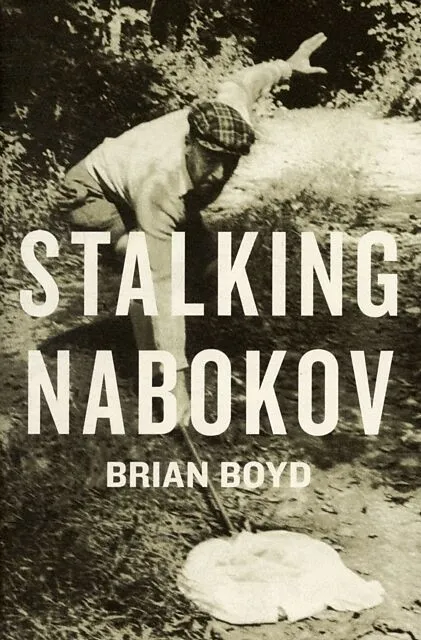
Stalking Nabokov
Beschreibung
Boyd confronts Nabokov's life, career, and legacy; his art, science, and thought; his subtle humor and puzzle-like storytelling; his complex psychological portraits; and his inheritance from, reworking of, and affinities with Shakespeare, Pushkin, Tolstoy, and...Format auswählen
- Fester EinbandCHF 186.80

Wird oft zusammen gekauft
Andere Kunden kauften auch
Beschreibung
Boyd confronts Nabokov's life, career, and legacy; his art, science, and thought; his subtle humor and puzzle-like storytelling; his complex psychological portraits; and his inheritance from, reworking of, and affinities with Shakespeare, Pushkin, Tolstoy, and Machado de Assis. Boyd offers new ways of reading Nabokov's best English-language works: Lolita, Pale Fire, Ada, and the unparalleled autobiography, Speak, Memory, and he discloses otherwise unknown information about the author's world. Sharing hispersonal reflections, Boyd recounts the adventures, hardships, and revelations of researching Nabokov's biography and his unusual finds in the archives, including materials still awaiting publication. The first to focus on Nabokov's metaphysics, Boyd cautions against their being used as the key to unlock all of the author's secrets, showing instead the many other rooms in Nabokov's castle of fiction that need exploring, such as his humor, narrative invention, and psychological insight into characters andreaders alike. Appreciating Nabokov as novelist, memoirist, poet, translator, scientist, and individual, Boyd helps us understand more than ever the author's multifaceted genius.
Autorentext
Brian Boyd is University Distinguished Professor of English, University of Auckland. His work on American, Brazilian, English, Greek, Irish, New Zealand, and Russian literature, from epics to comics, has appeared in sixteen languages and has won awards on four continents. Known also for his evolutionary and cognitive work, he is the author of On the Origin of Stories: Evolution, Cognition and Fiction and coeditor of Evolution, Literature, and Film: A Reader.
Klappentext
At the age of twenty-one, Brian Boyd wrote an essay on Vladimir Nabokov that the author called "brilliant." In 1991, after gaining exclusive access to the writer's archives, he wrote a two-part, award-winning biography, "Vladimir Nabokov: The Russian Years" and "Vladimir Nabokov: The American Years," that has become standard reading. This collection features essays written by Boyd after completing Nabokov's biography, incorporating material he gleaned from his research as well as new discoveries and formulations. This volume forms the perfect companion for readers of Nabokov, approaching the author from a variety of angles and perspectives.Boyd confronts Nabokov's life, career, and legacy; his art, science, and thought; his subtle humor and puzzle-like storytelling; his complex psychological portraits; and his inheritance from, reworking of, or affinities with Shakespeare, Pushkin, Tolstoy, and Machado de Assis. Boyd offers new ways of reading Nabokov's best English-language work: "Lolita," "Pale Fire," "Ada," and the unparalleled autobiography, "Speak, Memory," and he discloses otherwise unknown information about the author's world. Sharing his personal reflections, Boyd recounts the adventures, hardships, and revelations of researching Nabokov's biography and his unusual finds in the archives, including materials still awaiting publication. The first to focus on Nabokov's metaphysics, Boyd in fact downplays their importance, instead emphasizing the author's humor, reinvention of narrative possibility, and psychological renderings of various characters to unlock the greater mysteries. Reading Nabokov as novelist, memoirist, poet, translator, scientist, and individual, Boyd further immortalizes his far-reaching, versatile talents.
Inhalt
AcknowledgmentsList of AbbreviationsIntroductionNabokov: The Writer's Life and the Life Writer1. A Centennial Toast (1999)2. A Biographer's Life (2001)3. Who Is "My Nabokov"? (2007)Nabokov's Manuscripts and Books4. The Nabokov Biography and the Nabokov Archive (1992)5. From the Nabokov Archive: Nabokov's Literary Legacy (2009)Nabokov's Metaphysics6. Retrospects and Prospect/s (2001)7. Nabokov's Afterlife (2002)Nabokov's Butterflies8. Nabokov, Literature, Lepidoptera (2000)9. Netting Nabokov: Review of Dieter E. Zimmer, A Guide to Nabokov's Butterflies and Moths , 2001 (2001)Nabokov as Psychologist10. The Psychological Work of Fictional Play (2010)Nabokov and the Origins and Ends of Stories11. Stacks of Stories, Stories of Stacks (2010)Nabokov as Writer12. Nabokov's Humor (1996)13. Nabokov as Storyteller (2002)14. Nabokov's Transition from Russian to English: Repudiation or Evolution? (2007)Nabokov and Others15. Nabokov, Pushkin, Shakespeare: Genius, Generosity, and Gratitude in The Gift and Pale Fire (1999)16. Nabokov as Verse Translator: Introduction to Verses and Versions (2008)17. Tolstoy and Nabokov (1993)18. Nabokov and Machado de Assis (2009)Nabokov Works19. Speak, Memory : The Life and the Art (1990)20. Speak, Memory : Nabokov, Mother, and Lovers: The Weave of the Magic Carpet (1999)21. Lolita : Scene and Unseen (2006)22. Even Homais Nods: Nabokov's Fallibility; Or, How to Revise Lolita (1995)23. Literature, Pattern, Lolita; Or, Art, Literature, Science (2008)24. "Pale Fire": Poem and Pattern (2010)25. Ada : The Bog and the Garden; Or, Straw, Fluff, and Peat: Sources and Places in Ada (2004)26. A Book Burner Recants: The Original of Laura (2010)NotesBibliographyIndex