
IHR WARENKORB IST AKTUELL LEER.
Haben Sie noch nichts passendes gefunden? Stöbern Sie durch unser komplettes Sortiment.
Oder melden Sie sich an bzw. registrieren Sie sich.
- Kostenlose Lieferung
- Kauf auf Rechnung
- Ex Libris Tiefpreis
- Filiallieferung und 650+ Abholorte
- Rabatt-Bons als Club-Mitglied
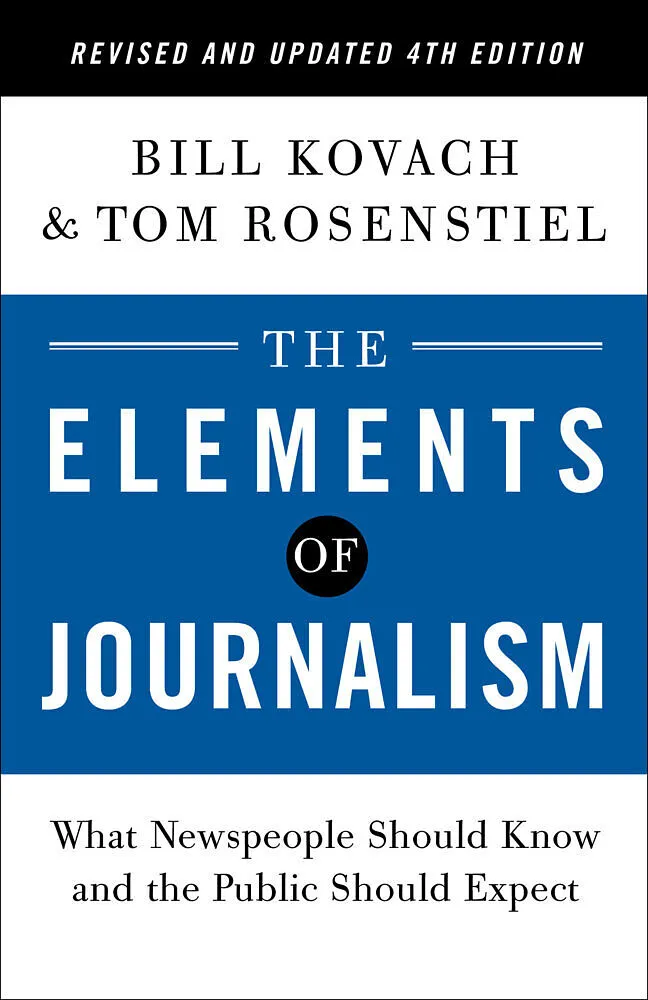
The Elements of Journalism, Revised and Updated 4th Edition
Beschreibung
Informationen zum Autor Bill Kovach was editor of The Atlanta Journal-Constitution , the Washington bureau chief for The New York Times, and curator of the Nieman Foundation for Journalism fellowship program at Harvard. He was founding chairman of the Committe...Format auswählen
- Poche format BCHF 21.10

Wird oft zusammen gekauft
Andere Kunden kauften auch
Beschreibung
Informationen zum Autor Bill Kovach was editor of The Atlanta Journal-Constitution , the Washington bureau chief for The New York Times, and curator of the Nieman Foundation for Journalism fellowship program at Harvard. He was founding chairman of the Committee of Concerned Journalists. Tom Rosenstiel is executive director of the American Press Institute, founder of the Project for Excellence in Journalism, a former media critic for the Los Angeles Times , and chief congressional correspondent for Newsweek. He and Kovach have written two other books together, Warp Speed and Blur. Klappentext "A timely new edition of the classic journalism guide, now featuring updated material on the importance of reporting in the age of media mistrust and fake news--and how journalists can use technology while also navigating its challenges. More than two decades ago, the Committee of Concerned Journalists gathered some of America's most influential newspeople to ask the question "What is journalism for?" Through exhaustive research, surveys, interviews, and public forums, they identified the essential elements that define journalism and its role in our society. The result is one of the most important books on the media ever written, winner of the Goldsmith Book Prize from Harvard, the Society of Professional Journalists Award, and the Bart Richards Award from Penn State University. Updated with new material covering the ways journalists can deftly leverage technology to their advantage, especially given the shifting revenue architecture--with "clickbait" fading away and consumers paying a higher premium for quality reporting--this fourth edition of The Elements of Journalism is an essential read for journalists, students, and anybody hoping to stay informed in contentious times"-- Leseprobe Preface to the Fourth Edition Bill Kovach often says that every generation creates its own journalism. That change doesn't happen gradually. It occurs in fits and starts, as momentous events or dramatic cultural shifts force news- rooms to reexamine themselves. Look back at the twentieth century and you can see these moments. The notion of applying a more scientific or objective method to gathering news, for instance, came in response to World War I and the Russian Revolution, as thoughtful journalists tried to reckon with failures of their profession at a time when democracy around the world was in doubt. The Hutchins Commission, which developed modern notions of press responsibility, came about after World War II, with the rise of electronic media and attempts by fascist regimes to make an evil science of propaganda. The first edition of this book, twenty years ago, was in response to the fragmentation of media caused by the emerging new technologies of cable and the internet and a new wave of sensationalism that resulted in the face of the financial pressures those technologies created. Today, in 2021, a new reexamination of journalism is under way. That reckoning is the result of the convergence of disparate but powerful forces. Journalism is threatened by the collapse of its advertising model. It is threatened by a culture at the all-powerful platform companies such as Facebook, Twitter, and YouTube, which is built around what separates peopleso they can be targeted for advertisingrather than what unites them. It is threatened by the rise of despotic leaders around the world who want to denigrate a free press and the fact-based approach to civic life that it represents. And it is driven by a reckoning in newsrooms over the failure of usually white- and male-dominated staffs to understand, care about, and cover people of color and the systemic racial injustice in the country. At the same time, those same newsrooms have managed to almost entirely alienate people in the United States who call themselves conservative. <...
Autorentext
Bill Kovach was editor of The Atlanta Journal-Constitution, the Washington bureau chief for The New York Times, and curator of the Nieman Foundation for Journalism fellowship program at Harvard. He was founding chairman of the Committee of Concerned Journalists.
Tom Rosenstiel is executive director of the American Press Institute, founder of the Project for Excellence in Journalism, a former media critic for the Los Angeles Times, and chief congressional correspondent for Newsweek. He and Kovach have written two other books together, Warp Speed and Blur.
Klappentext
"A timely new edition of the classic journalism guide, now featuring updated material on the importance of reporting in the age of media mistrust and fake news--and how journalists can use technology while also navigating its challenges. More than two decades ago, the Committee of Concerned Journalists gathered some of America's most influential newspeople to ask the question "What is journalism for?" Through exhaustive research, surveys, interviews, and public forums, they identified the essential elements that define journalism and its role in our society. The result is one of the most important books on the media ever written, winner of the Goldsmith Book Prize from Harvard, the Society of Professional Journalists Award, and the Bart Richards Award from Penn State University. Updated with new material covering the ways journalists can deftly leverage technology to their advantage, especially given the shifting revenue architecture--with "clickbait" fading away and consumers paying a higher premium for quality reporting--this fourth edition of The Elements of Journalism is an essential read for journalists, students, and anybody hoping to stay informed in contentious times"--
Zusammenfassung
A timely new edition of the classic journalism text, now featuring updated material on the importance of reporting in the age of media mistrust and fake news—and how journalists can use technology to navigate its challenges
More than two decades ago, the Committee of Concerned Journalists gathered some of America’s most influential newspeople and asked them, “What is journalism for?” Through exhaustive research, surveys, interviews, and public forums, the committee identified the essential elements that define journalism and its role in our society. The result is one of the most important books on media ever written—winner of the Goldsmith Book Prize from Harvard, a Society of Professional Journalists Award, and the Bart Richards Award for Media Criticism from Penn State University.
Updated with new material covering the ways journalists can leverage technology to their advantage, especially given the shifting revenue architecture of news—and with the future of news, facts, and democracy never more in question—this fourth edition of The Elements of Journalism is the authoritative guide for journalists, students, and anyone hoping to stay informed in contentious times.
Leseprobe
Preface to the Fourth Edition
Bill Kovach often says that every generation creates its own journalism. That change doesn’t happen gradually. It occurs in fits and starts, as momentous events or dramatic cultural shifts force news- rooms to reexamine themselves.
Look back at the twentieth century and you can see these moments. The notion of applying a more scientific or objective method to gathering news, for instance, came in response to World War I and the Russian Revolution, as thoughtful journalists tried to reckon with failures of their profession at a time when democracy around the world was in doubt. The Hutchins Commission, which developed modern notions of press responsibility, came about after World War II, with the rise of electronic media and attempts by fascist regimes to make an evil science of propaganda. The first edition of this book, twenty years ago, was in response to the fragmentation of media caused by the emerging new technologies of c…