
IHR WARENKORB IST AKTUELL LEER.
Haben Sie noch nichts passendes gefunden? Stöbern Sie durch unser komplettes Sortiment.
Oder melden Sie sich an bzw. registrieren Sie sich.
- Kostenlose Lieferung
- Kauf auf Rechnung
- Ex Libris Tiefpreis
- Filiallieferung und 650+ Abholorte
- Rabatt-Bons als Club-Mitglied
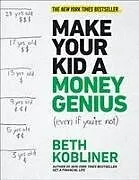
Make Your Kid a Money Genius Even If You're Not
Beschreibung
Zusatztext Addressing everything from car loans to moving home after college! Kobliner's recommendations are practical! thorough! and relevant. Considering the huge burden of debt that many young people carry today! wise is the parent who starts the youngster ...Format auswählen
- Fester EinbandCHF 24.30
Beschreibung
Zusatztext Addressing everything from car loans to moving home after college! Kobliner's recommendations are practical! thorough! and relevant. Considering the huge burden of debt that many young people carry today! wise is the parent who starts the youngster saving early. Warmly recommended. Informationen zum Autor Beth Kobliner is a personal finance commentator and journalist, and the author of the New York Times bestseller Get a Financial Life as well as a book for parents, Make Your Kid a Money Genius (Even If You're Not) . Beth is the founder of Get a Financial Life NYC, a financial literacy program working to integrate money lessons into the New York City public school curriculum, and was selected by President Obama to serve on the President's Advisory Council on Financial Capability for Young Americans. A former staff writer at Money magazine, Beth has contributed to The New York Times and The Wall Street Journal and has appeared on CNN, MSNBC, Today , PBS NewsHour , Sesame Street , and NPR. For more, see BethKobliner.com and her Instagram @BKobliner. Klappentext Edition statement indicates hardcover, but this item is paperback.Make Your Kid A Money Genius (Even If You're Not) 1 14 Rules for Talking to Your Kids About Money The fact that you're reading this means you know you should talk money with your kid. Whether the subject terrifies you or intrigues you, or you're simply looking for ways to broach the topic, the good news is that you're plunging in. Go, you! A few quick words about this chapter. Though its title might make it sound like I'm expecting you to be a financial drill sergeant (Now drop and give me twenty compound-interest calculations!), I'm not. This chapter is the gentle one, meant to ease you into some overall conceptsand contextthat'll help you engage with your child about money. Some points will apply, others might not, depending on your kid's age, interest level, and even gender. So don't think that you need to commit everything to memory or take furious notes. The idea here is to put down your highlighter and just read. One final thought before we begin: Money conversations don't happen in a vacuum. Instead, they pop up at various times throughout the messy business of living. Though it's become a cliché, most learning happens during these everyday teachable moments. The tips below and throughout this book are meant to help you take advantage of these opportunities. So here we go. 1 Start even earlier than you think you should. By the ripe old age of three, researchers at the University of WisconsinMadison report, many children are able to grasp economic ideas such as value and exchange, albeit in a very rudimentary way. They can also delay gratification and make choices. Though basic, all these concepts are important in understanding the role of money in our daily lives. Although there's no economic equivalent of Baby Mozart videos, no stuffed dolls that look like Warren Buffett to tell your kid to buy low and sell high when you squeeze them, that doesn't mean you shouldn't pay attention to this stuff when your child is small. Your toddler is eager, and able, to understand a lot. When you notice your little one swiping a pretend credit card, asking to push the buttons at the ATM, or looking through your wallet, instead of chuckling indulgently in a kids say the darndest things way, start teaching him some of the basic lessons in this book about where money comes from and how to pay for things. Even if your preschooler doesn't absorb it all, he will still notice that you're talking to him about something that matterssomething g...
ldquo;Addressing everything from car loans to moving home after college, Kobliner’s recommendations are practical, thorough, and relevant.… Considering the huge burden of debt that many young people carry today, wise is the parent who starts the youngster saving early. Warmly recommended.”
Autorentext
Beth Kobliner is a personal finance commentator and journalist, and the author of the New York Times bestseller Get a Financial Life as well as a book for parents, Make Your Kid a Money Genius (Even If You’re Not). Beth is the founder of Get a Financial Life NYC, a financial literacy program working to integrate money lessons into the New York City public school curriculum, and was selected by President Obama to serve on the President’s Advisory Council on Financial Capability for Young Americans. A former staff writer at Money magazine, Beth has contributed to The New York Times and The Wall Street Journal and has appeared on CNN, MSNBC, Today, PBS NewsHour, Sesame Street, and NPR. For more, see BethKobliner.com and her Instagram @BKobliner.
Klappentext
Edition statement indicates hardcover, but this item is paperback.
Zusammenfassung
The New York Times bestseller that is a must-read for any parent!
From Beth Kobliner, the author of the bestselling personal finance bible Get a Financial Life—a new, must-have guide showing parents how to teach their children (from toddlers to young adults) to manage money in a smart way.
Many of us think we can have the “money talk” when our kids are old enough to get it…which won’t be for years, right? But get this: Research shows that even preschoolers can understand basic money concepts, and a study from Cambridge University confirmed that basic money habits are formed by the age of seven. Oh, and research shows the number one influence on kids’ financial behaviors is mom and dad. Clearly, we can’t afford to wait.
Make Your Kid a Money Genius (Even If You’re Not) is a jargon-free, step-by-step guide to help parents of all income levels teach their kids—from ages three to twenty-three—about money. It turns out the key to raising a money genius isn’t to teach that four quarters equal a dollar or how to pick a stock. Instead, it’s about instilling values that have been proven to make people successful—not just financially, but in life: delaying gratification, working hard, living within your means, getting a good education, and acting generously toward others. More specifically, you’ll learn why allowance isn’t the Holy Grail when teaching your kid to handle money, and why after-school jobs aren’t always the answer either. You’ll discover the right age to give your kid a credit card, and learn why doling out a wad of cash can actually be a good parenting move.
You don’t need to be a money genius to make your kid a money genius. Regardless of your comfort level with finance—or your family’s income—this charming and fun book is an essential guide for passing along enduring financial principles, making your kids wise beyond their years—and peers—when it comes to money.
Leseprobe
Make Your Kid A Money Genius (Even If You’re Not)
1 
14 Rules for Talking to Your Kids About Money
The fact that you’re reading this means you know you should talk money with your kid. Whether the subject terrifies you or intrigues you, or you’re simply looking for ways to broach the topic, the good news is that you’re plunging in. Go, you!
A few quick words about this chapter. Though its title might make it sound like I’m expecting you to be a financial drill sergeant (“Now drop and give me twenty compound-interest calculations!”), I’m not. This chapter is the gentle one, meant to ease you into some overall concepts—and context—that’ll help you engage with your child about money. Some points will apply, others might not, depending on your kid’s age, interest level, and even gender. So don’t think that you need to commit everything to memory or take furi…