Beschreibung
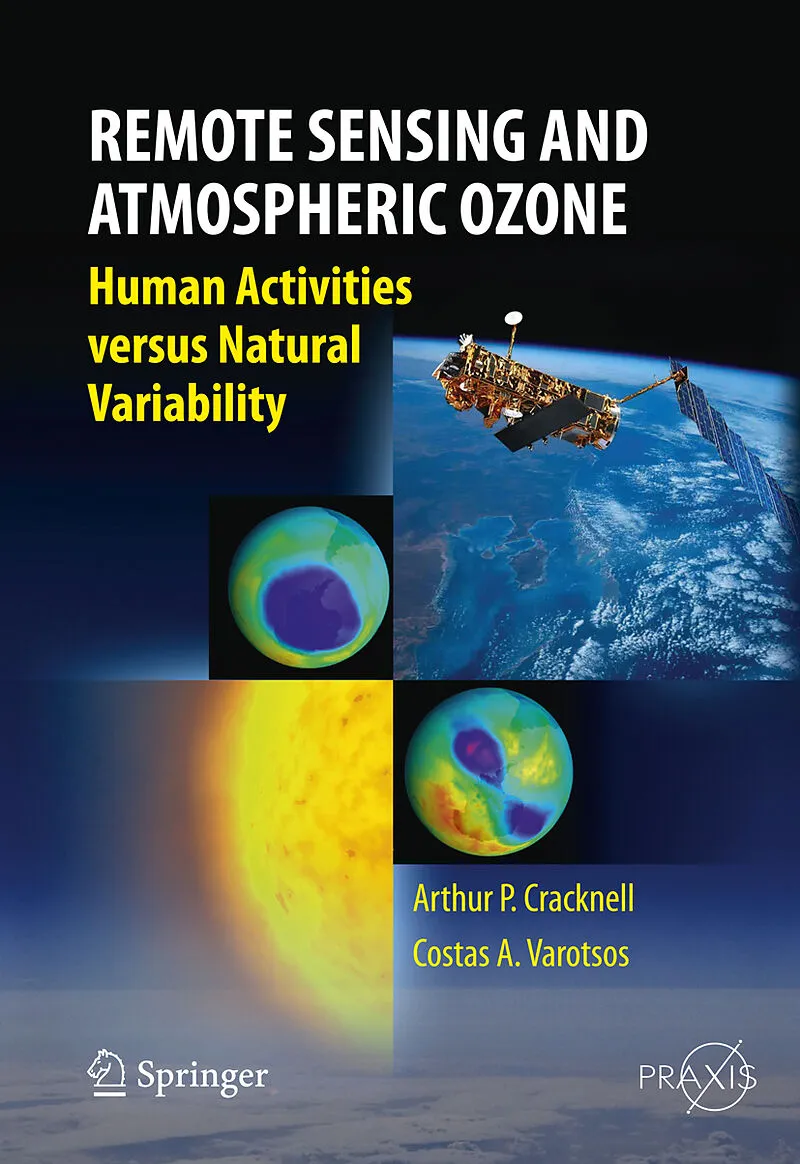
This book examines the effect of human activities on atmospheric ozone. It details the role of remote sensing techniques in understanding the effects of human activities on atmospheric ozone as well as in the development of social and political awareness. The ...This book examines the effect of human activities on atmospheric ozone. It details the role of remote sensing techniques in understanding the effects of human activities on atmospheric ozone as well as in the development of social and political awareness.
The destruction of the ozone layer, together with global warming, is one of the hot environmental topics of today. This book examines the effect of human activities on atmospheric ozone, namely the increase of tropospheric ozone and the general diminution of stratospheric ozone and the production of the Antarctic ozone hole. Also discussed is the role of remote sensing techniques in the understanding of the effects of human activities on atmospheric ozone as well as in the development of social and political awareness of the damage to the ozone layer by man-made chemicals, principally CFCs. This led to the formulation and ratification in 1989 of the Montreal Protocol on controlling/banning the manufacture and use of chemicals that damage the ozone layer. Since then, remote sensing has played a key role in monitoring atmospheric ozone concentration and determining the success of the Montreal Protocol in protecting the ozone layer from further damage. In this book, the renowned authors discuss the sophisticated instruments that have been launched into space to study not only ozone but also other trace gases in the atmosphere, some of which play a key role in the generation and destruction of ozone in the atmosphere. Professors Cracknell and Varotsos also examine the satellite-flown instruments which are involved in monitoring the absorption of solar ultraviolet light in the atmosphere in relation both to the generation and destruction of ozone and consequently to human health. This scholarly book, written by the foremost experts in the field, looks at remote sensing and its employment in the various aspects of ozone science. It is widely acknowledged that global warming, due to anthropogenic greenhouse gases emissions, represents a threat to the sustainability of human life on Earth. However, many other threats are potentially just as serious, including atmospheric pollution, ozone depletion, water pollution, the degradation of agricultural land, deforestation, the depletion of the world's mineral resources and population growth.
Explains how remote sensing provides information on atmospheric ozone related problems facing humanity Provides scientific evidence of the use of remote sensing instrumentation to monitor atmospheric ozone depletion Stimulates discussion and research in the field of longer terms problems in remote sensing and ozone Provides a sound grounding in the fundamentals of current research work on atmospheric ozone Looks at remote sensing and its employment in the various aspects of ozone science Examines the traditional methods of studying atmospheric ozone Demonstrates the key role played by remote sensing in the success of the Montreal Protocol, which bans the manufacture and use of substances that damage the ozone layer Includes supplementary material: sn.pub/extras
Autorentext
Arthur J. Cracknell: In the mid 1970s Prof. Cracknell started to become involved in remote sensing (Earth Observation) work, a field that was then in its infancy. The idea that led him to start remote sensing work in the former Physics Department at Dundee University was to provide a link between the generators of satellite data and the environmental scientists and engineers who would like to use the data. This work on the processing and interpretation of remote sensing data developed by Prof. Cracknell expanded enormously over a period of about 25 years and led to the publication by him and his co-authors of over 200 research papers and about 20 or so books on the subject. The books range from an introductory textbook on the subject, which is about to go into its second edition, to monographs and edited conference and summer school proceedings. Prof. Vladimir F. Krapivin published numerous papers and a number of books relevant to environmental and global changes studies. Among the latter are:"Ecoinformatics Methods" (with I.I. Potapov), 2002, Moscow (in Russian)."Modelling the Global Carbon Cycle" (with K.Ya. Kondratyev), 2004, Moscow (in Russian)."Global Change of the Environment: Ecoinformatics" (with K.Ya. Kondratyev), St. Petersburg (in Russian)."Perspectives of Civilization Development: Multidimensional Analysis" (with K.Ya. Kondratyev and V.P. Savinikh), 2003, Moscow (in Russian)."Global Environmental Change: Modelling and Monitoring" (with K.Ya. Kondratyev and G.W. Phillips), Springer, 2002, Germany;"Global Carbon Cycle and Climate Change" (with K.Ya. Kondratyev and C.A. Varotsos), Springer/Praxis, 2003, U.K.;"Global Ecodynamics: a Multidimensional Analysis" (with K.Ya. Kondratyev, V.P. Savinikh, and C.A. Varotsos), 2004, Springer/Praxis, U.K."Natural Disasters as Interactive Components of Global Ecodynamics" (with K.Ya. Kondratyev and C.A. Varotsos);"Atmospheric Aerosol Properties: Formation, Processes and Impacts" (with K.Ya. Kondratyev, L.S. Ivlev and C.A. Varotsos).
Inhalt
The traditional measurement of ozone in the atmosphere.- Satellite systems for studies of atmospheric ozone.- The dynamics of the atmospheric ozone.- Observed variability of surface solar UV radiation due to total ozone variations.- The role of science in the social and political arguments in leading up to the Montreal Protocol to ban the manufacture and use of chemical that destroy the ozone layer.- The history of the International Ozone Commission.- The study of atmospheric ozone since 1987.- Ozone and global change.