Beschreibung
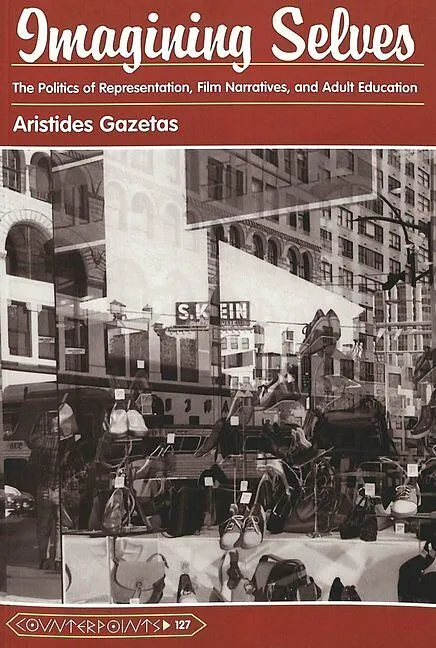
This book examines a number of theoretical positions proposed by adult educators in relation to five poststructural perspectives. The analysis begins with a Lacanian interpretation of subjectivity in the complexities of female bonding with the Other, then foll...This book examines a number of theoretical positions proposed by adult educators in relation to five poststructural perspectives. The analysis begins with a Lacanian interpretation of subjectivity in the complexities of female bonding with the Other, then follows with Foucault's concepts of knowledge and power, Derrida's perspective on differance, Baudrillard's thesis on «simulacra,» and closes with Lyotard's philosophy on the «postmodern condition.» The study argues that objects of knowledge are locally and historically specific, and that they become available for human understanding only within certain «language games,» «paradigms,» and «discursive formations.» Further, the study investigates the central role film narratives play in the process of socialization while questioning simultaneously, the ideological processes forming our subjectivities.
Autorentext
The Author: Aristides Gazetas received his Ph.D. in educational studies from the University of British Columbia. A Fulbright scholar to Greece, he was actively involved in the design of a film studies program for the University, of Lethbridge in the 1980s. As Associate Professor, he has written two telecourses, Studies in International Cinema II for Fine Arts and The Short History of Film - Film 330 for the Department of Theatre and Film at the University of British Columbia.
Zusammenfassung
"In his remarkably innovative book, 'Imagining Selves: The Politics of Representation, Film Narratives, and Adult Education' Aristides Gazetas engages in articulating enactive doubling. As he disrupts the modernist hold of representational discourse sustained by the metaphysics of presence as its precondition, he simultaneously repositions his writing in decentered sites of multiple metonymies. Here, he invokes works of contemporary scholars and their favorite metonymies: 'self/other' (Baudrillard), 'power/knowledge' (Foucault), 'presence/absence' (Derrida), 'realism/illusion' (Lacan), and 'fact/fiction' (Lyotard). So textured and textually decentered, Gazetas allows the interplay of texts to reconstitute both narrative and education. Indeed, for filmmakers and educators a fresh flavor in the new millennium." (Ted T. Aoki, Professor Emeritus, University of Alberta)
"Aristides Gazetas's deep knowledge of film history and postmodern theory is evident in this well-crafted and engaging analysis of how cultural identities are constructed in film narratives. He demonstrates well the important role of film and postmodern analysis in understanding the politics of difference and its implications for both adult learners and those engaged in the practice of adult education. This is a thorough, highly readable, and compelling analysis that will challenge readers to consider how the narrative discourses of film construct and represent them as both adults and learners." (Thomas J. Sork, Professor of Adult Education, University of British Columbia)
"Aristides Gazetas's book is a powerful reminder of the need to rethink how the imaginary and the real become 'necessary illusions' that constitute human identities in ways beyond our knowing. Once we accept that the effects of words and images inscript how we 'imagine selves', then we acknowledge that we must be answerable for the discourse practices in the classroom both in terms of subjects and subjectivities. Although adult education is addressed specifically, I found Gazetas's call for a repositioning that includes notions of difference and hybridity insightful to my work with English language learners who also struggle with questions of 'imagining selves'. Gazetas makes an important contribution to the emerging literature on poststructural thinking and educational practices." (Marylin Low, University of British Columbia)
Tief- preis