
IHR WARENKORB IST AKTUELL LEER.
Haben Sie noch nichts passendes gefunden? Stöbern Sie durch unser komplettes Sortiment.
Oder melden Sie sich an bzw. registrieren Sie sich.
- Kostenlose Lieferung
- Kauf auf Rechnung
- Ex Libris Tiefpreis
- Filiallieferung und 650+ Abholorte
- Rabatt-Bons als Club-Mitglied
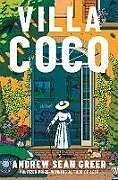
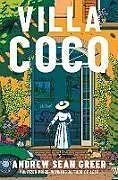
Villa Coco
Beschreibung
Pulitzer Prize winner Andrew Sean Greer (“A great chronicler of our times.” –<San Francisco Chronicle<) showcases his wit, sophistication and deep knowledge of focaccia in this magical and madcap tale of a young man who takes an u...Format auswählen
- Fester EinbandCHF 31.60
Wird oft zusammen gekauft
Andere Kunden kauften auch
Beschreibung
Pulitzer Prize winner Andrew Sean Greer (“A great chronicler of our times.” –<San Francisco Chronicle<) showcases his wit, sophistication and deep knowledge of focaccia in this magical and madcap tale of a young man who takes an unspecified job with a charismatic elderly Baronessa at her crumbling villa in the Tuscan hills
Broke and directionless, our young man (the chosen moniker of <Villa Coco<’s narrator) takes a job in the Italian countryside as the all-purpose assistant (technically, the employment ad asked for “adjutant”) to Lisabetta, known to her friends as Coco, a strong-willed, wealthy widow of great local renown. Technically, our young man is an archivist, charged with cataloguing Coco’s extensive and eclectic collection of art and artifacts, but what <are< his actual duties? He is charged with ridding the house of a marten, whatever that is, locating the antediluvian septic system, entertaining an endless carousel of guests (from bohemian painters to elderly princesses to handsome nephews), attending a funeral in order to make off with the urn, and not inadvertently sabotaging Coco’s great and final plan—to locate the lost love of her life and be reunited before it’s too late.
Told with the signature wit, insight, and deeply felt humanity that made <Less <an international phenomenon, <Villa Coco< is a dazzling, sun-soaked ode to life itself—a romp through a youthfully self-constructed emotional obstacle course, a meditation on what we give and take from others, and a bawdy Mediterranean ballad about becoming who you’ve always wanted to be.
Autorentext
Andrew Sean Greer
Klappentext
**NEW YORK TIMES BESTSELLER • Andrew Sean Greer, Pulitzer Prize-winning author of Less, showcases his wit, sophistication, and deep knowledge of focaccia in this tale of a young man who takes an unspecified job with a charismatic elderly Baronessa at her crumbling villa in the Tuscan hills.
A MOST ANTICIPATED BOOK OF THE YEAR: People, TIME, Esquire, Oprah Daily, Lit Hub, Seattle Times
“No one writing in English is funnier or more charming than Andrew Greer. Every sentence in this novel sings.” —David Sedaris, author of Happy-Go-Lucky
“An absolute delight.”—Elif Batuman, author of Either/Or
“Such a sunny book.”—Kate Atkinson, author of Shrines of Gaiety**
An aspiring archivist determined to begin a “serious” life after an undistinguished undergraduate career takes up residence in the Italian countryside. Here, he becomes the all-purpose assistant to the Baronessa, known to her friends as Coco, a defiantly youthful and naturally flamboyant woman of ninety-two. Amid a chaotic and colorful milieu of gin-swilling princesses, incomprehensible handymen, roaming boarhunters, nuns, and other local wildlife, our young man does his best to catalog the villa’s extensive collection of art and antiques—although he notices that things seem to go missing from right under his nose.
Despite himself, he tumbles into an affair with a married man, complicating his future plans considerably. And when the Baronessa loses someone close to her, he becomes an unwitting accomplice in the acceleration of Coco’s great and final plan: to locate the love of her life and be reunited before it’s too late. Told with the signature wit, charm, and humanity that made Less an international phenomenon, Villa Coco is a dazzling, sun-soaked ode to life itself, a meditation on how seriously we ought to take ourselves, and a bawdy Mediterranean ballad about becoming who we’ve always wanted to be.
Leseprobe
The little Tuscan train station, brown shutters against yellow paint, seemed so fanciful you might unwrap it and find it was chocolate. The departures and arrivals sign had half its bulbs burnt out, so all our young man could discern was a cuneiform description of the current train strike, and while he looked for and could not find a living person, he did find a statue labeled San Drogo. The saint wore a floppy hat and seemed overburdened with a crosier, a scythe, and a sleeping lamb, as if he were carrying the shopping for another, more important saint. Our young man himself was overburdened with books, luggage, gin, fish oil, and doubt. He had followed the telegram’s nonsensical instructions all the way from the Eastern Seaboard to Florence, whose domes and spires he glimpsed only briefly before boarding a tin-can train into the Tuscan hills, and now stood in the hot wind of a late-September day. For a long time it was only himself, San Drogo, and an olive tree whose roots were breaking through its planter. Though in his later travels, on sea and shore, he would become accustomed to the sensation of foreign air, this first arrival in Italy would be minted forever in his memory.
Here is the telegram:
GIOVEDÌ COME BY 5:15 TRAIN FLORENCE TO S. DROGO GAZELLE WILL BE WAITING BRING GIN FOR PRINCESS & FISH OIL FOR FAINA
He had made his way to the Florence train station; he had taken the 5:15; he had brought gin for whatever princess might desire it and fish oil for anyone named Faina. He looked around for this “gazelle” supposedly waiting for him, though, as the range of the gazelle does not extend to Europe, he was dubious.
A car arrived: a beat-up old creature trailing a veil of dust like a warthog bride. It stopped in the middle of the parking lot and for a long time did nothing; Saint Drogo, with all his shopping, seemed more active. The electric sign flashed something in Sumerian. Then the car door opened and out popped a person so lean and small our young man thought it might be an adolescent. But it was an elderly man.
“JOE!” the man shouted, waving. His head was lightly feathered in gray, accompanied by a raptor’s beak and fervid stare; his movements were equally birdlike, jerky, startling.
Our young man’s name was not Joe.
Halting bits of a foreign language were tossed toward him, like gym class balls our young man was unable to catch. “Giovedì” was the one word he picked up: JOE-VE-DEE. From this and the telegram, he realized someone had misunderstood his name for the Italian for “Thursday.” Then again, an American might be called anything. As might a man in a train station.
“Gazelle?” our young man asked.
The man nodded. He did not smile. Gazelle’s name seemed to suit him, as he bounded up to take the bag, threw it into the car as if furious with it, then gestured for our young man to jump in, talking the whole time in guttural dot-dash language that did not at all remind one of the fluid, musical Italian heard in foreign films. The only understandable word was a peculiar one: “MITSU!” he would shout, “BITCHY!” Then he would point at the car and smile proudly. Our young man came to understand it was a Mitsubishi. He clutched his duffel to his chest. The Mitsu-bitchy awakened in surprise. It started, stalled, then started again. A shout from the driver. Then, with a leap over a rock pile, they were off. Our young man sighed to be in a place, at last, where he could take life seriously.
I call him “our young man” because the sight of him—all gangly, double-jointed limbs, waves of filbert hair, and a raised-eyebrow expression of both innocence and arrogance—is so much more like a soulless marionette, an unenchanted Pinocchio, than a twenty-one-year-old American near the end of the millennium, that I can hardly bring myself to write of him in the first person. I’m sure an elderly toad, if magically presented with his younger tadpole form, would soo…