
IHR WARENKORB IST AKTUELL LEER.
Haben Sie noch nichts passendes gefunden? Stöbern Sie durch unser komplettes Sortiment.
Oder melden Sie sich an bzw. registrieren Sie sich.
- Kostenlose Lieferung
- Kauf auf Rechnung
- Ex Libris Tiefpreis
- Filiallieferung und 650+ Abholorte
- Rabatt-Bons als Club-Mitglied
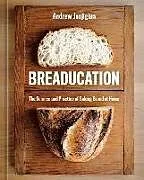
Breaducation
Beschreibung
Your all-inclusive guide to understanding the science behind making the best leavened bread at home with over 50 recipes for sourdough, brioche, baguettes, bagels, pita, and much more, from the founder of the IACP Award–nominated newsletter <Wordloaf...Format auswählen
- Fester EinbandCHF 46.80

Wird oft zusammen gekauft
Andere Kunden kauften auch
Beschreibung
Your all-inclusive guide to understanding the science behind making the best leavened bread at home with over 50 recipes for sourdough, brioche, baguettes, bagels, pita, and much more, from the founder of the IACP Award–nominated newsletter <Wordloaf<.
Now, he brings his years of experience, love for science, and detailed precision to
<lCrusty loaves: Basically Perfect Sourdough, Durum Slab Bread, Cheesy Crits Sourdough, and Rye Scald Miche</l<lGrain-filled breads: Cream-of-Wheat Sourdough, Cracked Farro Porridge Sourdough Pan Bread, and Rugbrød </l<lSquishy and fluffy ones: Shokupain de Mie, Challah, and Brioche</l<lLong and little breads: Baguettes, Parker House "Swolls", and Bagels</l<lFlat-ish bakes: Fougasse, Pita, and Matnakash (Armenian Fingerprint Flatbread)</l<lDiscarded starter and old bread reuses: Sourdough Olive Oil Granola, Sourdough Boston Brown Bread, and Bread Amino Sauce</l
Through every iteration of your bakes, Andrew encourages you to build off the techniques you''ve learned and bring in your own creative flourishes. With many step-by-step photos and illustrations, charts breaking down scaling, hydration percentages, and more, these 50 reliable recipes will teach you what goes into making great bread at home....
Autorentext
Andrew Janjigian
Leseprobe
Introduction
Usually it is simple and easy: Wake to a container of ripe, aromatic levain, mix a dough, and set it somewhere warm enough to encourage the sourdough microbes and the flour to work their silent magic. A few hours—and a handful of gentle and quick turns of the dough—later, the mixture has transformed itself from a lifeless paste into a living, breathing organism, gassy, perfumed, and bouncy. Dough becomes loaf after a quick shaping, then rests and rises again, either on the counter for a few hours or overnight in the fridge. Finally, after less than an hour in a hot oven and a few hours of cooling, we have bread again. None of it demands much thought, aside from the effort it takes to scribble down a formula on a scrap of paper and listen for the timer whenever it chimes.
Bread baking really is this uncomplicated, at least once you understand it. There’s a lot to learn about how doughs behave and the many ways bakers coax them into behaving as they’d like, but once you have absorbed this intel, the actual practice is meditatively, gloriously mundane.
As every devoted bread baker eventually discovers, the complexity of bread baking is—aside from the joy of the breads themselves—the fun part. The thrill is in “getting” what is happening within your doughs and applying that understanding to make loaves that are flavorful and beautiful. This desire to know more is what separates someone who bakes bread from a *bread baker.
*
This book is for bread bakers of every experience level, but particularly those who desire to understand more. Whether you’re an absolute beginner in search of reliable recipes and clear guidance; a baker who has mastered a few trusted recipes and is ready for others; or a competent, confident baker who wants to create recipes of your own, Breaducation will meet you where you are.
My Breaducation
When I began writing Breaducation, I was a decent baker, mostly happy with the breads I made, and, after some twenty years of baking, I liked to think I understood the art and science of bread baking pretty well. I naïvely assumed most of the work would involve writing things down and creating new recipes drawing upon that knowledge.
Reader, I could not have been more wrong. Writing this book has forced me to rethink nearly every aspect of my baking and correct countless false assumptions about how and why I do things. There is no recipe or method in my repertoire that hasn’t evolved in some way—in many cases radically—since I began this project, and the quality and consistency of my breads have improved to levels I never thought possible.
Which is not to say that I have learned everything there is to know about baking bread—far from it. I still have plenty of not-great bake days, and in many ways I am humbler than ever about my understanding and abilities. But thankfully, I now have a much better sense of what I don’t yet know, and I am more forgiving when things don’t go quite as intended. Each and every bake is a delight and another opportunity to learn.
One of the most important things I realized was that there is no “one true way” to bake bread—every baker eventually settles on a set of approaches that makes sense for them, whether to fit their own circumstances, to make life as easy as possible, or to do things in a way that simply gives them joy.
Over the years I have had many amazing teachers, both formal and informal, and each did things in their own way. I’ve since created my own set of approaches that work for me. Breaducation presents my way of doing things in my own humble home bakery, while pointing toward alternatives that might work better for others or be worth exploring just for fun. In the long run, you should choose your own approaches, too, because they make your life as a baker better, easier, or more joyful, not because they are “right.”
Reading Breaducation
The front matter of Breaducation—all the stuff that comes before the recipes—is meant to provide a thorough understanding of the story of bread: what happens both within a loaf and without. It begins with a high-level overview of the elements, ingredients, methods, and tools that go into bread baking. This is followed by deeper dives into each of these topics, in sequential order, as one particular baker (me) shepherds a bread from flour to loaf. From a distance, bread baking might seem simple, but the closer you look, the more there is to say or to learn about it. My goal here is to cover each of the things that happen and the choices a baker might make along the way in as much detail as possible, so that the story of bread is clear once you attempt the recipes that follow. Some advanced techniques and topics get covered only in passing for space reasons, but my website, breaducationdotorg, is where you’ll find loads more intel.
A few things to keep in mind as you read it:
Baking terminology and jargon. Most bakers—me included—use a lot of terms that will be unfamiliar to the uninitiated. Sadly, there’s no getting around this. Many of these terms name concepts and practices you will want to know, and most lack commonplace synonyms. These are the words bakers use to describe what they do and what happens, and it’s worth learning them. I’ve tried to define them as early and clearly as possible. (There’s a glossary at the end of the book, too, so you can look up any terms you haven’t absorbed yet.)
Bread baking is modular. Nearly every formula in Breaducation is based upon a small handful of approaches I use over and over. It might not be obvious at first glance, but bread baking is a modular practice. You can turn a single tub of dough into boules, bâtards, baguettes, or buns. You can make any of these breads from countless different doughs; each will be unique but true to its style. And you can take a basic dough and add spices, liquids other than water, inclusions like olives or walnuts, or toppings or coatings to the shaped loaf—all without changing the underlying formula. Bread baking is choose-your-own-adventure cooking, and you only need a handful of basic doughs and some knowledge of their potential to be endlessly creative with it.
**
All else being equal.** One of the most important phrases to keep in mind when reading this…