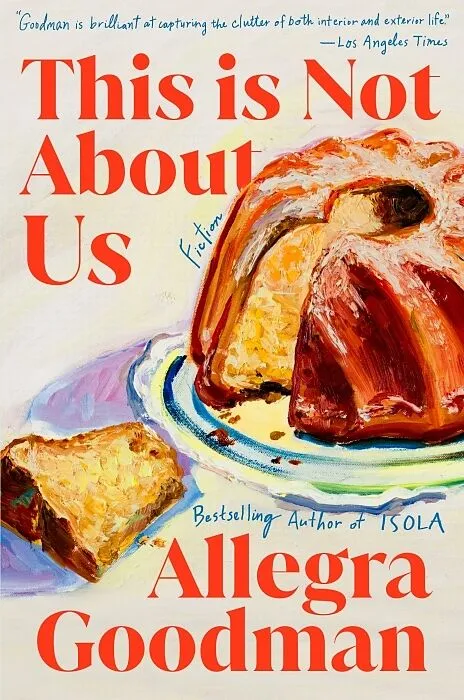
This Is Not About Us
Beschreibung
A kaleidoscopic portrait of a modern American family—steadfast, complicated, begrudging, and loving—from the bestselling author of <Isola< <Was this just a brief skirmish, or the beginning of a thirty-year feud? In the Rubenstein f...Format auswählen
- Fester EinbandCHF 31.90

Wird oft zusammen gekauft
Andere Kunden kauften auch
Beschreibung
**A kaleidoscopic portrait of a modern American family—steadfast, complicated, begrudging, and loving—from the bestselling author of <Isola<
<Was this just a brief skirmish, or the beginning of a thirty-year feud? In the Rubenstein family, it could go either way.<**
When their beloved older sister passes away, Sylvia and Helen Rubinstein are unmoored. A misunderstanding about apple cake turns into decades of stubborn silence. Busy with their own lives—divorces, dating, career setbacks, college applications, bat mitzvahs and ballet recitals—their children do not want to get involved. As for their grandchildren? Impossible.
With <This Is Not About Us<, master storyteller Allegra Goodman—whose prior collection was heralded as “one of the most astute and engaging books about American family life” (<The Boston Globe<)—returns to the form and subject that endeared her to legions of readers. Sharply observed and laced with humor, <This Is Not About Us< is a story of growing up and growing old, the weight of parental expectations, and the complex connection between sisters—a big-hearted book about the love that binds a family across generations.
Autorentext
Allegra Goodman
Klappentext
**NATIONAL BESTSELLER • A kaleidoscopic portrait of a modern American family—steadfast, complicated, begrudging, and loving—from the bestselling author of Isola
“Wise, witty . . . a deliciously readable book [about] the delicate minutiae of family life, played beautifully, boldly, brightly in a major key.”—The New York Times Book Review (Editors’ Choice)**
“Goodman’s mature and deftly written book suggests that, in family as in art, there is no such thing as uncomplicated happiness.”—The Wall Street Journal
Was this just a brief skirmish, or the beginning of a thirty-year feud? In the Rubinstein family, it could go either way.**
**When their beloved sister passes away, Sylvia and Helen Rubinstein are unmoored. A misunderstanding about apple cake turns into a decade of stubborn silence. Busy with their own lives—divorces, dating, career setbacks, college applications, bat mitzvahs and ballet recitals—their children do not want to get involved. As for their grandchildren? Impossible.
With This Is Not About Us, master storyteller Allegra Goodman—whose prior collection was heralded as “one of the most astute and engaging books about American family life” (The Boston Globe)—returns to the form and subject that endeared her to legions of readers. Sharply observed and laced with humor, This Is Not About Us is a story of growing up and growing old, the weight of parental expectations, and the complex connection between sisters—a big-hearted book about the love that binds a family across generations.
Zusammenfassung
**A kaleidoscopic portrait of a modern American family—steadfast, complicated, begrudging, and loving—from the bestselling author of Isola
“A compelling, love-laced portrait of several generations of a family much like yours, mine and just about everyone’s.”—People (Most Anticipated Books of 2026)
** Was this just a brief skirmish, or the beginning of a thirty-year feud? In the Rubinstein family, it could go either way.**
**When their beloved sister passes away, Sylvia and Helen Rubinstein are unmoored. A misunderstanding about apple cake turns into a decade of stubborn silence. Busy with their own lives—divorces, dating, career setbacks, college applications, bat mitzvahs and ballet recitals—their children do not want to get involved. As for their grandchildren? Impossible.
With This Is Not About Us, master storyteller Allegra Goodman—whose prior collection was heralded as “one of the most astute and engaging books about American family life” (The Boston Globe)—returns to the form and subject that endeared her to legions of readers. Sharply observed and laced with humor, This Is Not About Us is a story of growing up and growing old, the weight of parental expectations, and the complex connection between sisters—a big-hearted book about the love that binds a family across generations.
Leseprobe
Chapter 1
Apple Cake
Her sisters flinched because she was the youngest, but she looked so old. Jeanne was just seventy-four, and no one ever thought . . . They didn’t speak of it. They would not allow themselves, but Helen was eighty, Sylvia seventy-eight. They’d married first, been mothers first. They were older. They should have been frailer. How could Jeanne be first to go?
In the Brooklyn house, their baby lay propped up on pillows. Jeanne, who had celebrated her first birthday in eyelet lace, a slice of cake on the tray of her high chair, and her sisters on either side. Their living doll with her blond curls and round blue eyes. In the mountains, in Kaaterskill, they’d pulled her in their wagon over grass bumpy with apples from the apple tree. Later, when the family moved to Boston and the Brookline house, Helen and Sylvia had walked their little sister to school. Now it was dreadful to approach her—hair just wisps, voice nearly gone, her cough breaking every sentence. Horror, pity, shame. Jeanne’s older sisters felt all that at once, to see her now and to remember her as she had been. They were sorry and they were glad to feel so alive, steps firm in their low-heeled shoes. Their own bodies sound, rejoicing with each breath. What a terrible thing to say! They would never admit it. Their own strength, their good fortune, and their guilt—they could never put it into words. No one should!
“How are you, darling?” Helen asked.
Jeanne didn’t answer.
“Did you see the orchid Richard sent?” Sylvia turned a tall white orchid toward Jeanne’s chair.
Jeanne looked briefly at her nephew’s gift. There were so many flowers. Blossoms filled the first-floor music studio where Jeanne had to live because she couldn’t take the stairs. The orchid from Richard, the sunflowers from her daughter-in-law, Melanie, the roses from the Auerbachs next door. Wherever she looked, she saw arrangements. The piano tuner had sent a basket of mums, which were losing petals, shedding everywhere. The cards said, “All our love,” and “Thinking of you,” and even “Healing light.” This from her niece Wendy, the music therapist.
“Look how beautiful they are.” Sylvia meant, Do you see how much everybody cares for you?
Jeanne made a face. The flowers depressed her, especially those already wilting. When she looked at the mums, she felt she wasn’t dying fast enough.
Her sisters sat chattering about the heat, the traffic, and the rain. They were afraid to leave her alone—although she had lived by herself for years, a widow. She lived alone because she liked it. Her late husband had been difficult, to say the least.
According to her sons, Jeanne’s Tudor home was much too big. According to Phoebe, her twenty-year-old granddaughter, Jeanne’s house wasted energy. For years, everybody had been telling Jeanne to move. Now nobody mentioned it.
These were the privileges of hospice. You didn’t have to blow insulation into your walls. No one suggested assisted living, or criticized your carbon footprint, which would disappear entirely in weeks, or even days. On the other hand, everyone came to see you and confide in you. Jeanne didn’t believe in God or any kind of afterlife, but lung cancer made believers of her family, so that she, who despised …