Beschreibung
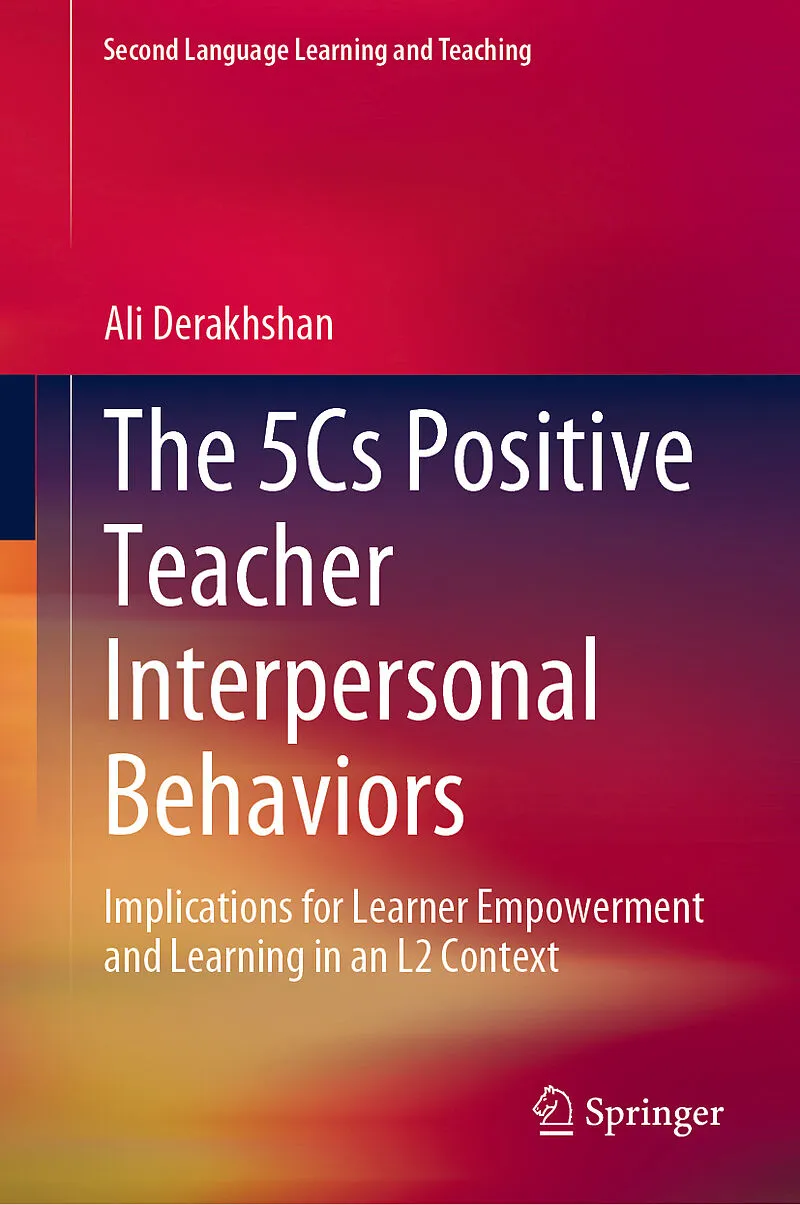
This book argues that, in line with the tenets of positive psychology in SLA and the rhetorical/relational goal theory, positive teacher-student interpersonal relationships are deemed to be of great significance for empowering students to accomplish favorable ...This book argues that, in line with the tenets of positive psychology in SLA and the rhetorical/relational goal theory, positive teacher-student interpersonal relationships are deemed to be of great significance for empowering students to accomplish favorable academic outcomes and to successfully learn a second/foreign language (L2), whether at its affective, behavioral, or cognitive levels. Therefore, understanding the role of teacher interpersonal behaviors and their effect on students' learning gains in the domain of SLA is of utmost importance, particularly as this line of research is at its nascent stage of development, and, as a result, available empirical evidence is still inconclusive. To address this issue, drawing on the mixed methods design, this book mainly aims to, first, empirically scrutinize the role of 5Cs positive teacher interpersonal variables (i.e., care, clarity, closeness, confirmation, and credibility) in L2 students' affective, behavioral, and cognitivelearning outcomes through the mediation of student-perceived learner empowerment in the L2 context of Iran. Second, it is intended to show how L2 teacher educators, teachers, and materials developers, among other key educational stakeholders, can facilitate the provision of interpersonally rich language learning environments with the ultimate goal of enhancing students' L2 learning.
Piques the interest of SLA teachers and researchers by shedding light on teacherstudent interpersonal relationships Springboards the mediating role of learner empowerment Provides empirical evidence for affective behavioral and cognitive L2 learning
Autorentext
Ali Derakhshan is Professor of Applied Linguistics at the English Language and Literature Department, Golestan University, Gorgan, Iran. He has been a member of the Iranian Elites Foundation since 2015. He is currently a Yunshan Chair Professor at the School of English Education, Guangdong University of Foreign Studies (GDUFS), Guangzhou, China. As authenticated by the Essential Science Indicators (ESI) Database, Clarivate Analytics shows his name among the world’s top 1% of scientists in 2024. His name appeared in Stanford University’s list of the world’s top 2% of the most influential scientists in 2022, 2023, and 2024. He has published in accredited top-tier international journals, including Computers and Education, Review of Educational Research, Computers in Human Behavior, Language Learning & Technology, Education and Information Technologies, Applied Linguistics, Language Teaching Research, System, Assessing Writing, Applied Linguistics Review, Studies in Second Language Learning and Teaching, Journal of Multilingual and Multicultural Development, ELT Journal, English for Specific Purposes, Innovation in Language Learning and Teaching, International Review of Applied Linguistics in Language Teaching, International Journal of Applied Linguistics, Thinking Skills and Creativity, Current Psychology, Asia Pacific Education Researcher, European Journal of Education, Educational Studies, Pragmatics and Society, Journal of Psycholinguistic Research, Porta Linguarum, Learning and Motivation, etc. His monograph, The"5Cs" positive teacher interpersonal behaviors: Implications for learner empowerment and learning in an L2 context, was published by Springer in 2022. His co-authored book Instructed second language pragmatics for the speech acts of request, apology, and refusal: A meta-analysis was published by Springer in 2023. His research interests are educational psychology, technology in language education, teacher education, learner individual differences, and cross-cultural interpersonal factors in language education.
Inhalt
Chapter 1. Overview of Theoretical Frameworks.- Chapter 2. Empirical Background.- Chapter 3. Design of the Study.- Chapter 4. Results.- Chapter 5. Conclusions, Pedagogical Implications, and Directions for Future Research.